Hi there! This time I have something interesting and quite unexpected for you 🙂
Absolute digital meets absolute vintage. Not computer vintage, though, but musical.
This is the Tascam DA-P1, a professional DAT (Digital Audio Tape) recorder. It is a versatile device used for recording music, field reporting, sound effects, and nature sounds. It is sturdy, reliable, a bit heavy, and runs on battery power for a couple of hours.
First off—what is DAT? It is a digital audio recording format that shares the same physical medium as DDS (Digital Data Storage). DDS and DDS-2 tapes are compatible with DAT, and some recorders even support DDS-3. However, with later generations, everything comes down to tape thickness—the newer the generation, the thinner and more fragile the tape, meaning the tape transport mechanism must be perfectly calibrated.
The medium itself is a miniature cassette, sizing somewhere between a traditional compact cassette and a microcassette for dictaphones. The tape width is 4 mm, and about one meter holds roughly 2 minutes of audio. This leads to a funny quirk: audio cassettes are labeled by runtime, while computer tapes are labeled by tape length. Because of this, a DAT-120 cassette actually holds an hour less than a DDS-90 tape.
The recording quality is slightly higher than an Audio CD. The standard modes are 16-bit at 44.1 kHz or 48 kHz, plus a Long Play mode at 12-bit / 32 kHz. Later decks featured even more advanced modes, but they weren't always cross-compatible between different manufacturers.
Since this is a professional-grade unit, it comes packed with great features: a full set of analog line and digital inputs/outputs, XLR microphone inputs with 48V phantom power, and a 6.3 mm jack for high-impedance headphones (ideally 600 ohms). It also offers extensive setting controls via analog switches and supports automatic signal parameter negotiation. The device has a small but user-friendly screen with a cozy orange backlight.
It was originally purchased with a dead battery. Thanks to our resident wizard Dima, it was rebuilt to be "better than new" and now lasts up to 4 hours during playback.
The main challenge is that very few commercial albums were ever released on DAT, though the format was used in studios for mastering for a very long time. That is why we record the cassettes ourselves! :)))
Dear subscribers! My post today might surprise you a bit. You know me as an IT history researcher, an author of historical articles, and the long-time host of this channel. Some of you are familiar with my professional side or my automotive hobbies. Today, you will discover yet another facet of my interests—somewhat unexpected, yet perfectly fitting the character of a technical romantic.
And so, I present to you my first book, Eric Voigt: Cold Isn't Felt Twice. The genre might seem surprising—it is a dieselpunk procedural and technofantasy. However, if you are tired of worlds where magic works at the snap of a finger and authors confuse a carburetor with a CVT, then you have come to the right place. As an architect and a visionary, it was important for me to deconstruct fantasy clichés using strict logic. In the world of Almarna, mana and ancient curses obey the laws of physics and chemistry. Meanwhile, the detective plot of the Aviation Safety Administration revolves around mechanical specifications, two-stroke opposed diesel engines, and forensic expertise. But the tedious technical background is just a framework. Inside the book lives what I love deeply myself: tangible domestic comfort, travel, unusual machinery, and strong women with huge, kind hearts who break the standards of glossy beauty. [1, 2, 3, 4, 5]
My pen name has long been known to many of you. So, please welcome:
Laurentiis von Feuer. Eric Voigt: Cold Isn't Felt Twice.
Read it on Author.today. The book is available for free, and a new chapter will be posted every day:
https://author.today/work/631661
Here is another major gestalt completed. Thanks to my fellow enthusiast Ivan, I got my hands on a "big" T60p—a version with a 15" FlexView screen and a 1600x1200 resolution. Actually, this is exactly its main highlight and key difference from the 14" version, which featured a good but still TN matrix with a 1400x1050 resolution. It was the FlexView screens (AFFS and IPS technologies) that brought truly high-quality images to laptops. They were installed for just over 5 years—from their debut on the A30p in late 2001 until this model's production ended in 2007. After that, for a long time, IPS screens could only be found in convertible laptops and occasionally in compact premium models like the X220. The second coming of high-quality screens only happened in 2014 when the technology became more affordable. As for "square" screens, they haven't returned yet...
The presented specimen is also interesting for two more details: first, the 3G modem is a fairly rare option for those times; second, this is an early version of the T60p, still without Lenovo badges.
Technically, the 14" and 15" models differed only in their casings and screens. The motherboards, most components, and options were identical. Interestingly, the 14" model in the T60 and T61 series was noticeably thinner than the 15" one—even though there were no structural differences.
IBM ThinkPad T60p - 04/2006.
Core Duo T2600 2.16 GHz
3 GB RAM
128 GB SSD
256 MB ATI FireGL V5200
DVD-RW
3G / Bluetooth / Wi-Fi
Long time no see, guys, sorry about that! I’ve been completely drained by the hectic grind of launching and updating my website, followed by a mountain of personal stuff. But today, I actually have an awesome reason to post!
My long-awaited PowerMac G4 MDD Dual has finally arrived. It’s a killer complete setup that came with a dual Studio Display configuration and a pro-grade audio interface!
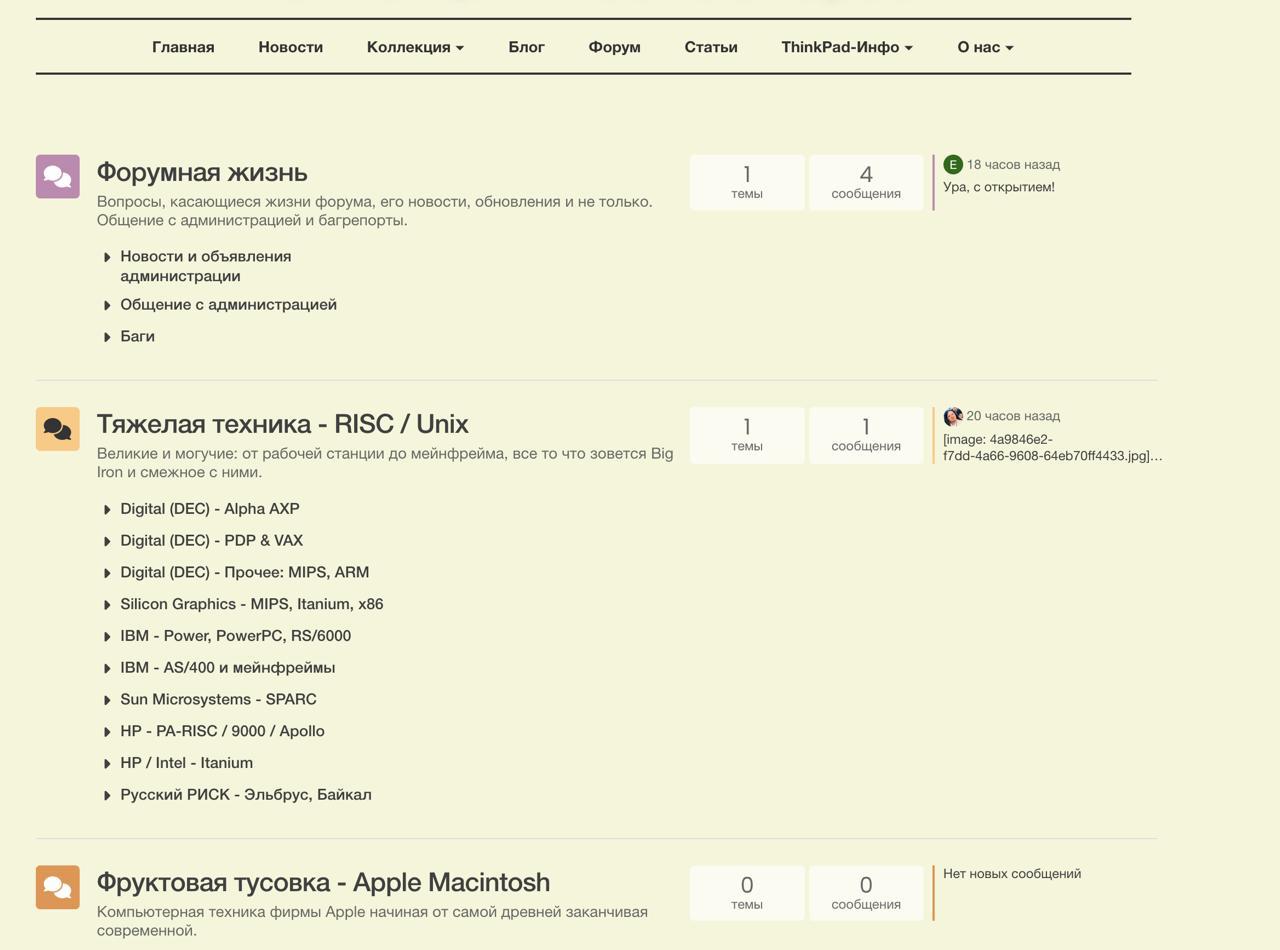
They say forums are dead. They say they were left behind in the 2000s. But we believe that a forum is an excellent way to accumulate and categorize knowledge without diminishing the pleasure of communication. In an era of messenger wars and network restrictions from various sides, a forum ensures that accumulated information isn't lost and helps preserve a community of enthusiasts! Great examples of such platforms are the famous VOGONS.org and ThinkPads.com (now inaccessible without certain workarounds). There is nothing of this caliber in the Russian-speaking segment of the internet yet.
After careful consideration, we decided to take on a very ambitious goal: to build a true retro-community in the Runet. This space will allow enthusiasts to communicate in their native Russian language, exchange knowledge, and develop and popularize retrocomputing and technical history research. And so, here it is! A forum has launched at digitalvintage.ru!
We have defined a starting set of sections for discussion, chosen a modern and expandable forum engine, and invite you to take part in its further development. After all, the most important part of any forum is its members. Without you, there will be no content and no community. Join us, and let’s create all of this together!
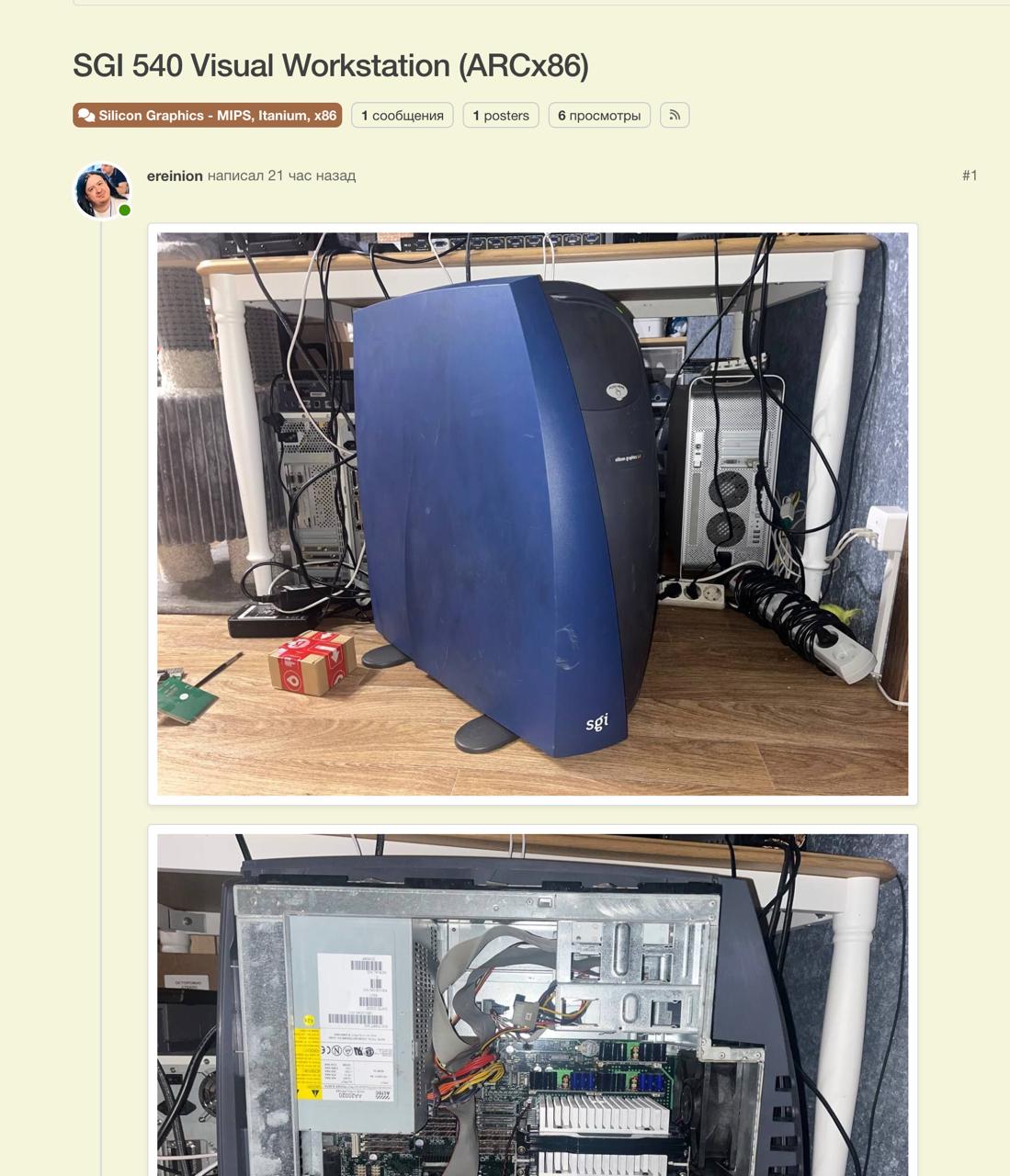
Newcomers will find sections dedicated to key hardware and technologies (and if something is missing, we will gladly add it!). A special highlight of the forum will be dedicated sections for magnificent "heavy iron" — Unix machines, the legendary ThinkPad laptops, and the cult operating system OS/2.
Forum address: digitalvintage.ru/forum
We’ll be waiting for you!
Digitalvintage.ru News
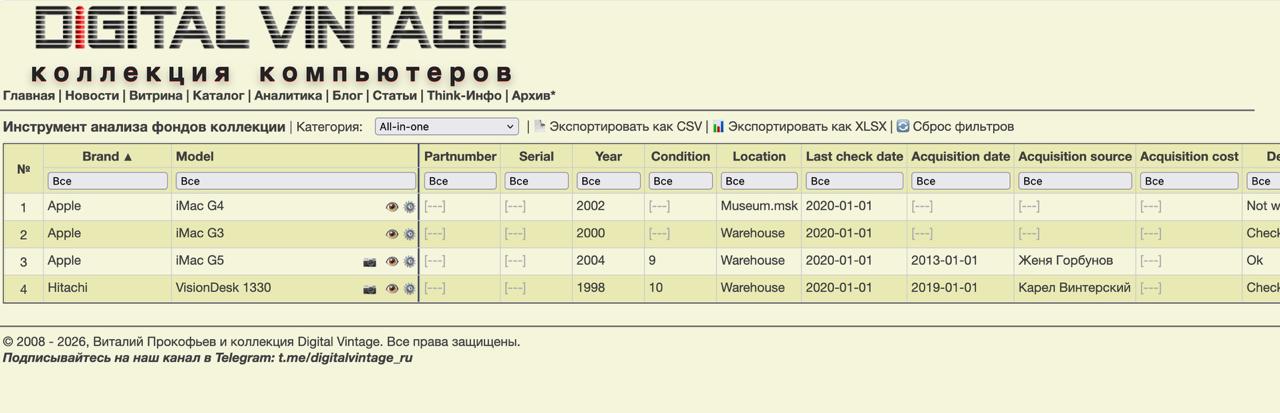
Analytical tools for working with the collection's list have been added.
You can display the entire list of items in each category, select specific devices using filters, and even export the results to XLS or CSV.
This tool will be useful for fellow collectors and researchers of technology history.
We're continuing the flow of ThinkPad-related love)))
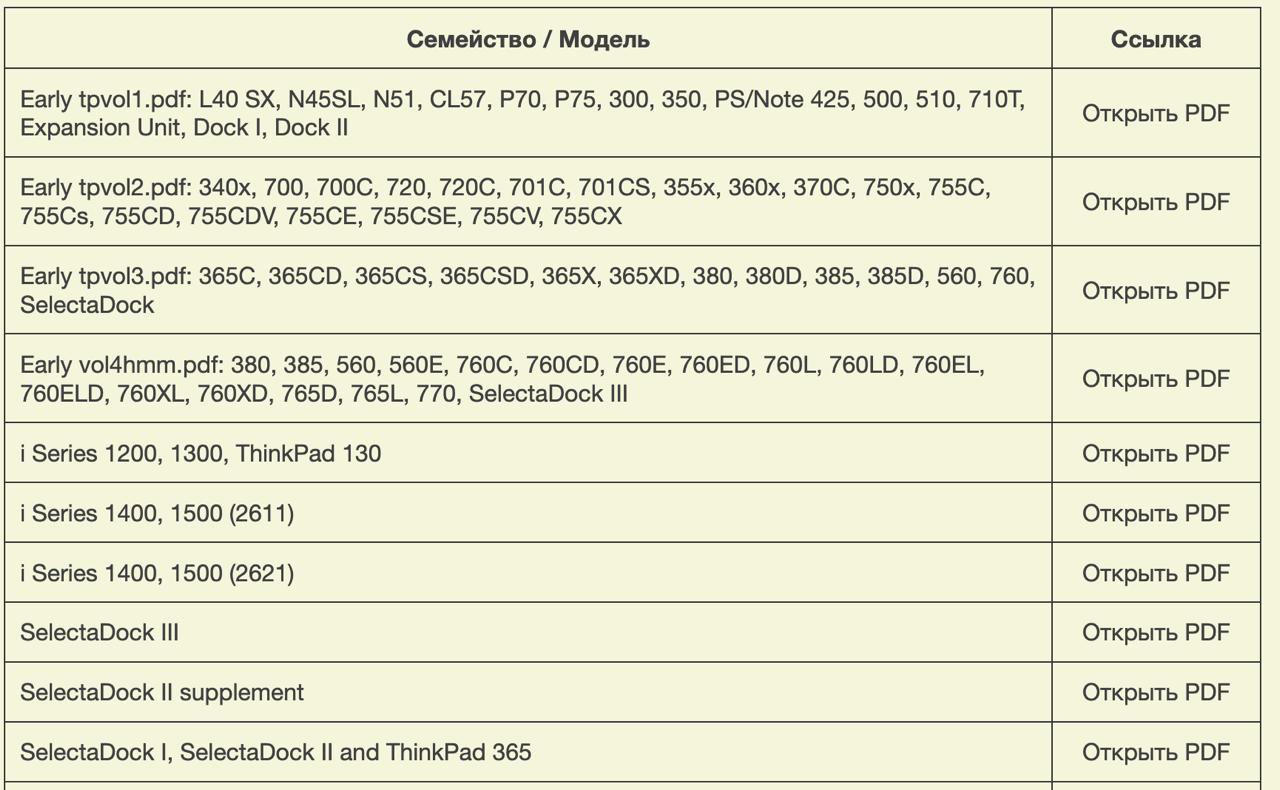
ThinkPad driver and catalog archives have been added to the website – all located in the Think-Info section!
There are now six subsections with valuable content:
• ThinkPad Configuration Database (MTM)
• Driver archive for classic ThinkPad models (up to 61 families)
• ThinkPad Service Manual Archive (HMM)
• ThinkPad Catalog Archive (PSREF / TABOOK)
• IBM PCBSS Archive
• ThinkPad data directory at retro.digitalvintage.ru
Come on over to https://dev.digitalvintage.ru/ru/thinkbase/ and share the link with all classic ThinkPad enthusiasts!
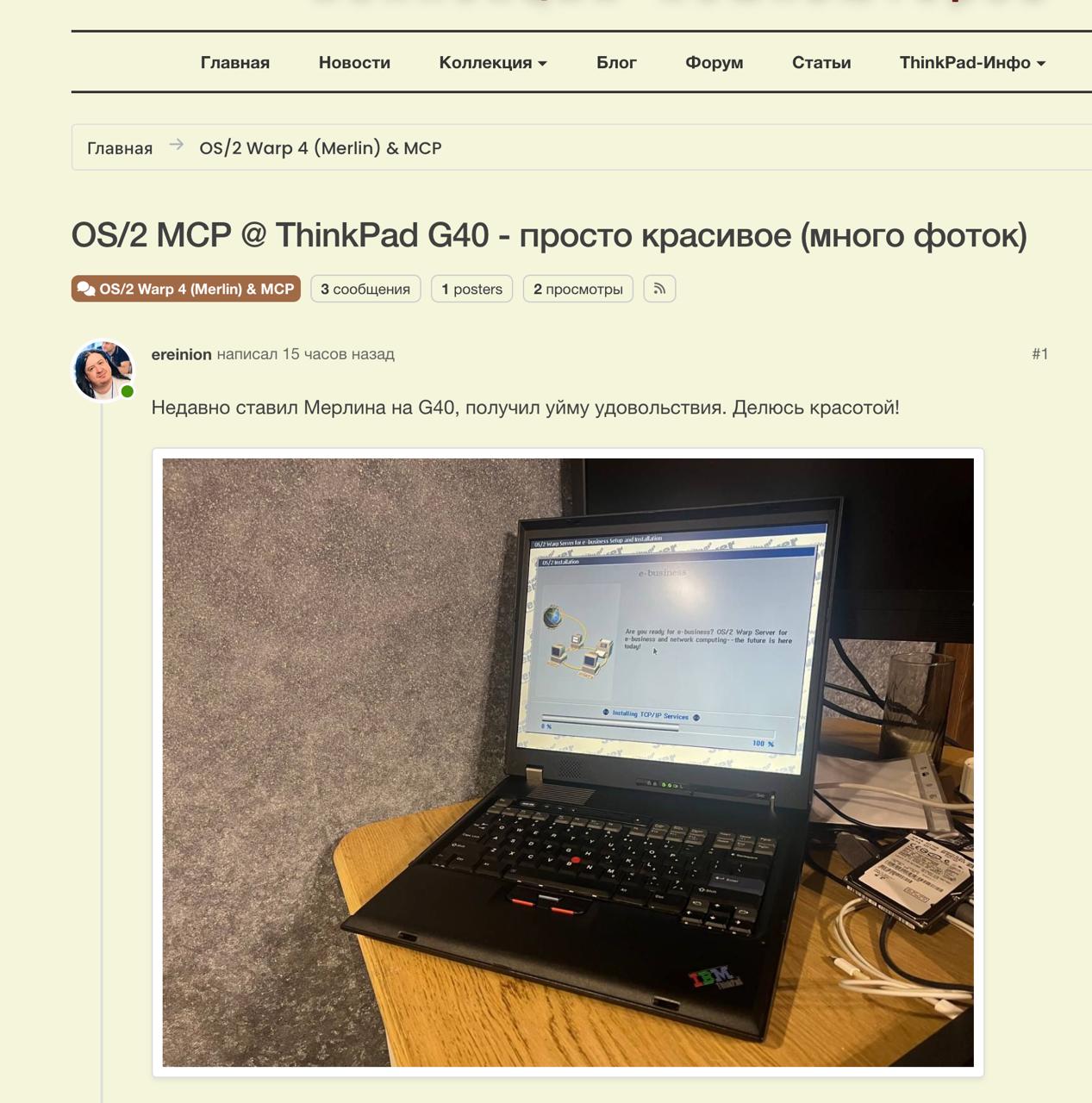
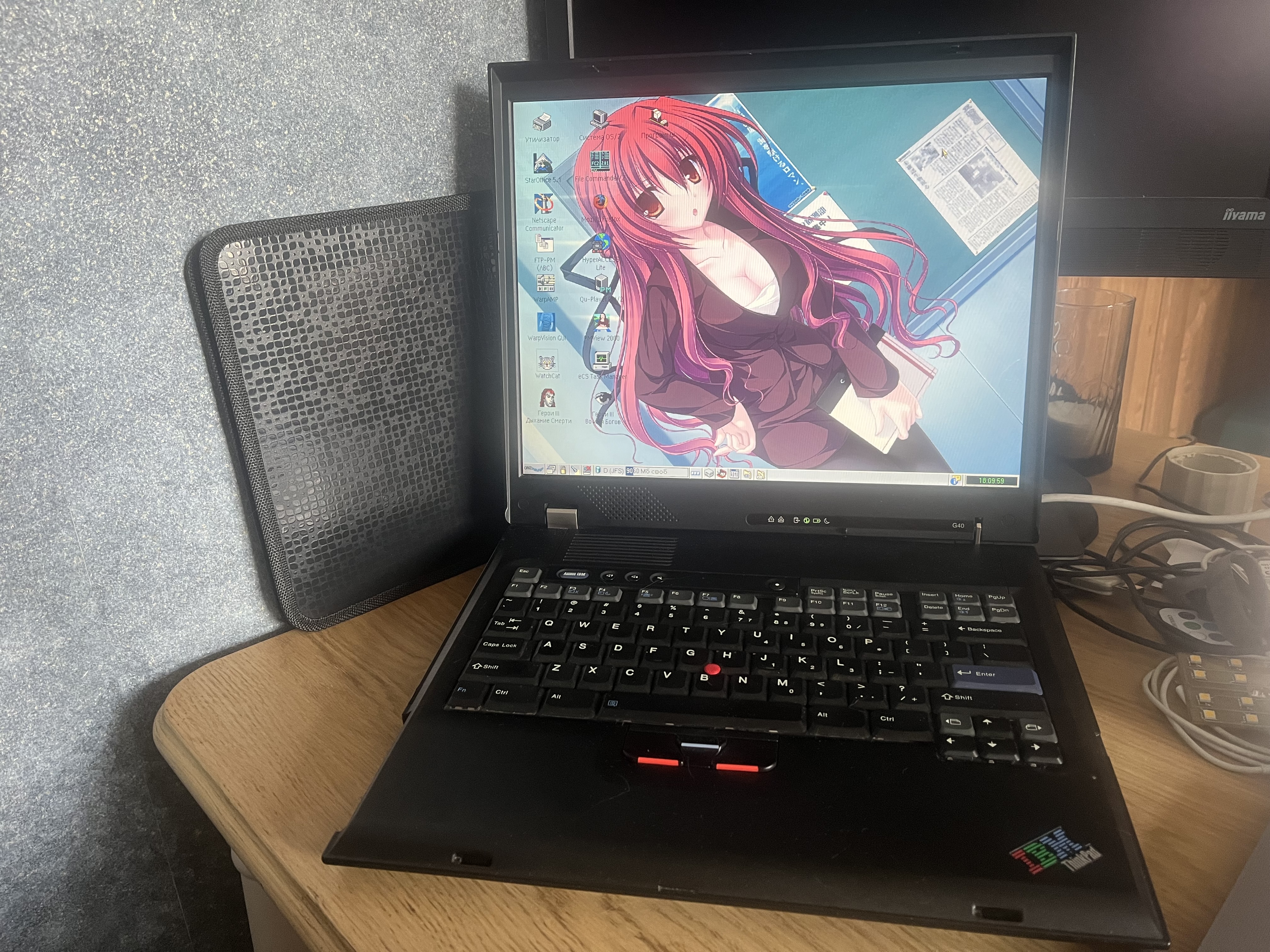
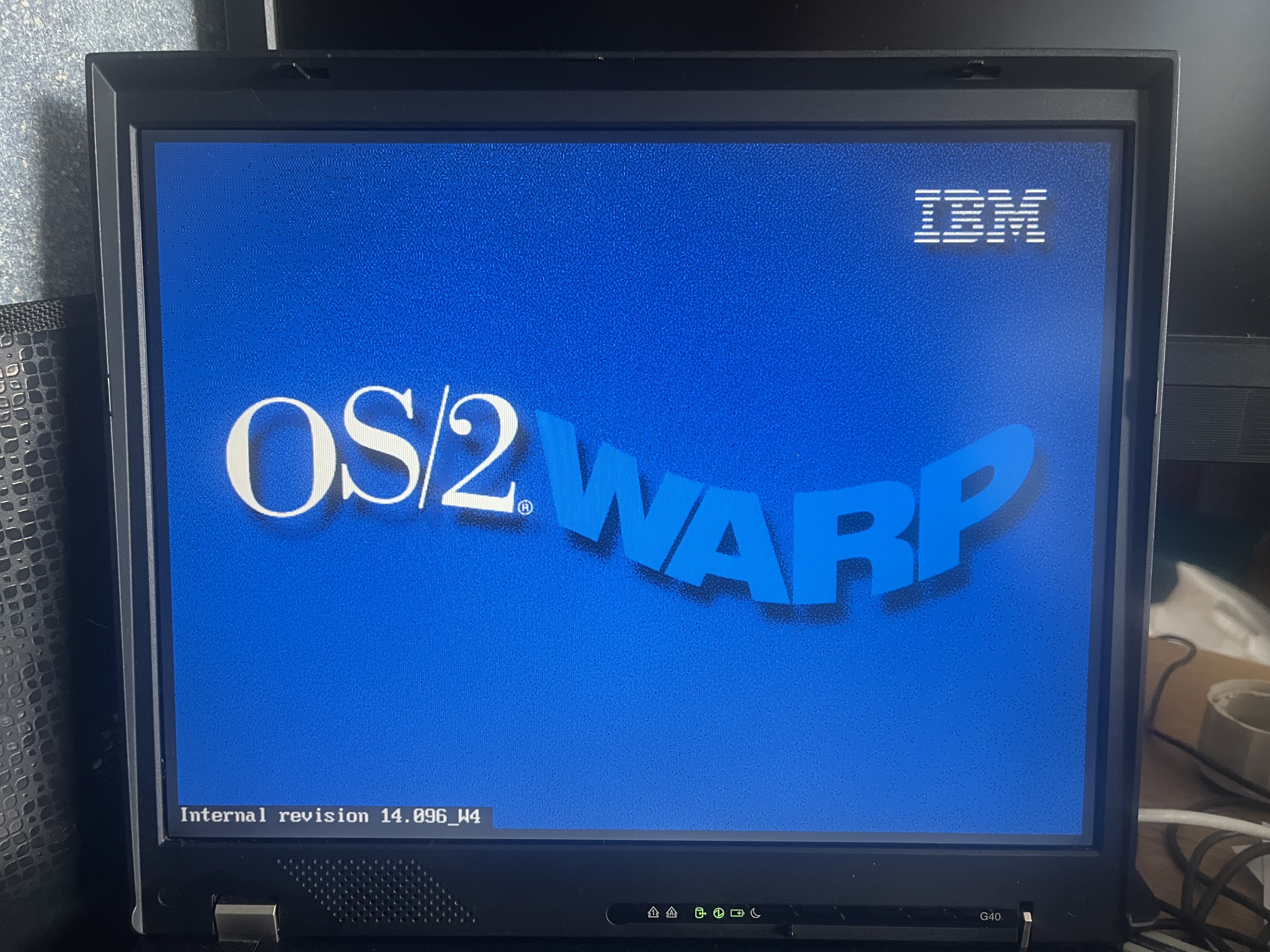
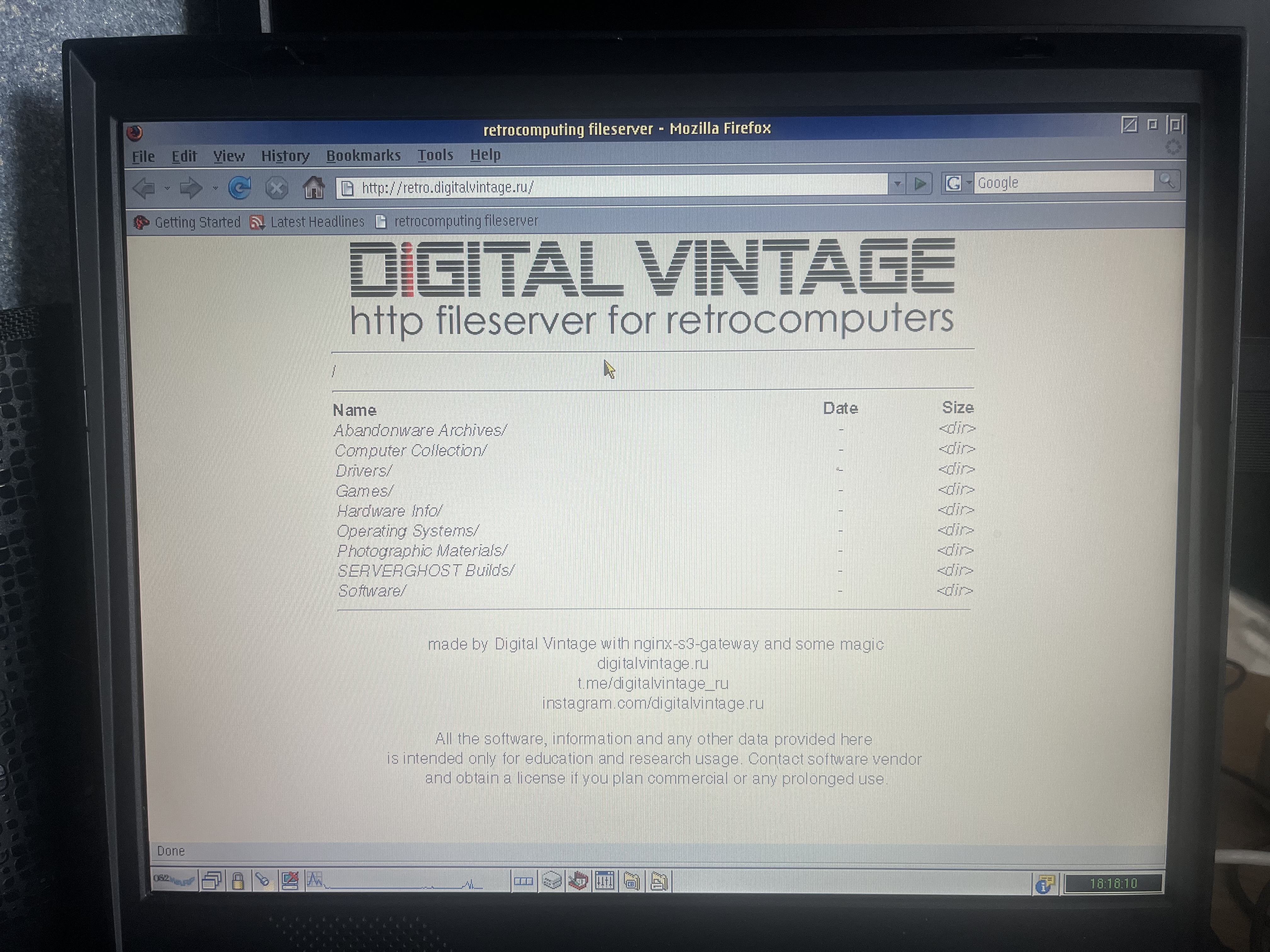
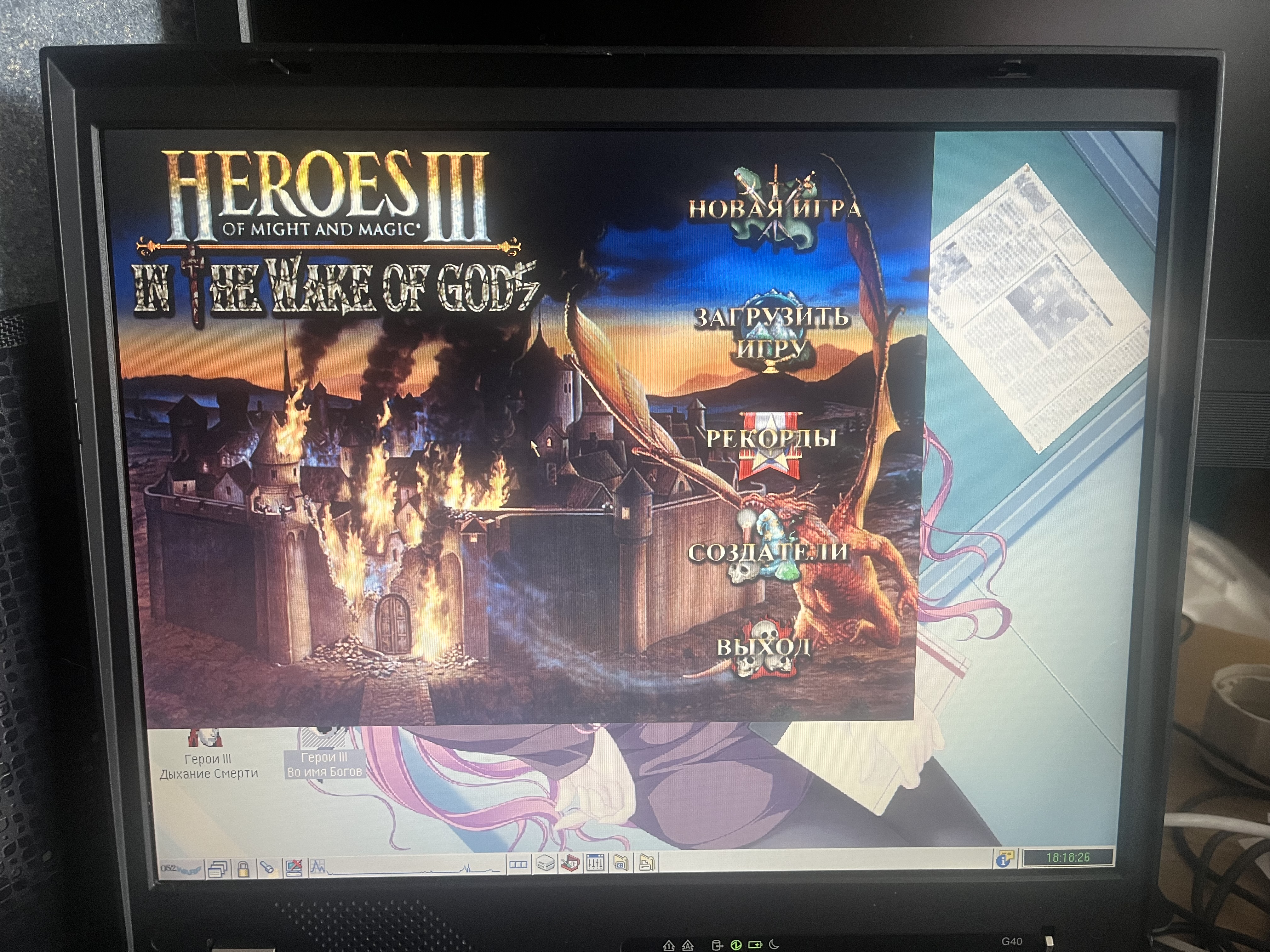
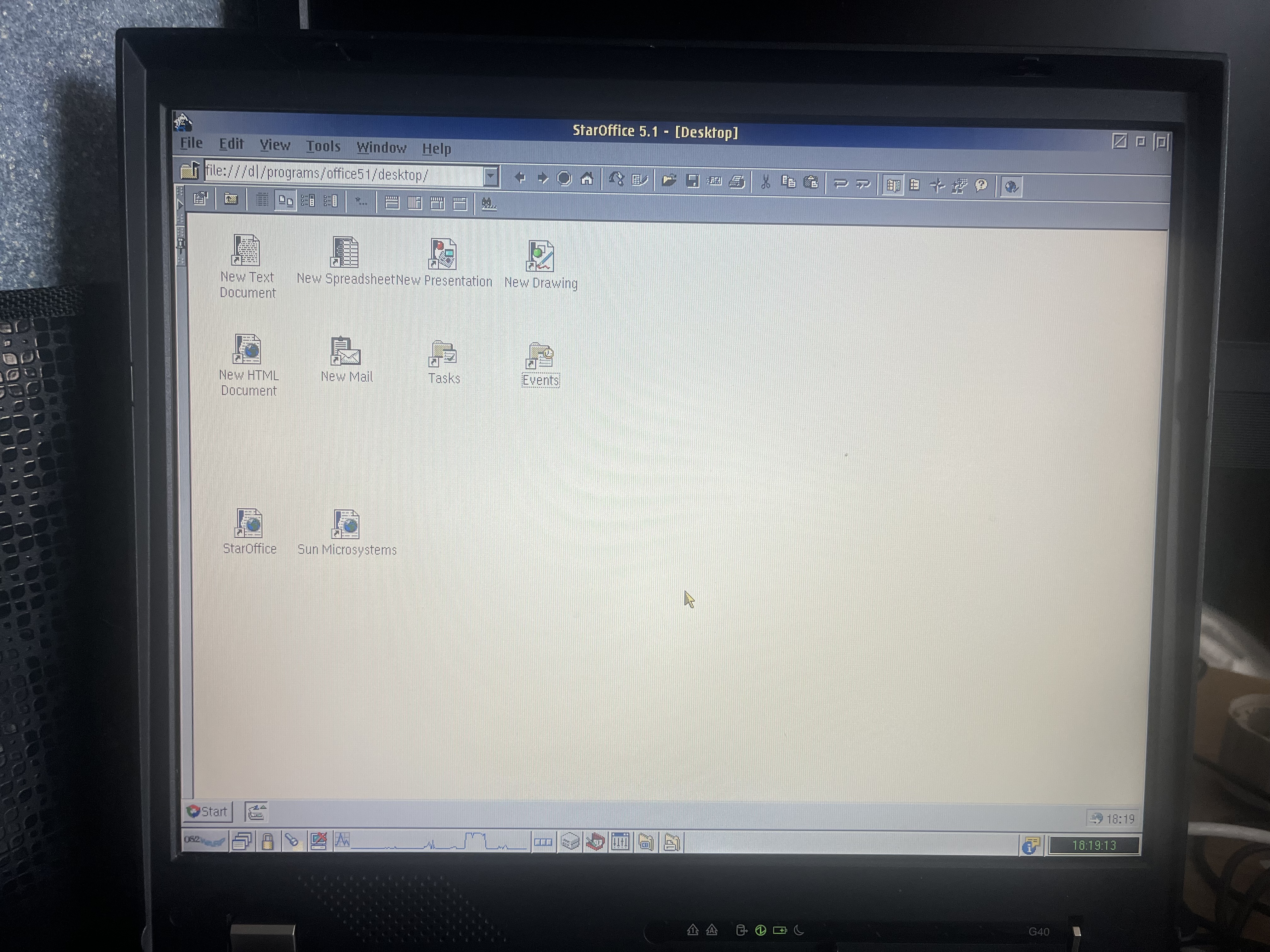
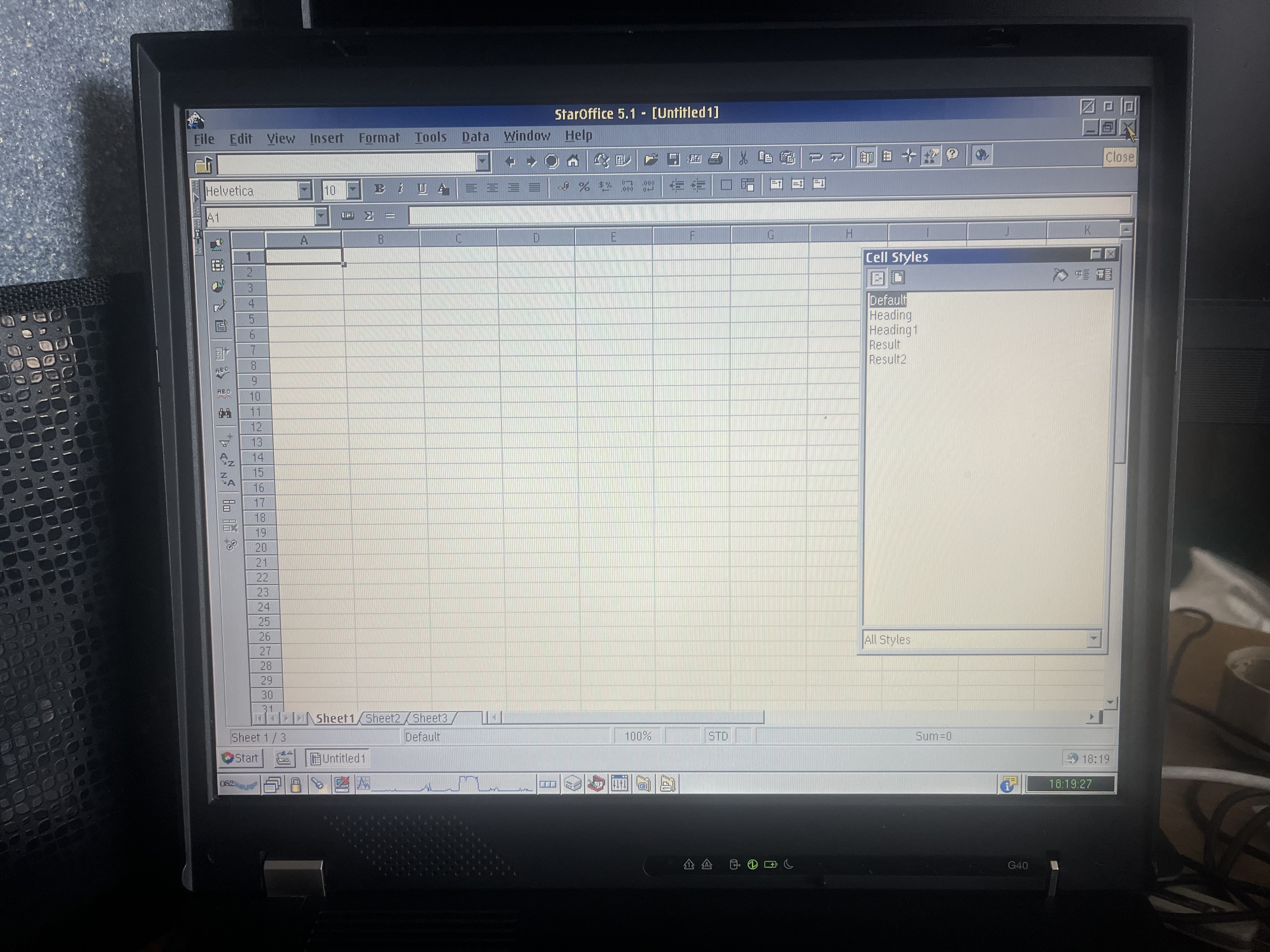
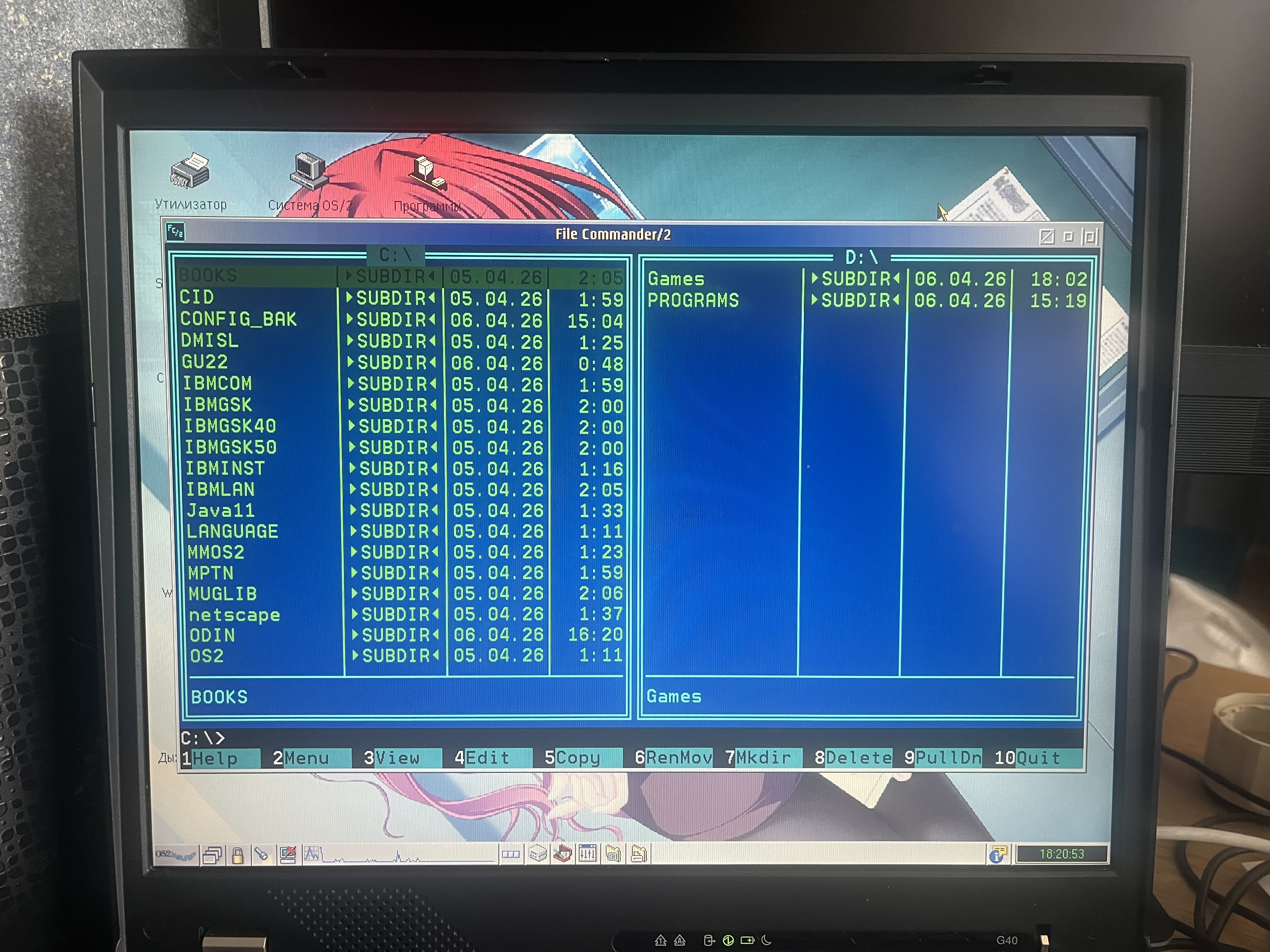
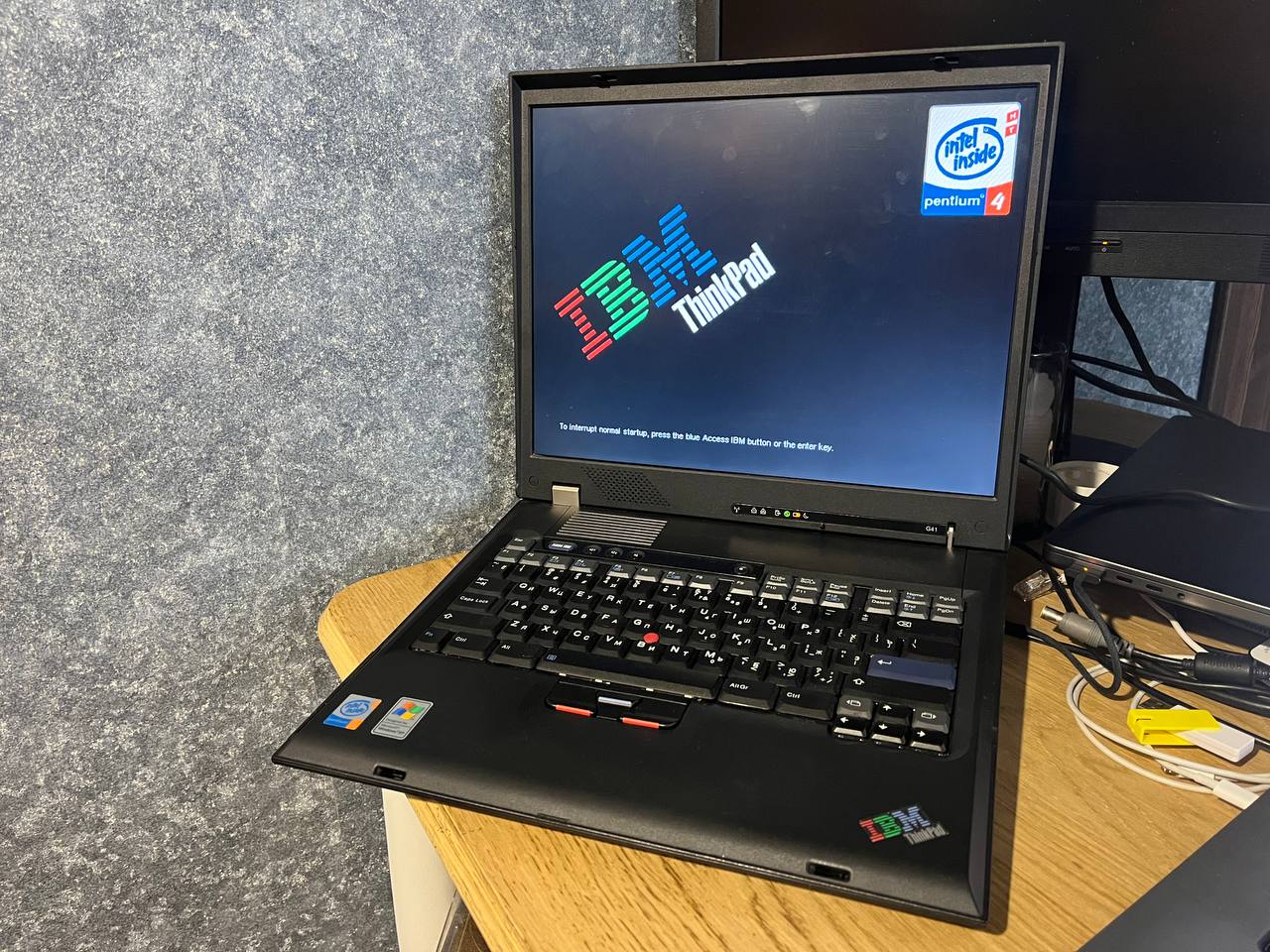
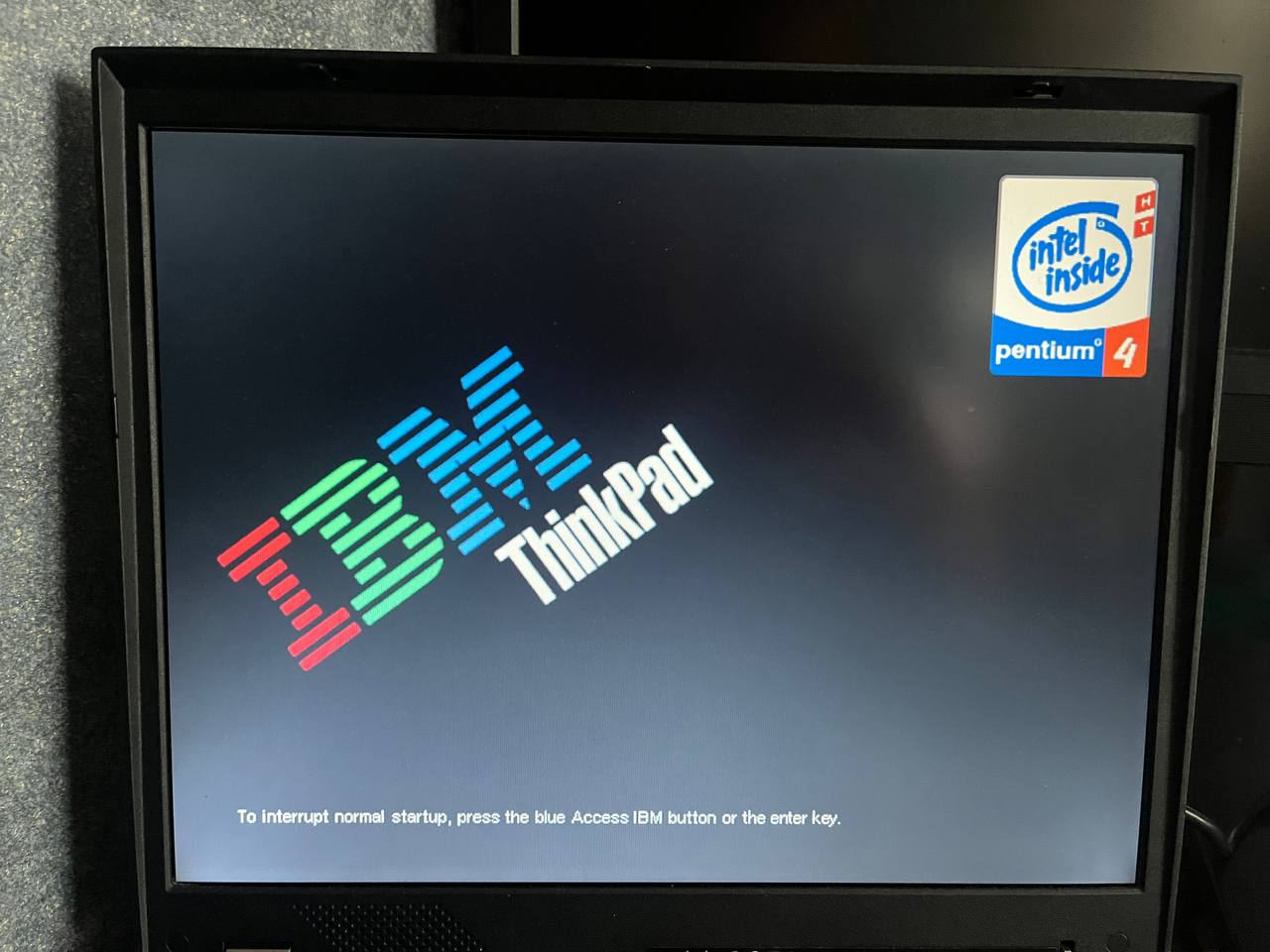
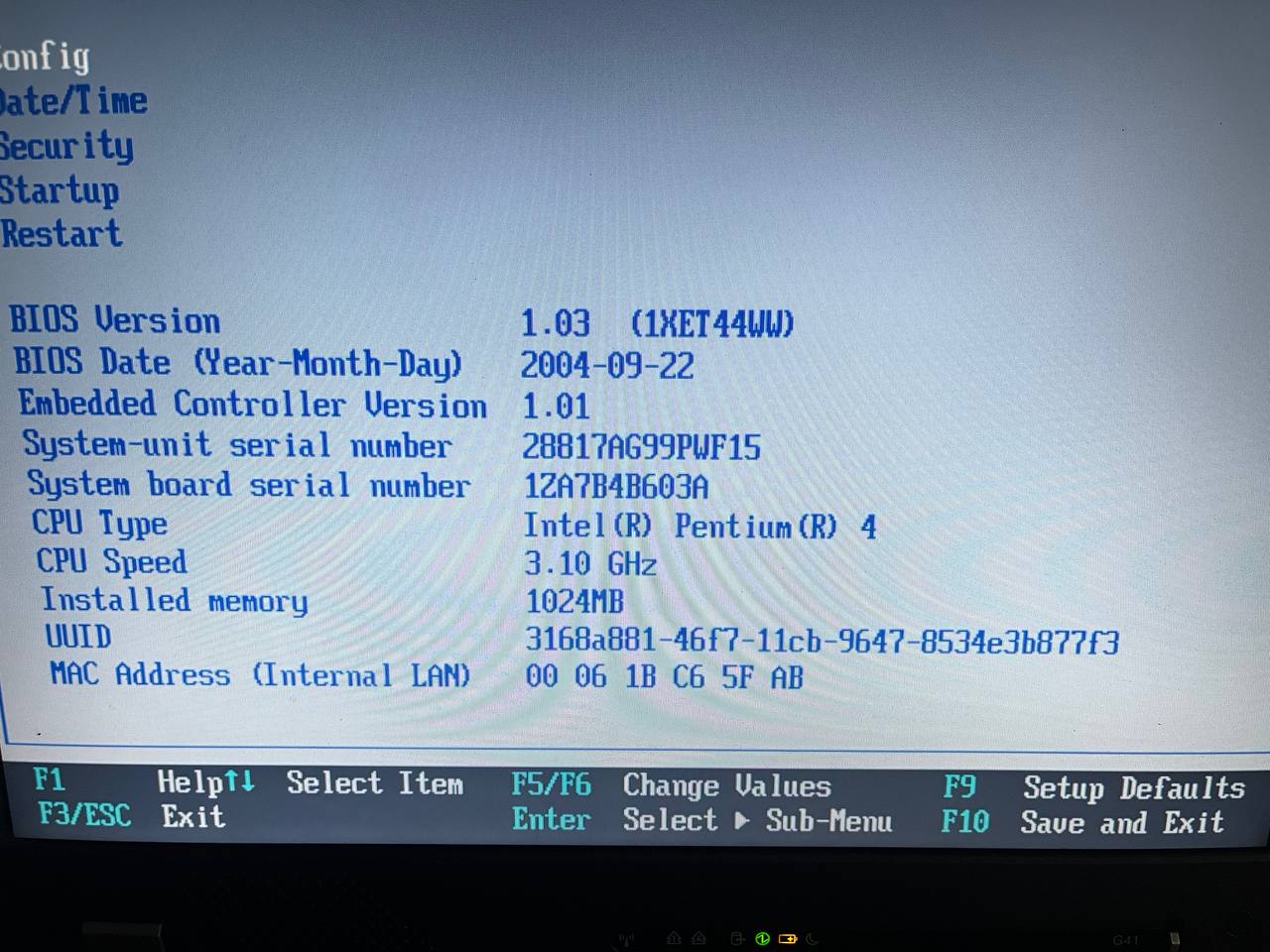
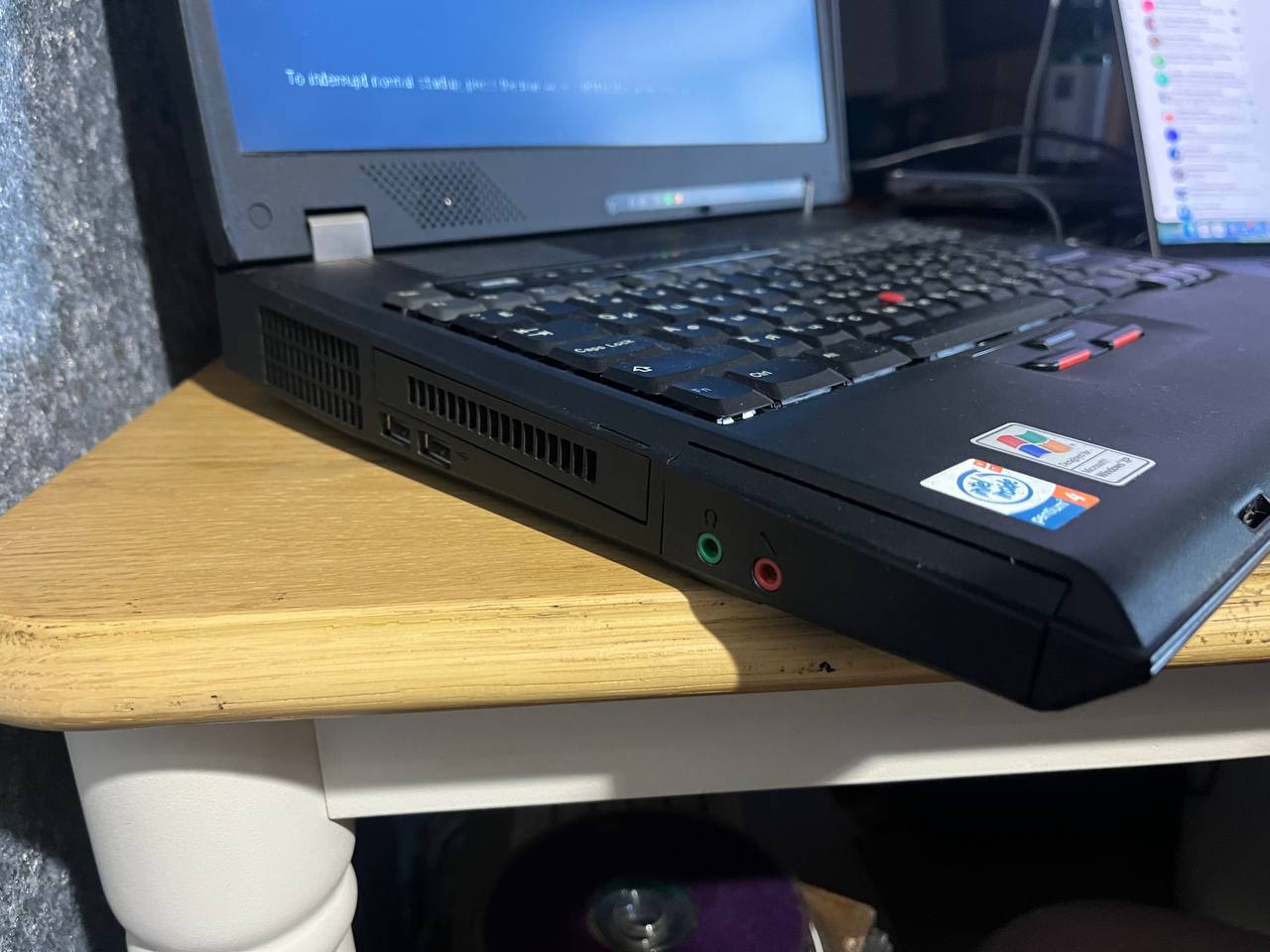
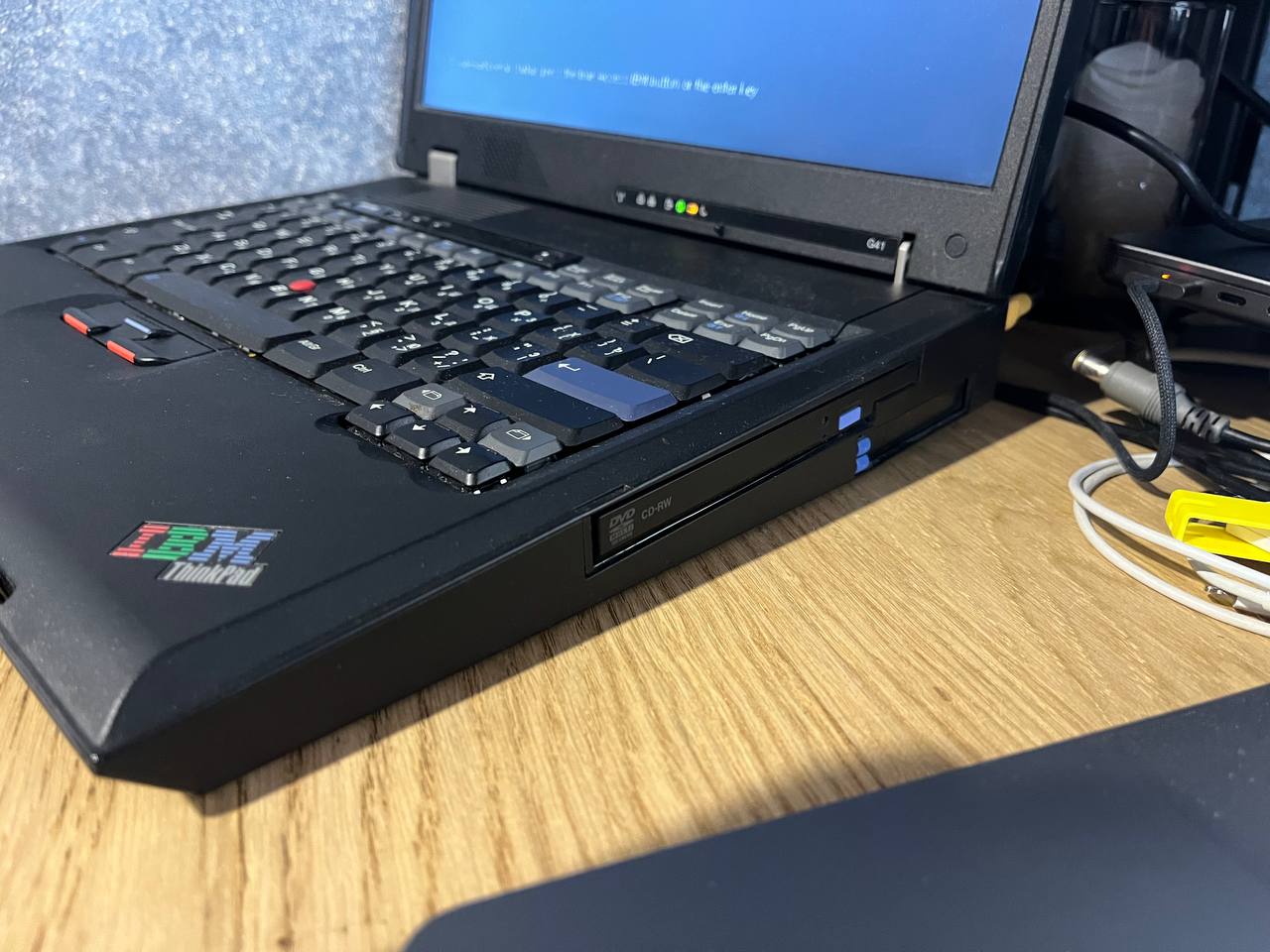
It took a fair bit of fiddling around, remembering how to configure OS/2, and here it is – the machine is ready! You recently saw the ThinkPad G41, and this is its predecessor, the G40, and it has a 3.5" floppy disk drive! And just like the G41, it has an autonomous heater. The Pentium 4 system, but from the previous generation – Northwood, is a pure desktop processor, not something in between. It has 2400 MHz, maximum 3000, without Hyper-Threading. The bus is 400 MHz. The chipset is an intermediate Intel 852GM. Integrated video, a 15" XGA screen – all pretty standard for inexpensive desktop notebooks. The only unusual thing is that it's an IBM ThinkPad...
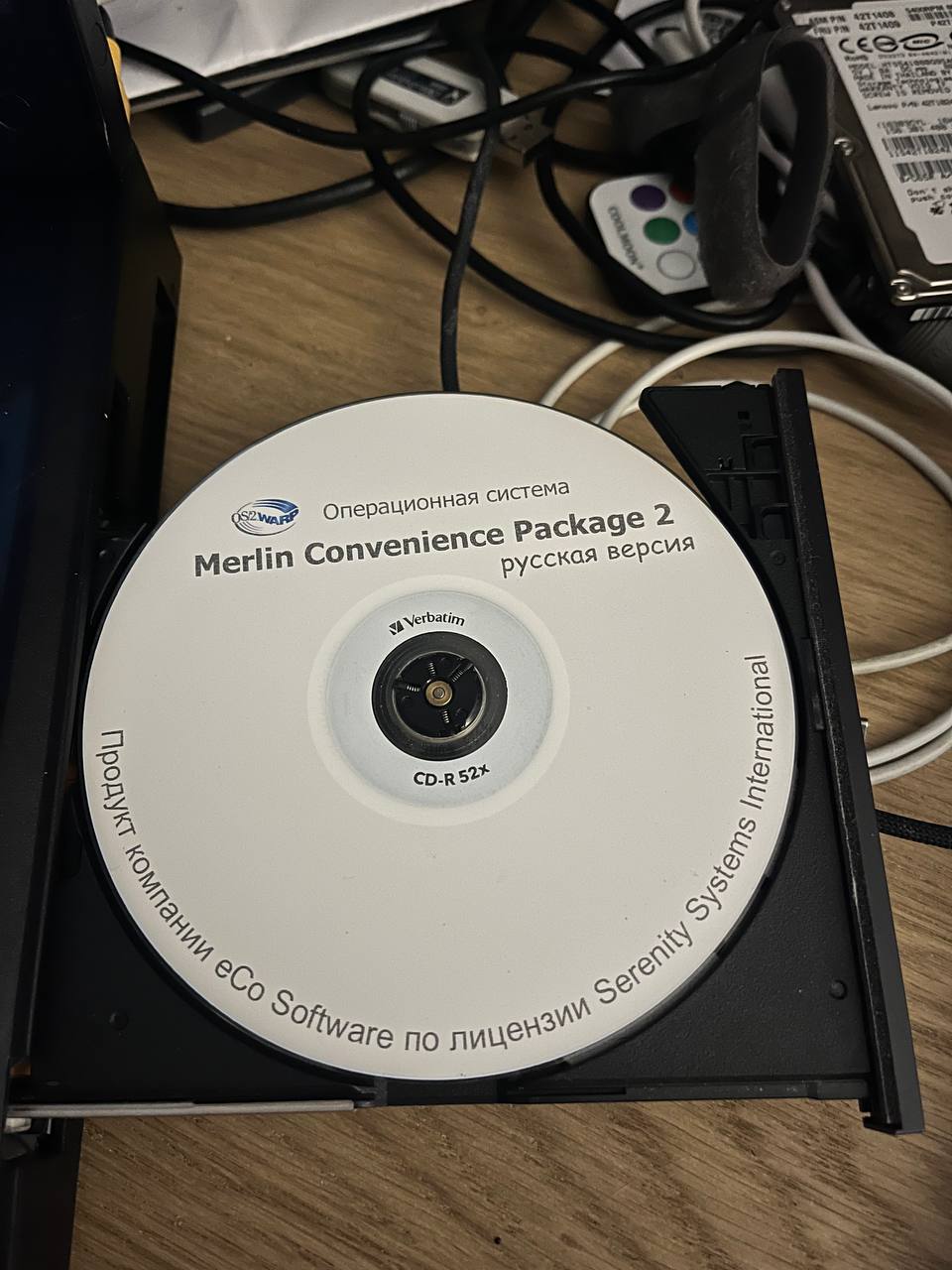
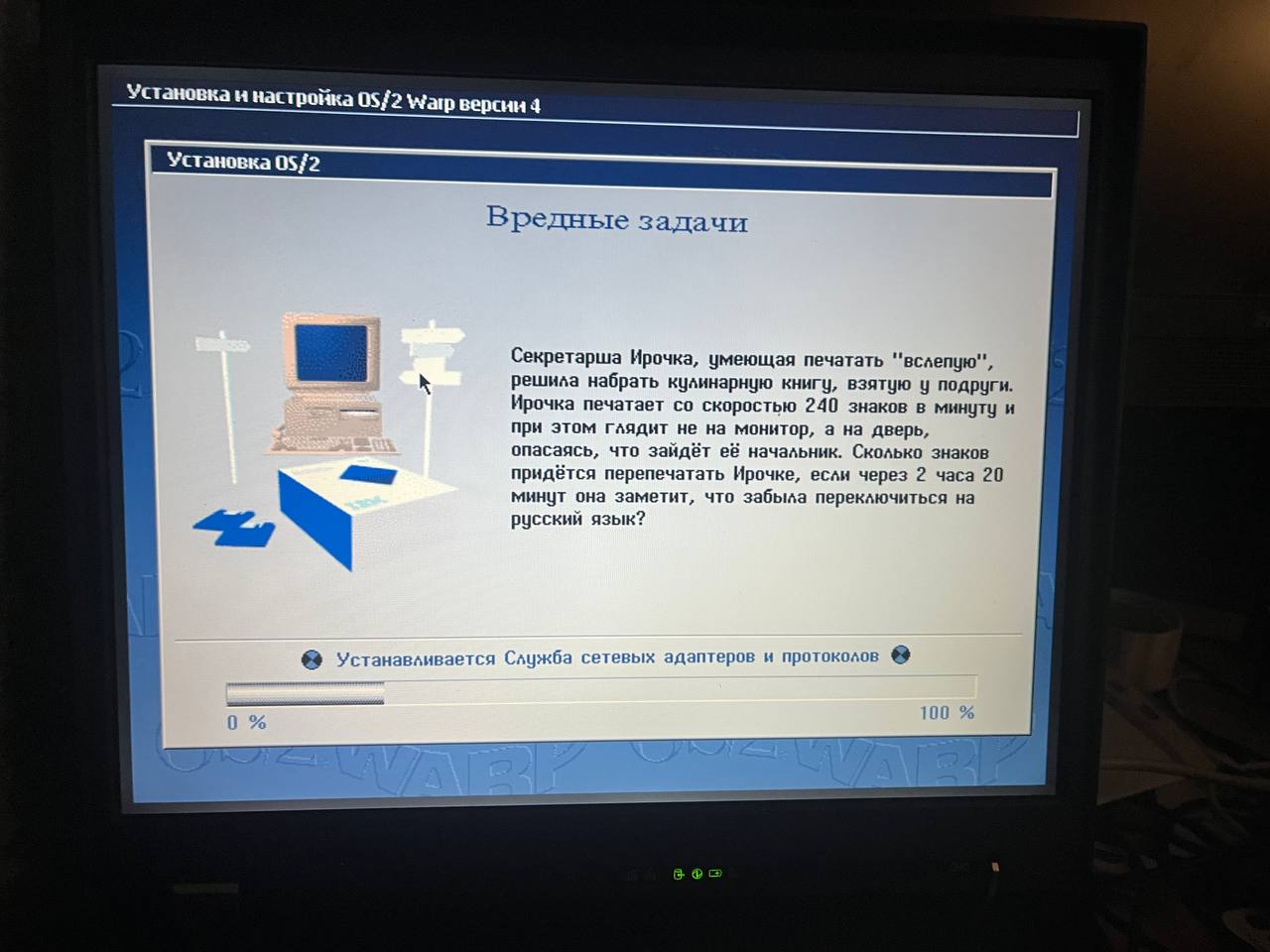
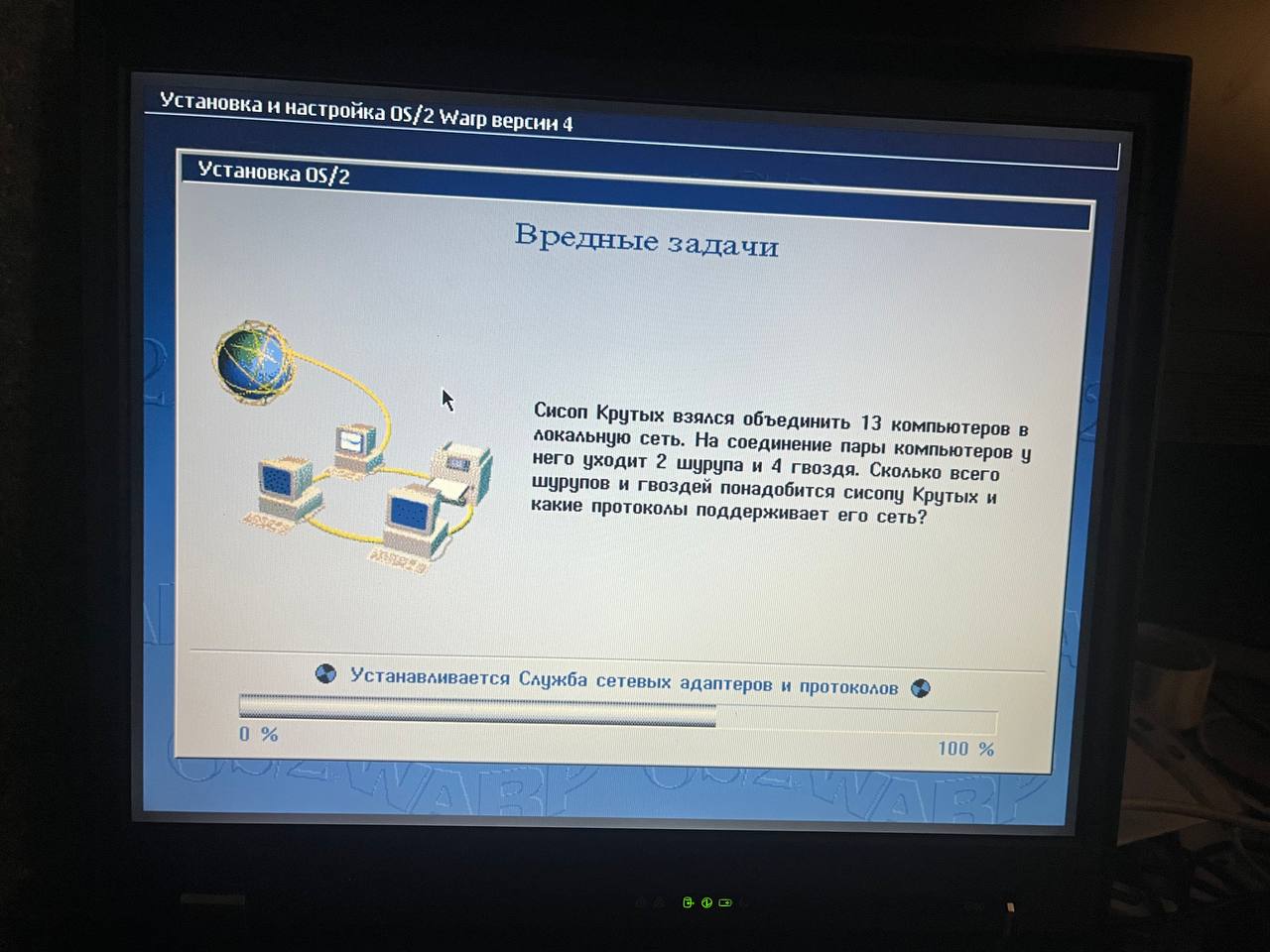
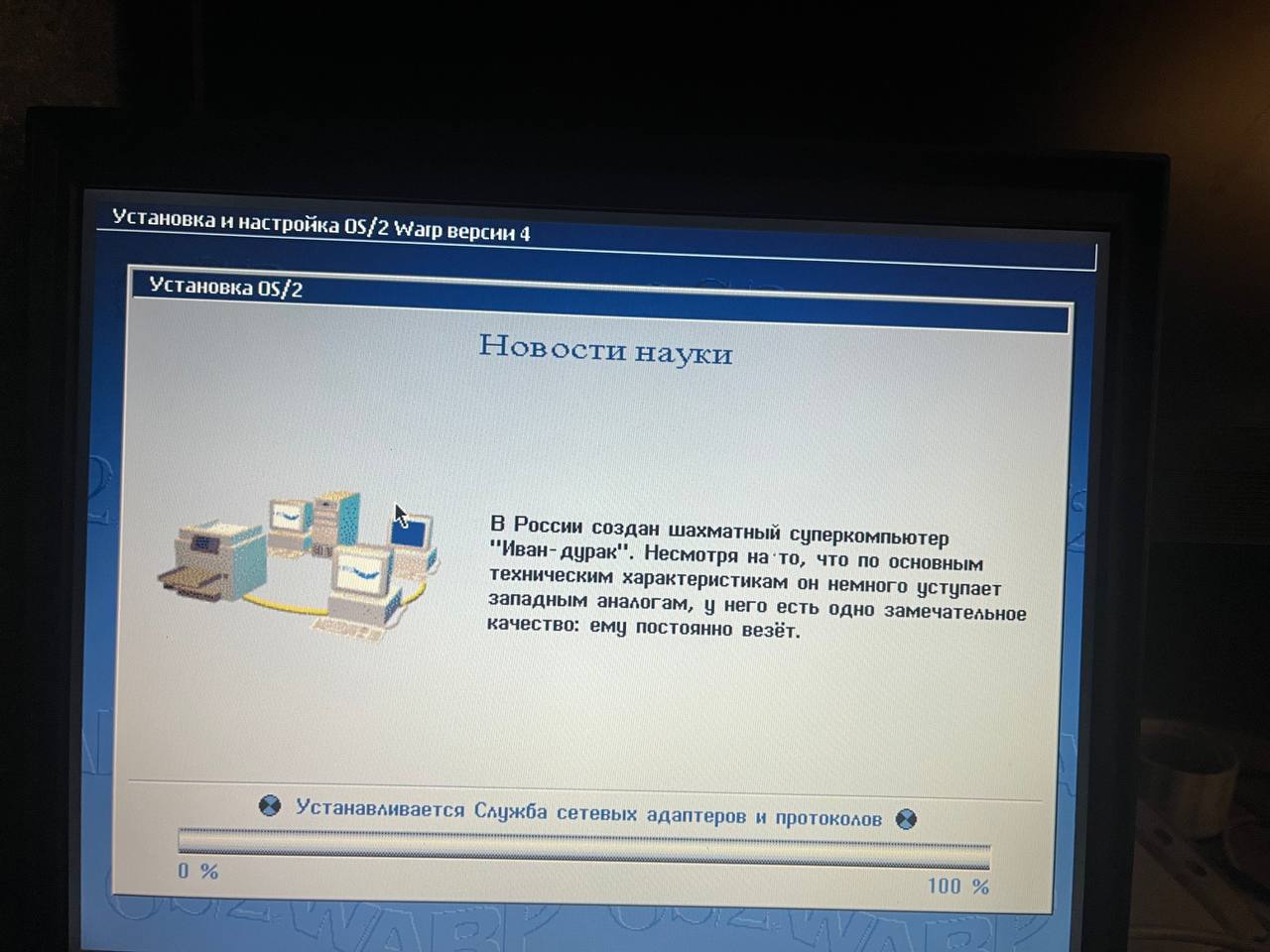
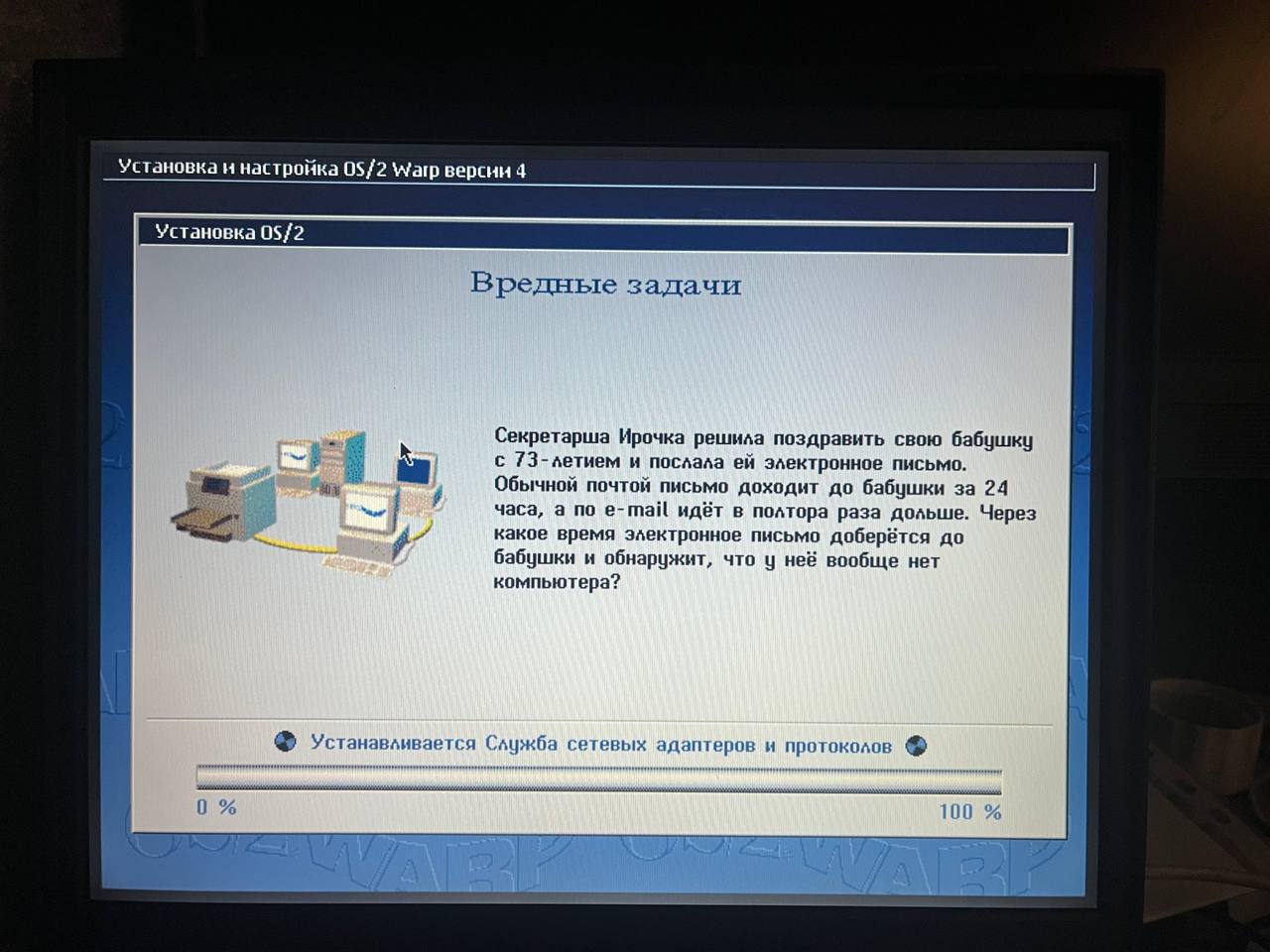
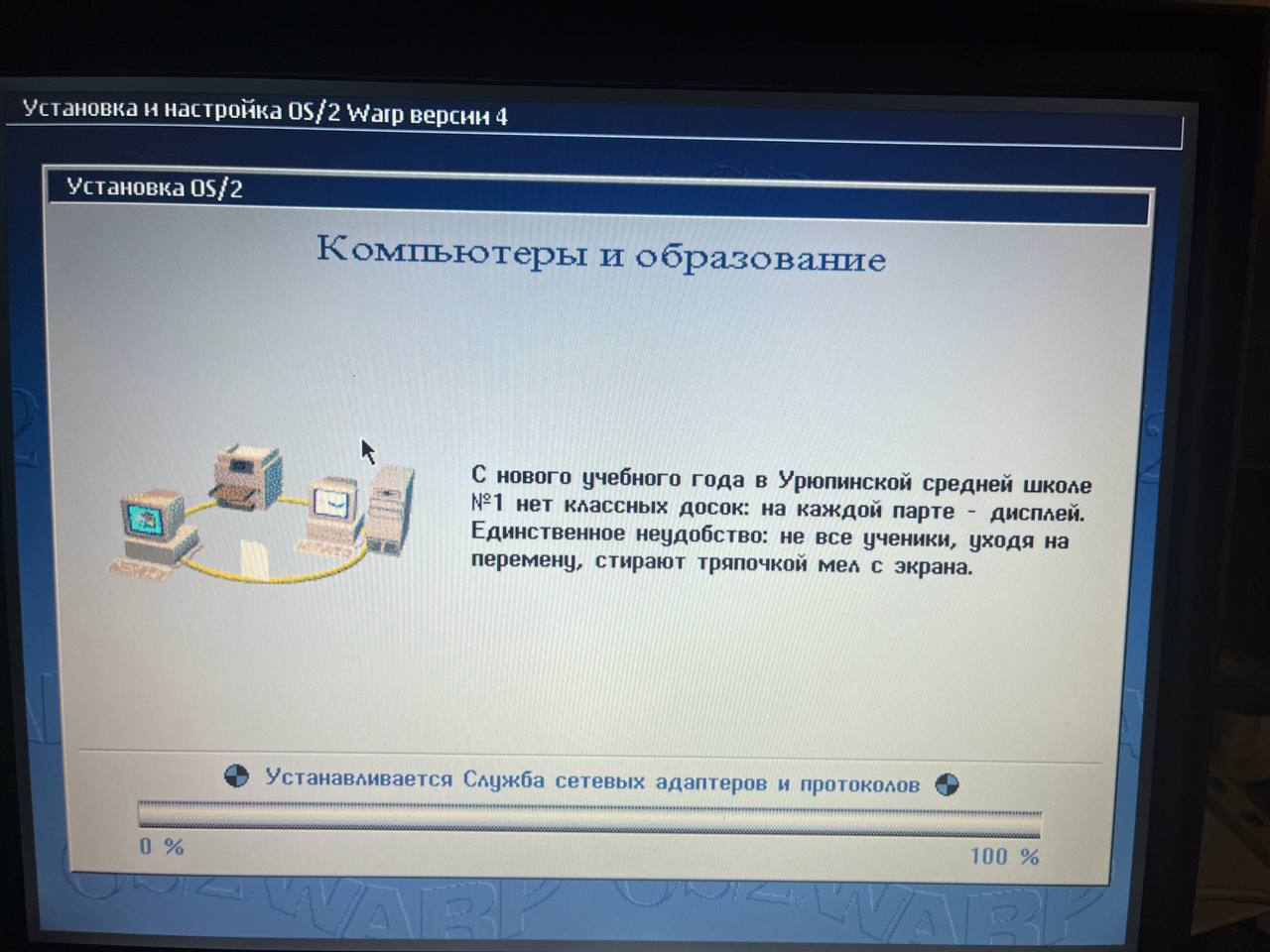
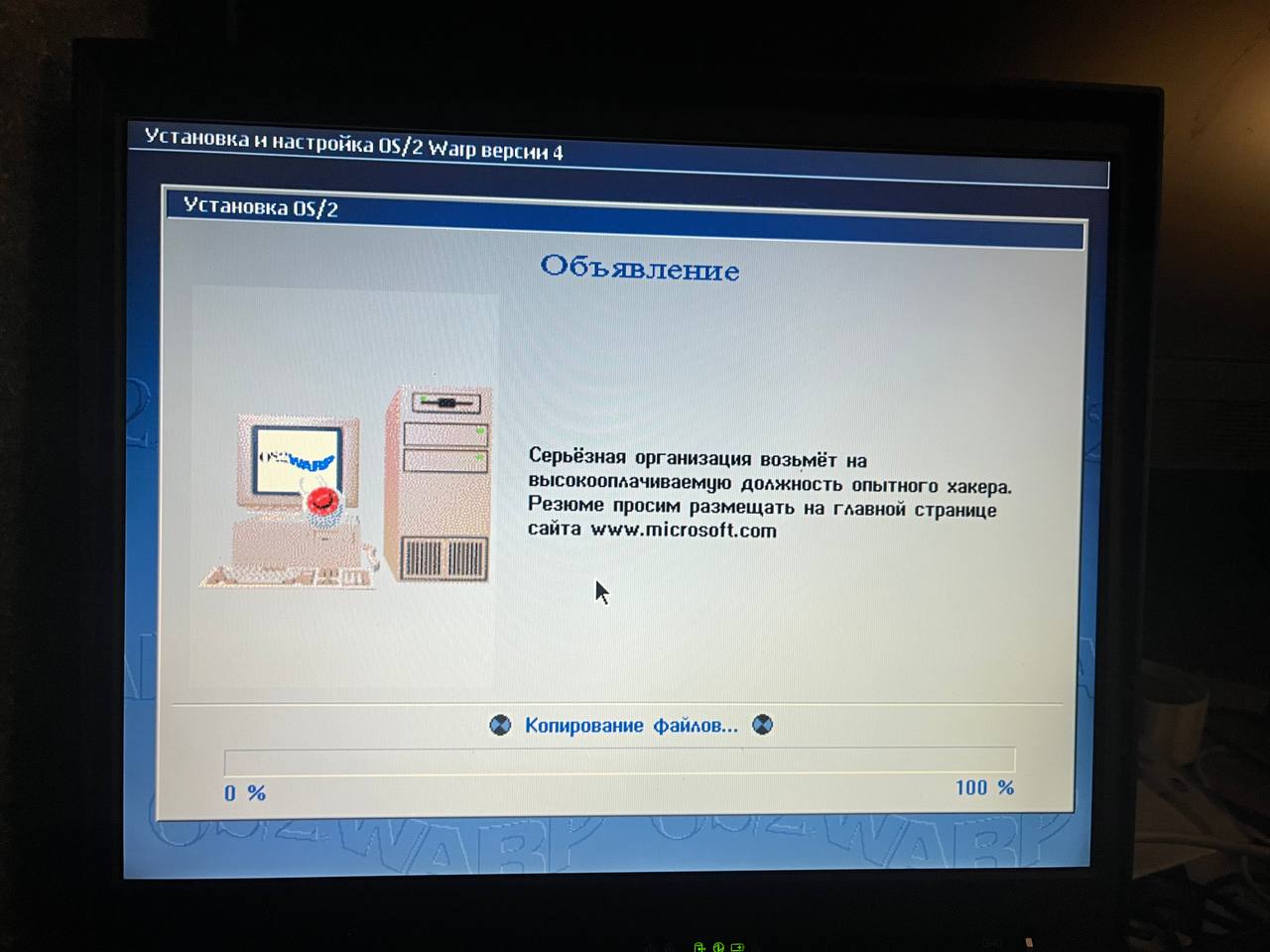
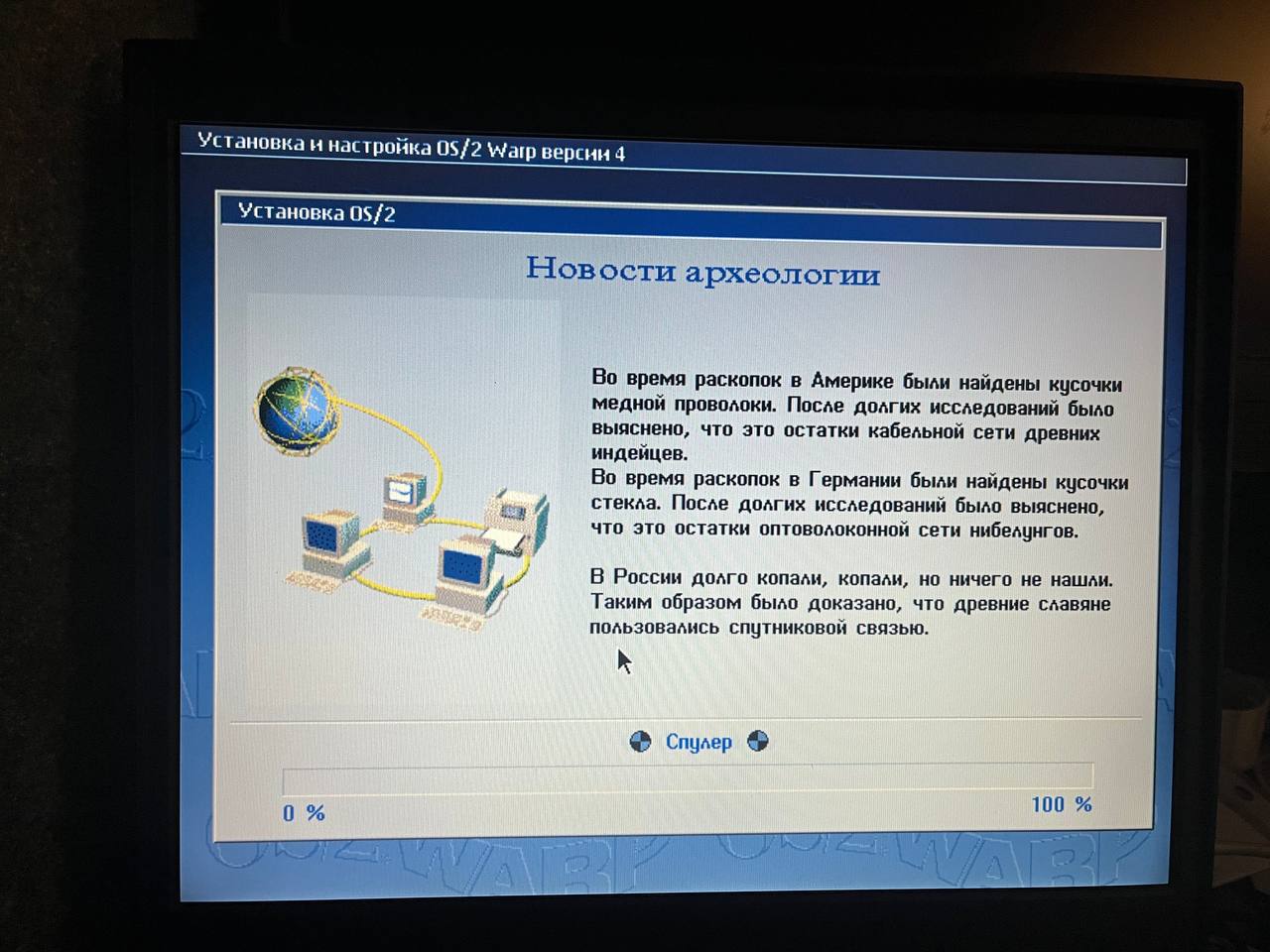
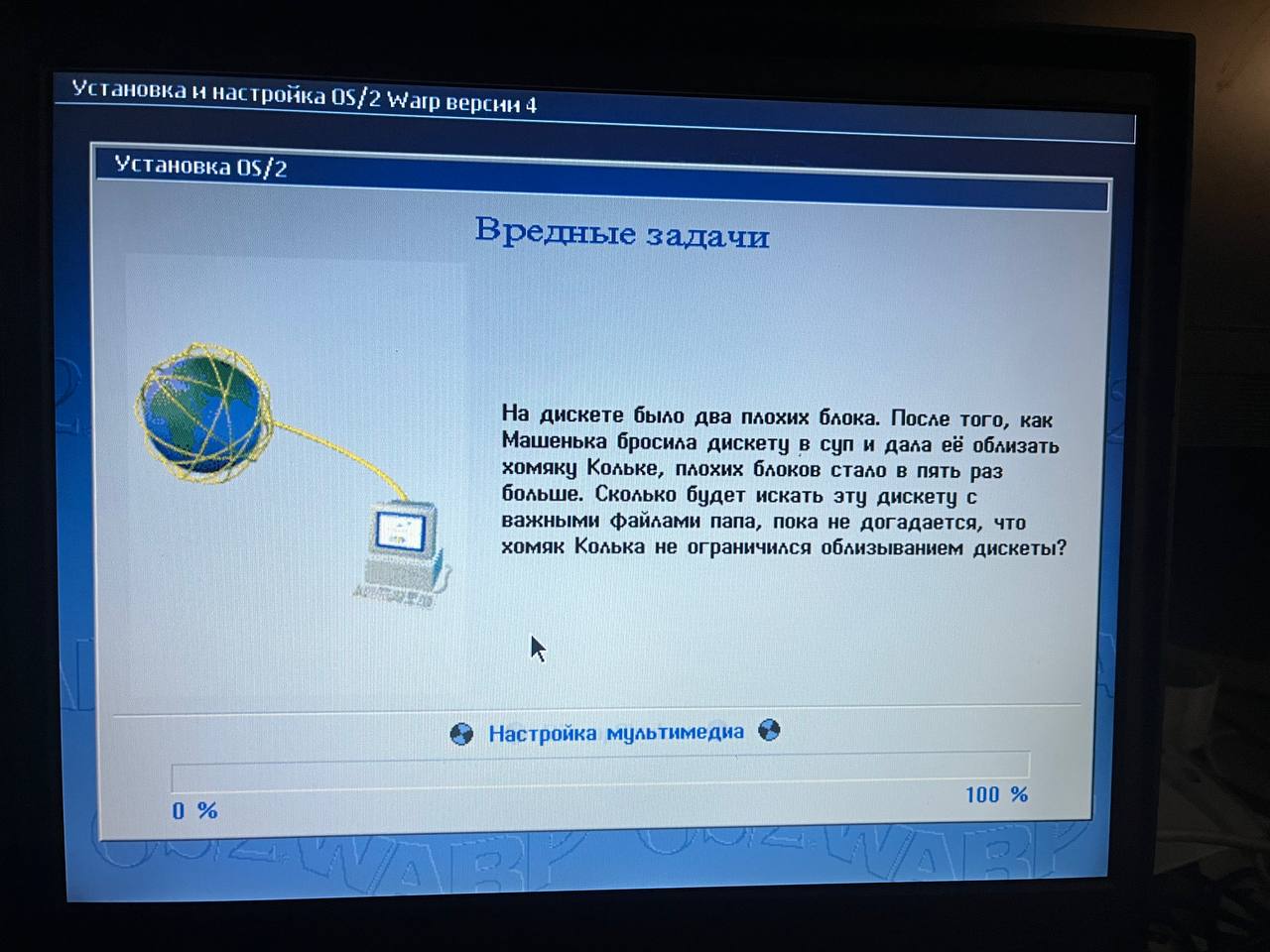
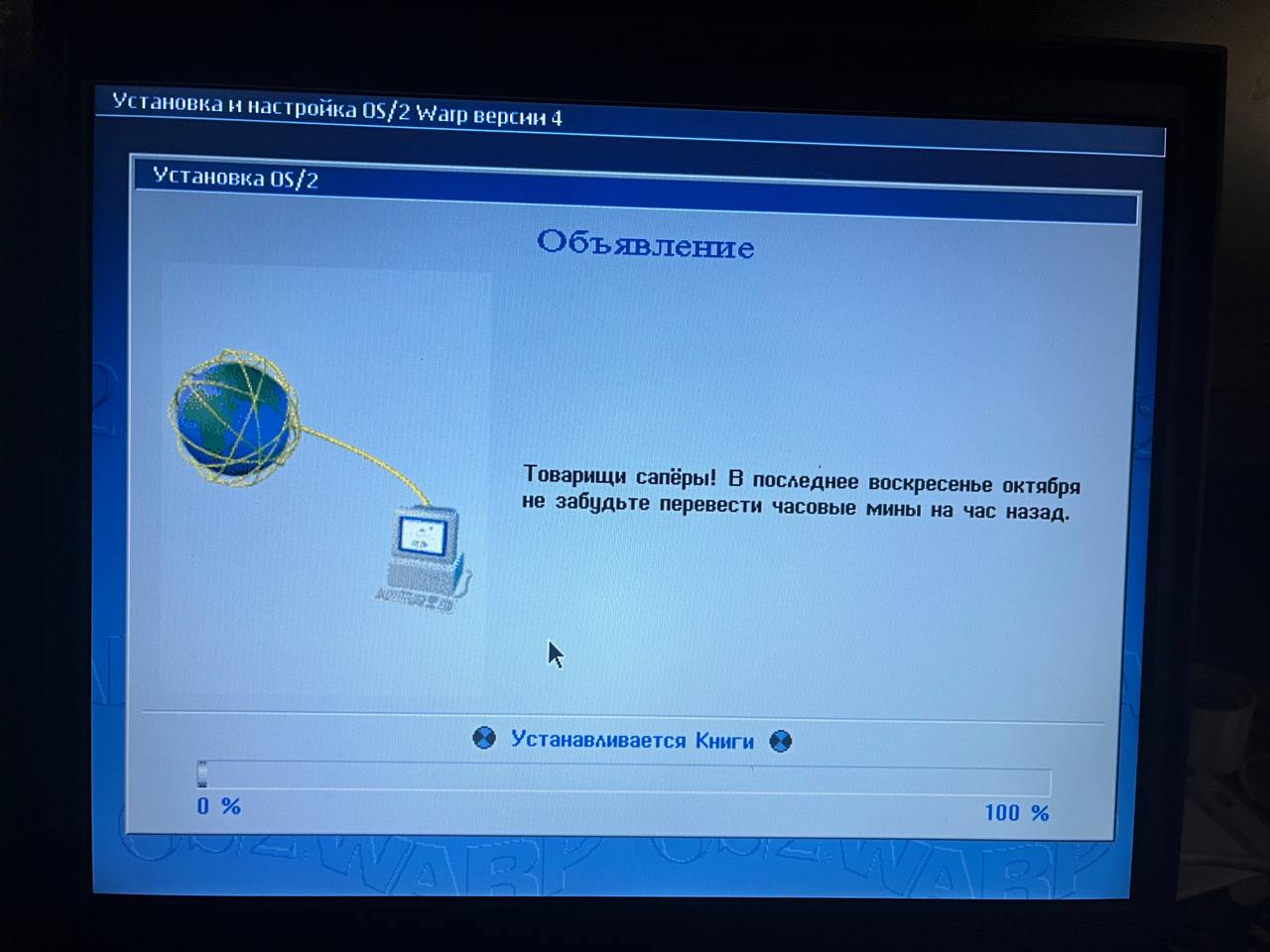
The OS/2! Funnyest OS in the world! Some russian jokes on official CD disk "IBM OS/2 Warp MCP2 RUS" by IBM, Serenity Systems and eCo Software - circa 2002.
By the way, friends—digitalvintage.ru is officially live and in prod! Registration is working, and you can explore our articles, the blog (with a complete mirror of all past posts), and the catalog! It is already filled with photos, courtesy of our faithful TechnoDragon. And yes, you can like and comment on everything!!! Come on in! Or, if you prefer, just hook up to our RSS feed!
Don't worry, we are staying right here on Telegram, but posts will now be duplicated on the site and on VK: vk.com/digitalvintage_ru
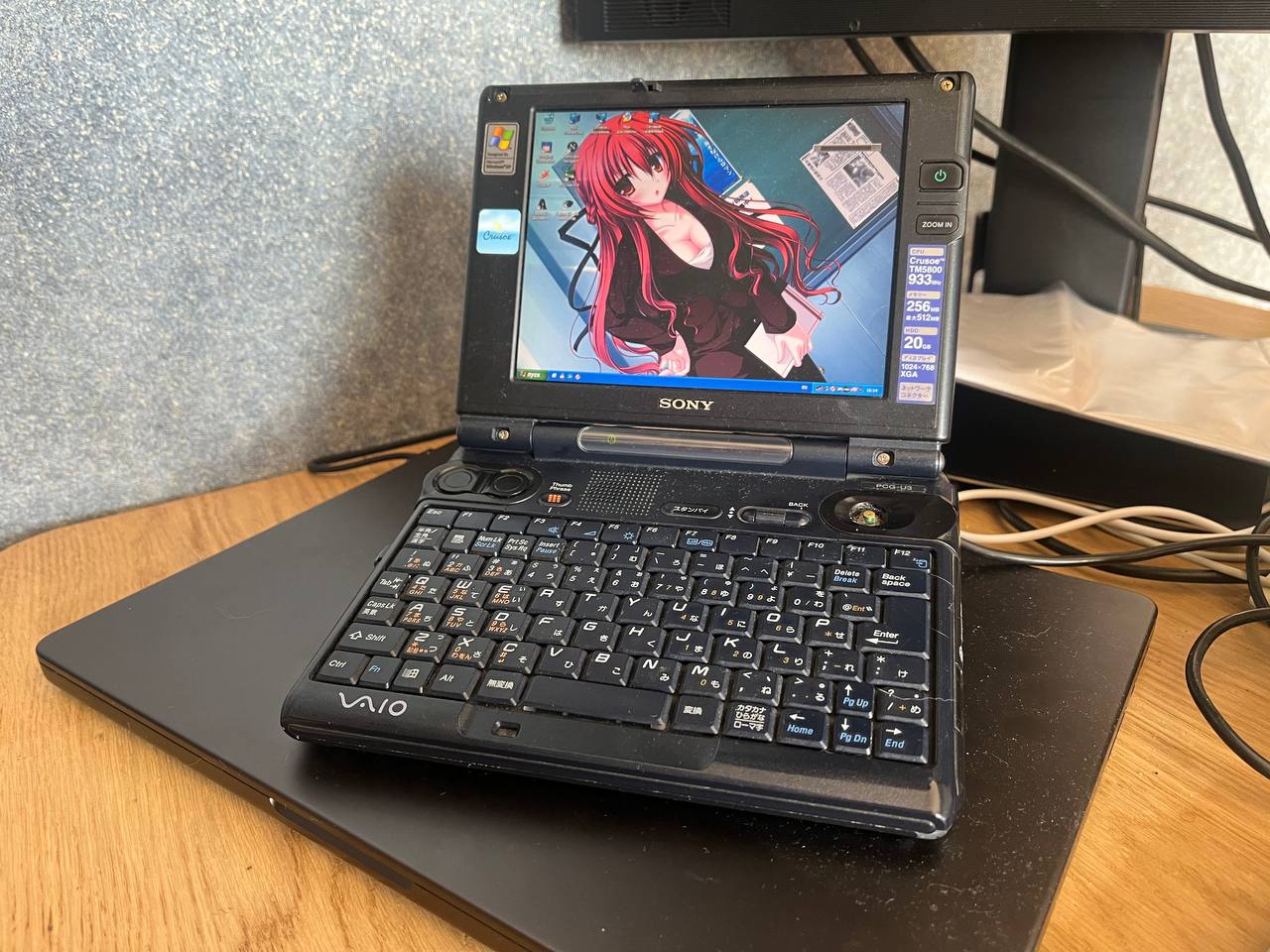
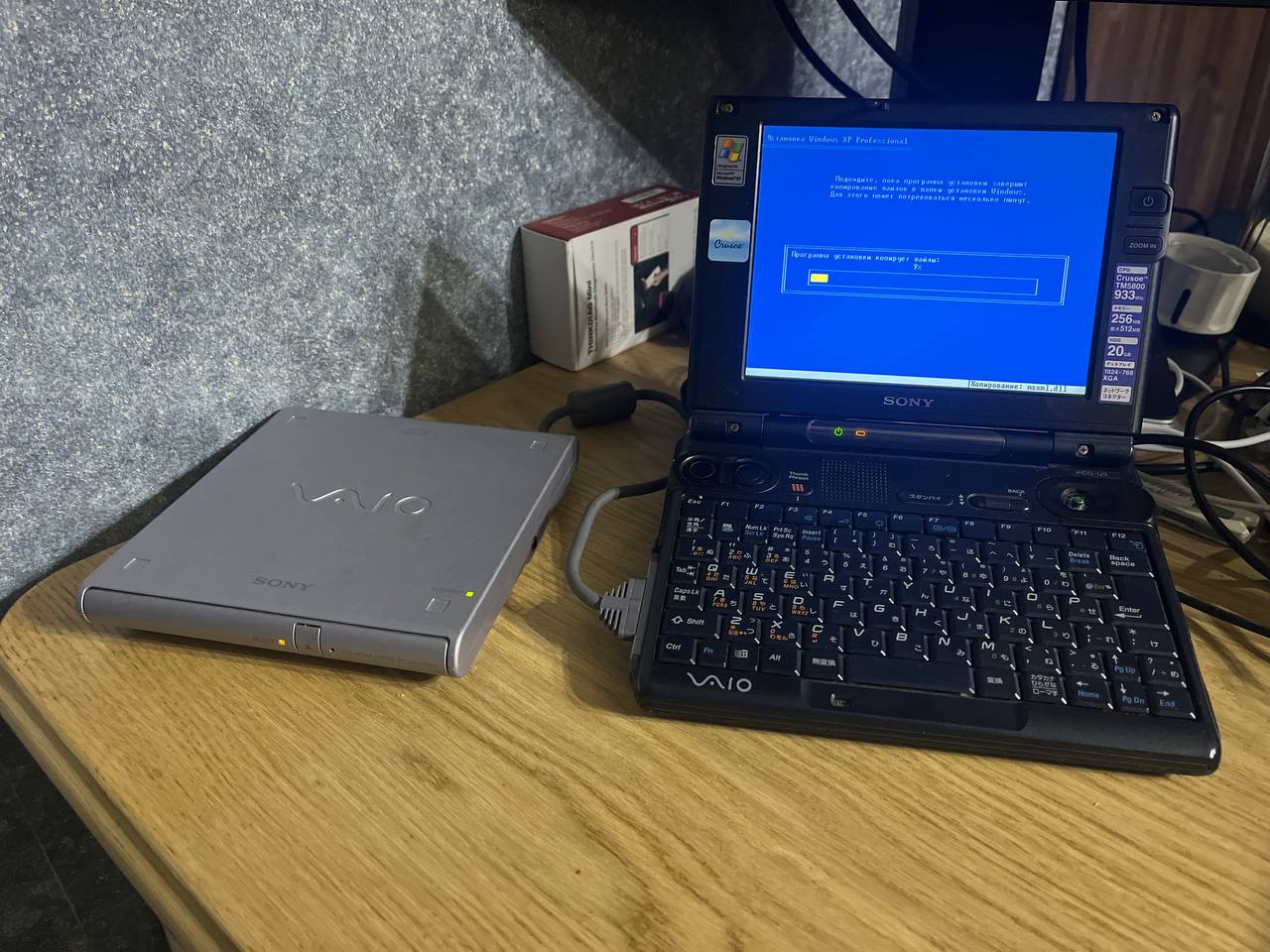
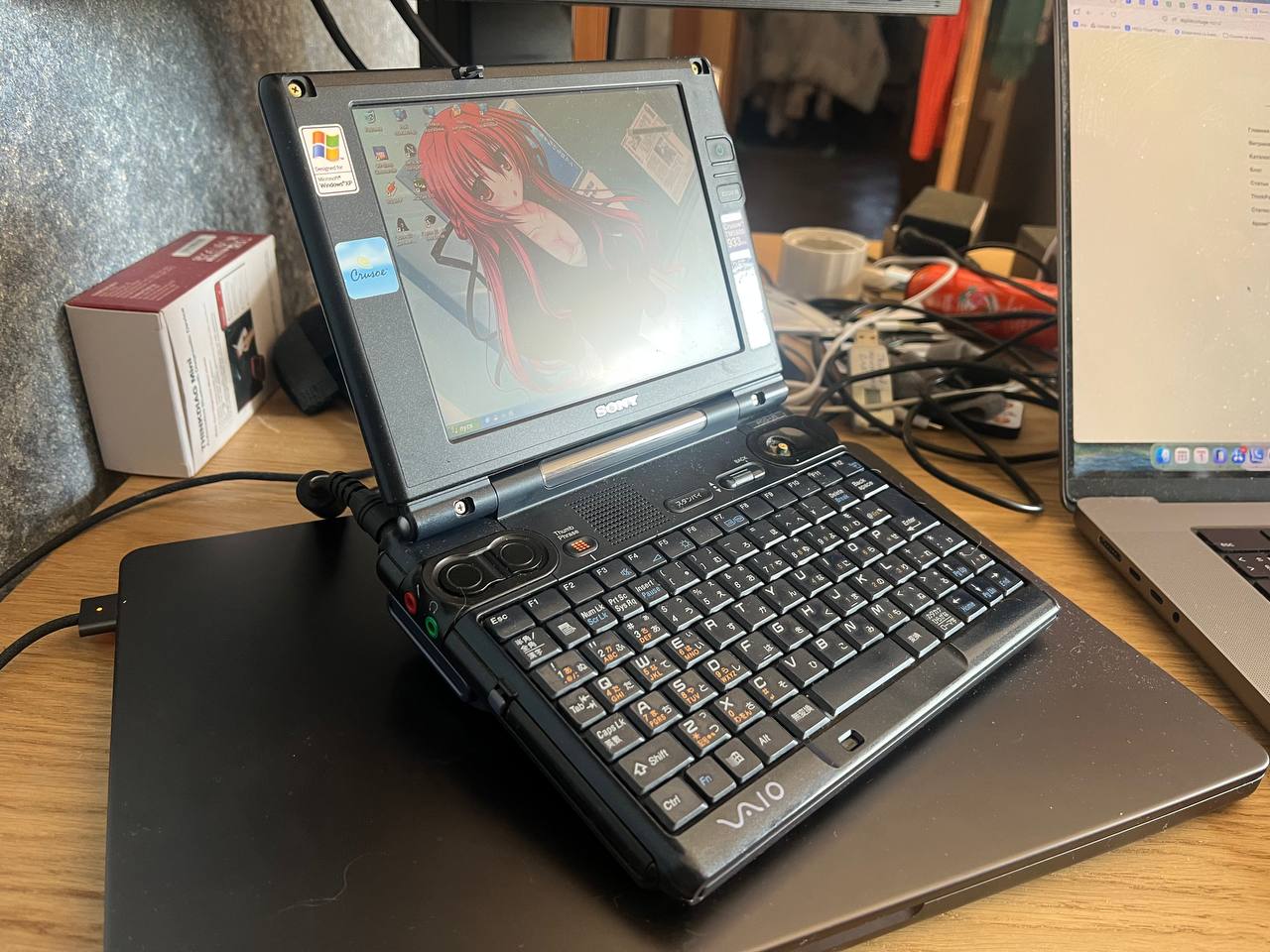
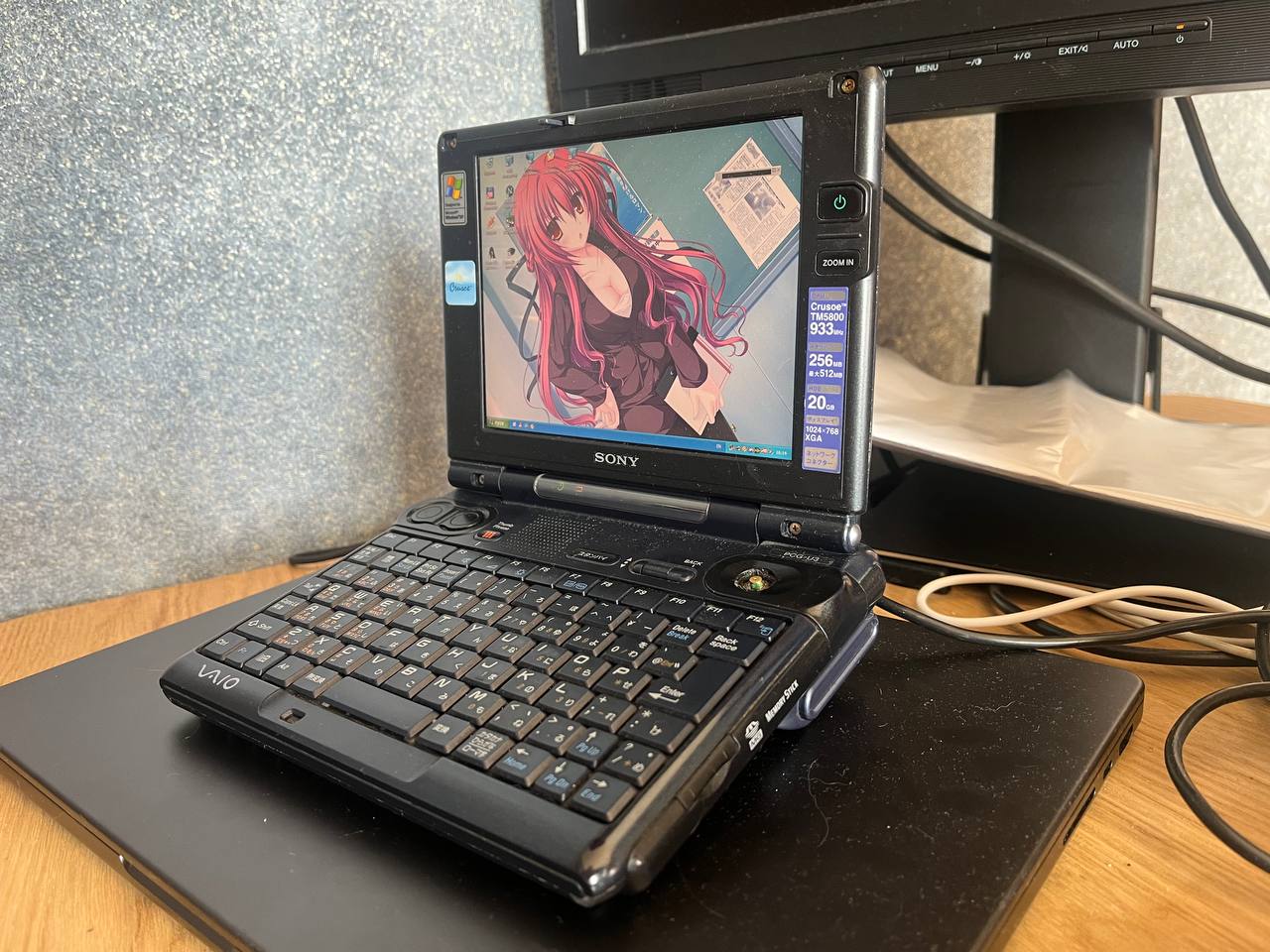
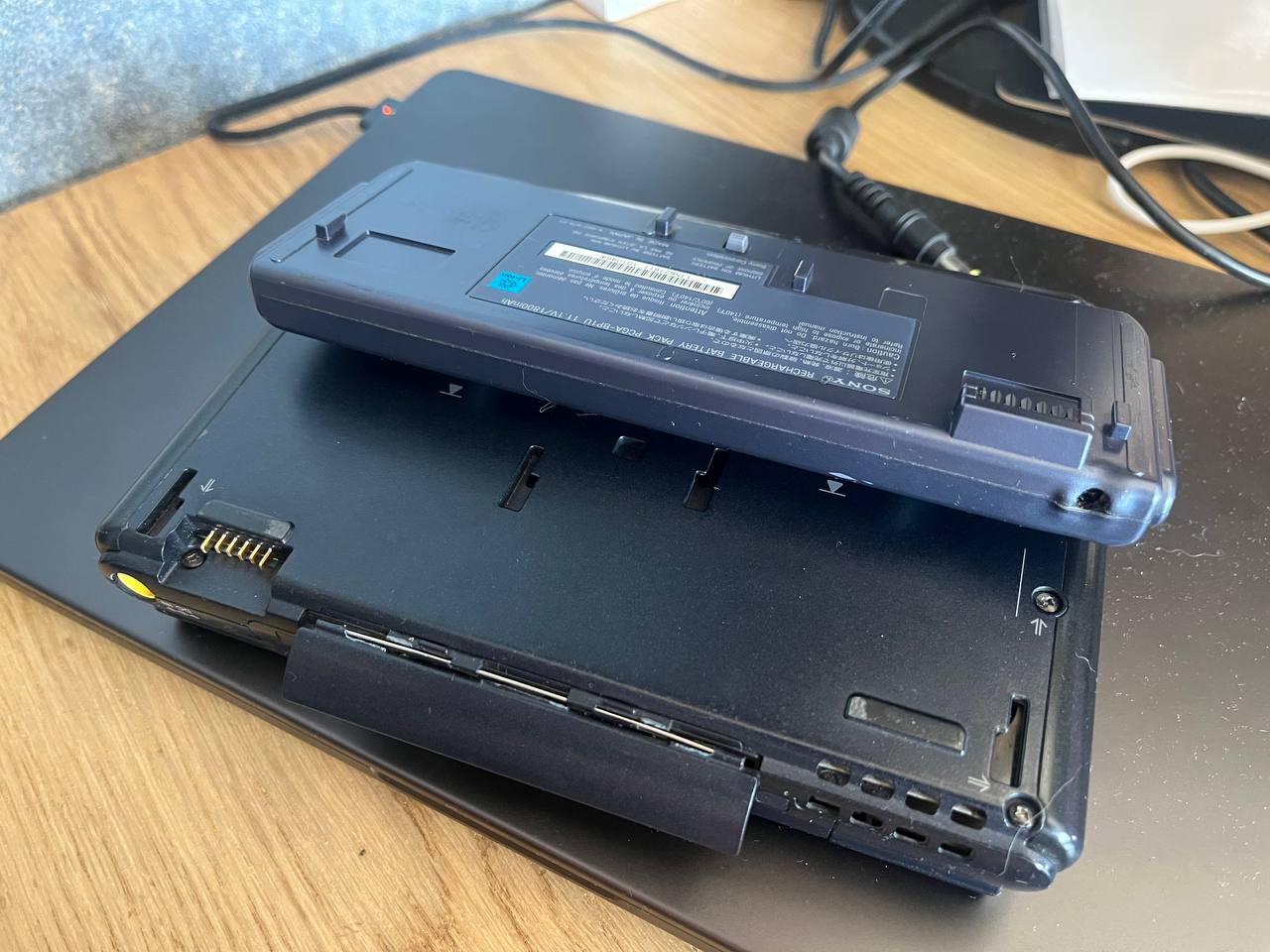
So tiny that they couldn’t even fit the battery inside! With a mere 6.4-inch screen and weighing just over 800 grams, this is the astonishingly small Sony Vaio PCG-U3—a Japanese exclusive powered by an x86-emulating processor from Transmeta.
At its heart is the top-tier (for its time) 933 MHz Crusoe TM5800. It’s actually a VLIW chip—a close relative of Elbrus and Itanium, not your typical Pentiums! While it certainly runs cool, it executes code not optimized for its clever architecture with all the grace of a Celeron. Sometimes, it even feels like that infamous Covington Celeron, unburdened by the 'nuisance' of an L2 cache.
The CPU is paired with 256 to 512 MB of RAM (this particular unit has 384 MB), though 24 MB of that is eaten up by the Code Morphing software's translation cache. While the memory and PCI controllers are integrated into the CPU and the southbridge is handled by an ALi chip, the graphics are powered by an ATI Mobility Radeon with 8 MB of VRAM sitting on the PCI bus. Rounding out this leisurely orchestra is a 20 GB 1.8-inch hard drive. And boy, is it sloooow.
But honestly, cramming all of this into such a tiny chassis back in 2003 was a massive feat. It’s just a real shame the battery has to live on the outside, noticeably ruining its pocketable dimensions. That said, Windows XP runs surprisingly briskly and feels quite pleasant to use. It boots up Heroes of Might and Magic, handles Office—what more could you ask for? It can even play movies and music. All in all, a truly wonderful tech toy!
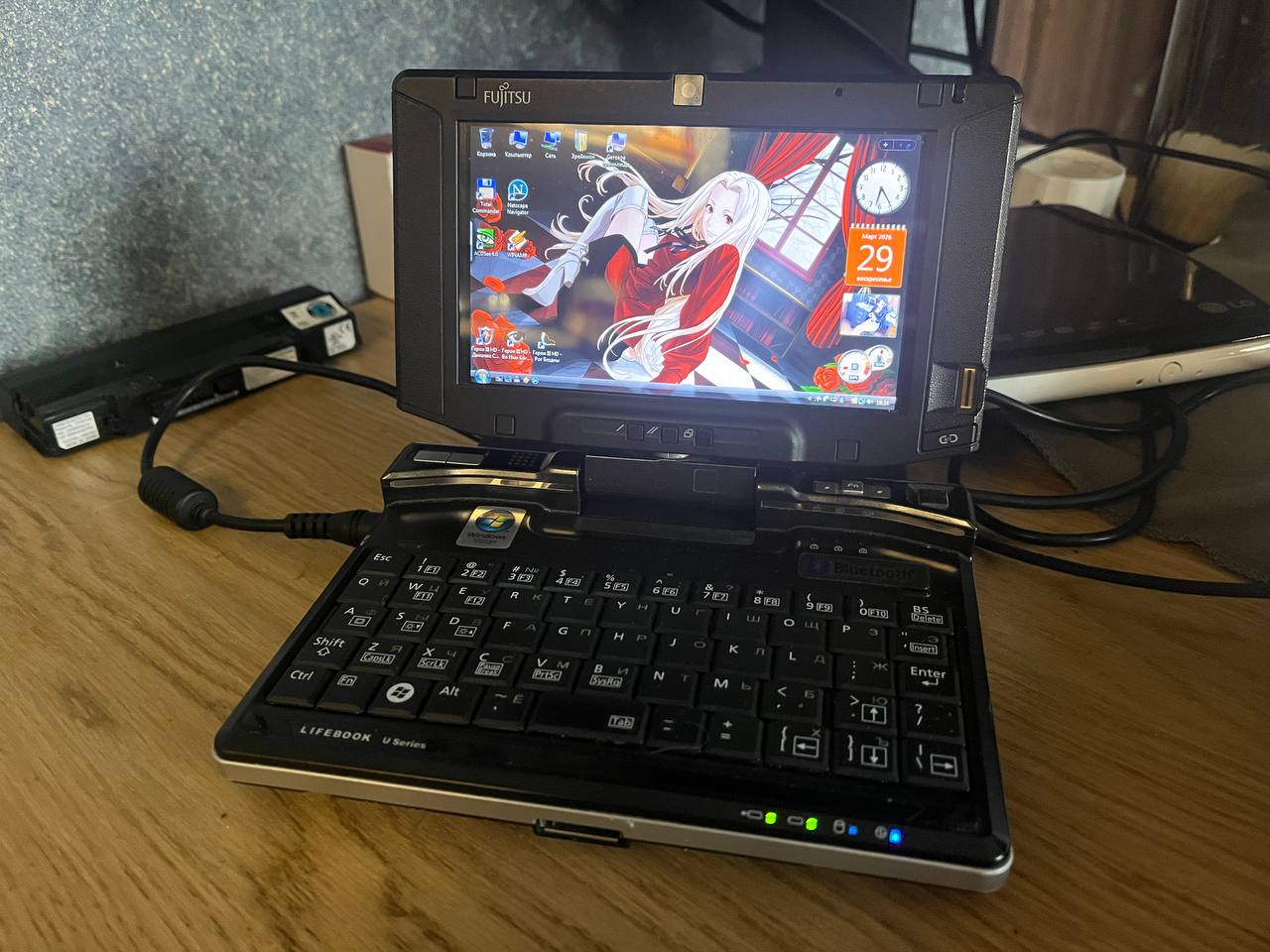
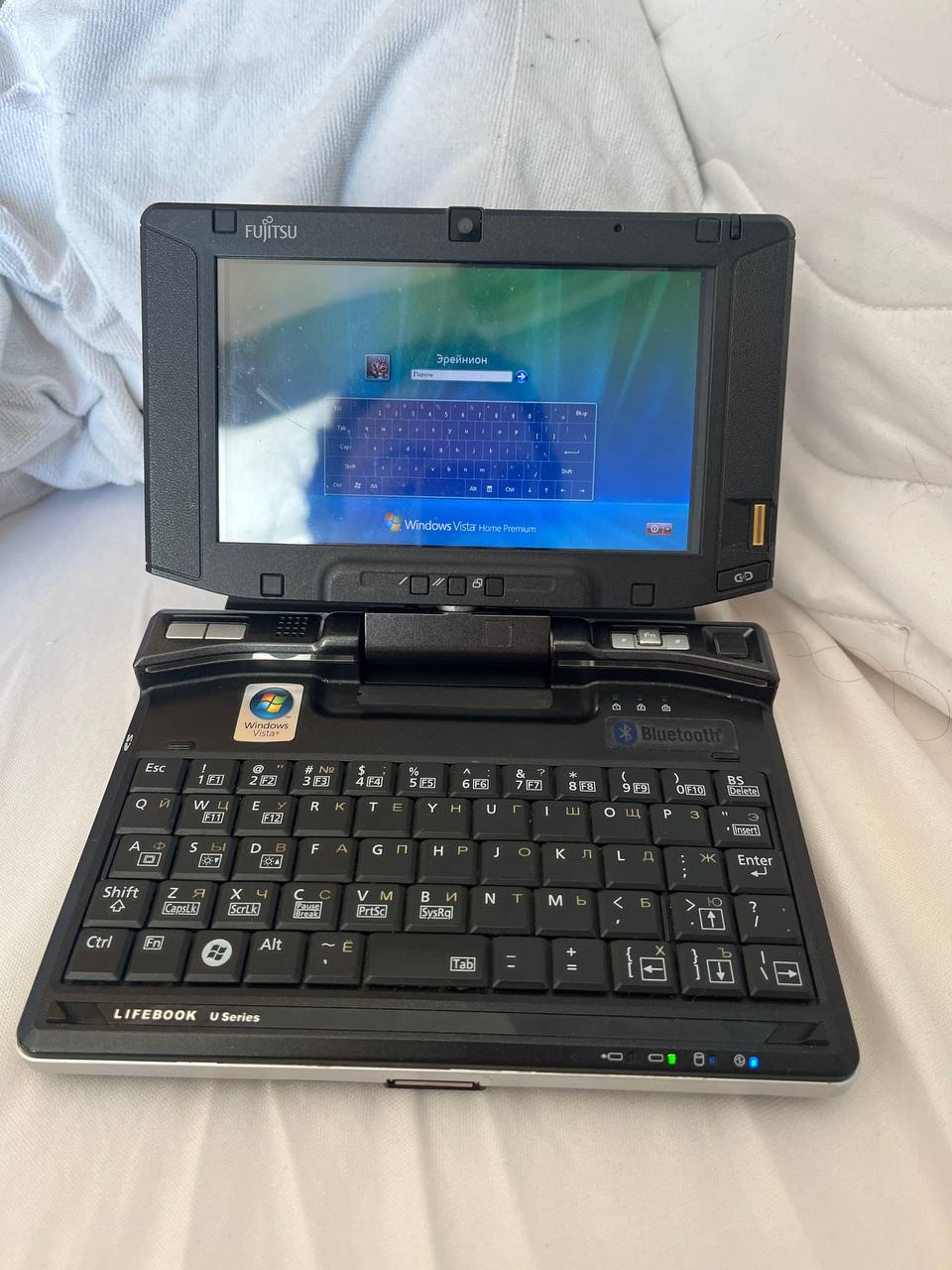
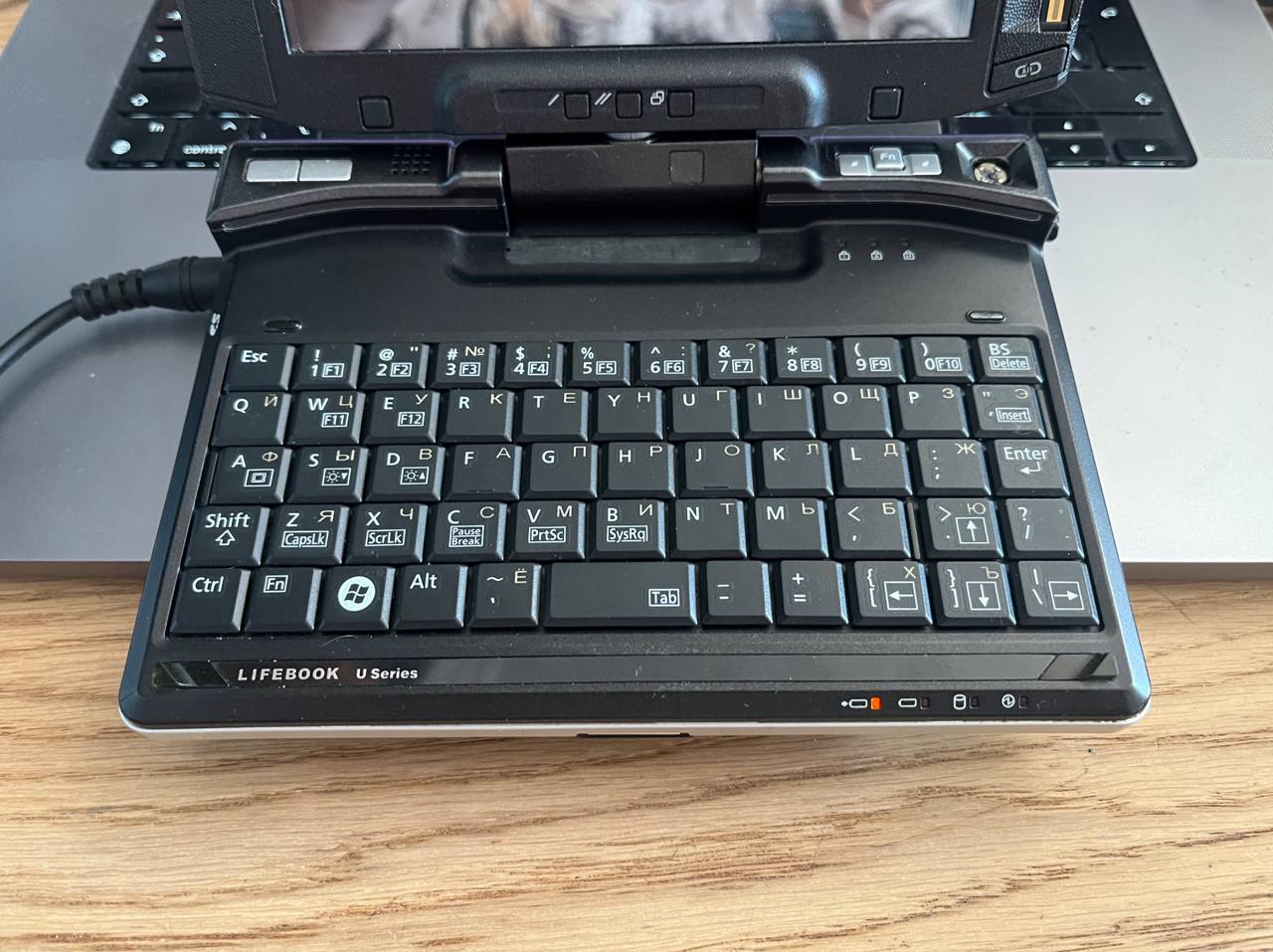
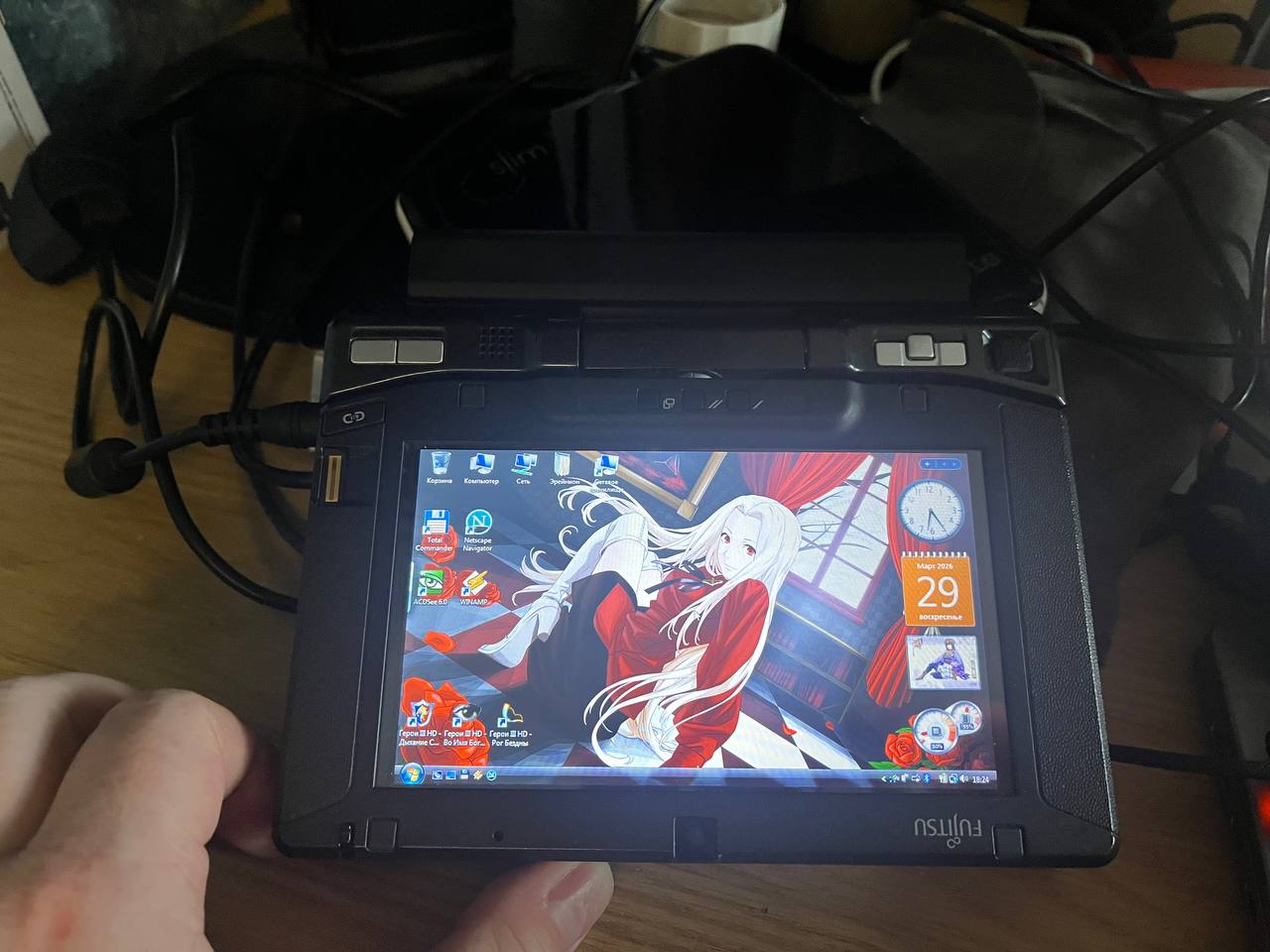
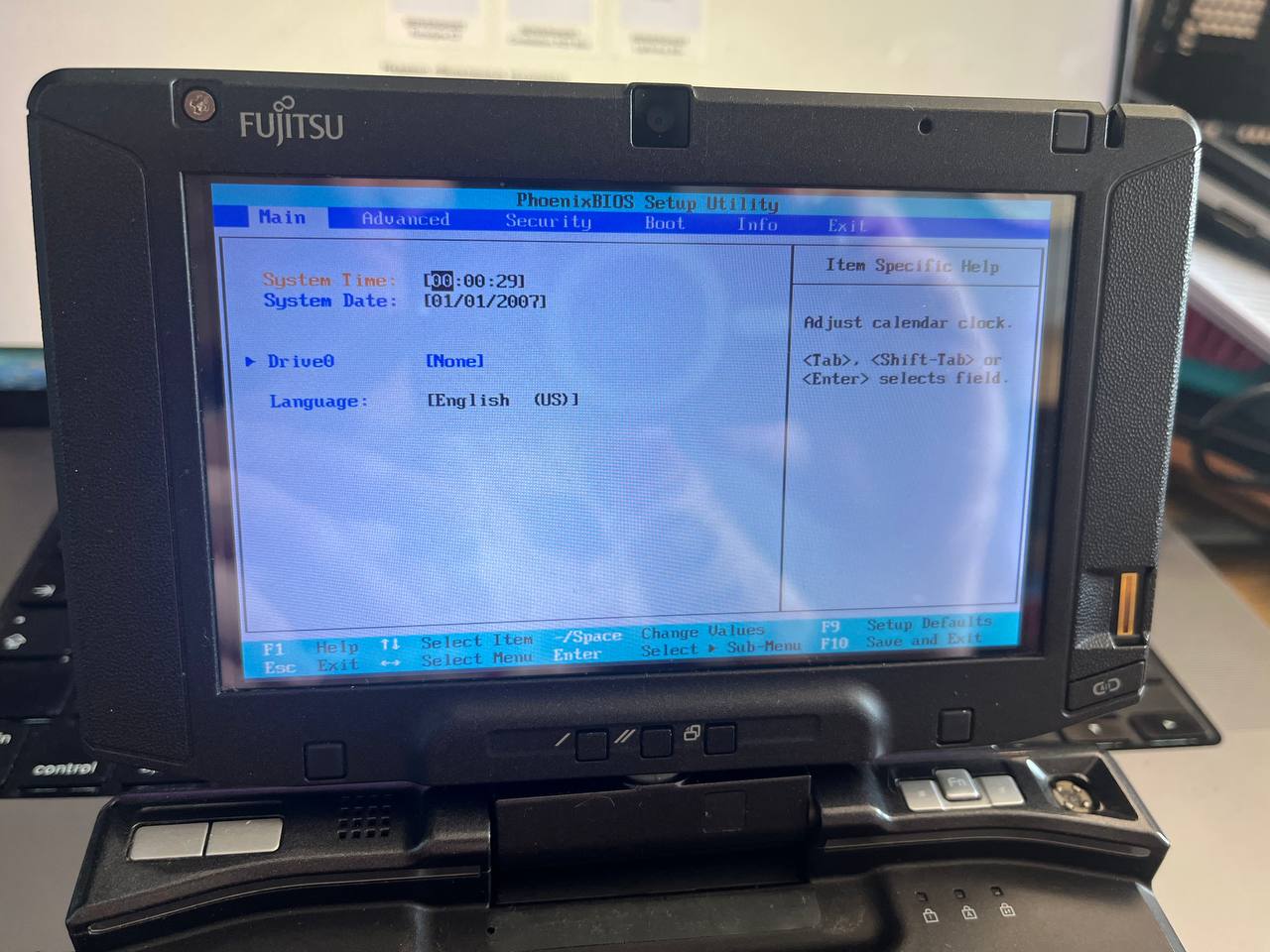
Вы наверно уже соскучились по ретро-девайсам. Вот вам интересный! Это не ThinkPad (хотя по очереди должен быть подарок одного из подписчиков, но я не успел его довести до ума). Это Fujitsu Lifebook U810 и он у меня уже довольно давно. И это тоже подарок - один из давних друзей подарил перед отъездом на репатриацию. Машинка интересная, миниатюрный, буквально мизерный ноут-трансформер. Всего 5.6 дюймов - меньше его кажется только Sony Vaio UX. Они даже почти ровесники - фуджик вышел в 2007 году, в начале бума UMPC. Вес - около 700 грамм. Заточен на работу на весу с хватом двумя или одной рукой. На удивление удобен в работе в планшетном режиме благодаря тому, что трекпойнт и его кнопки остаются доступны. А вот сенсор по сегодняшним меркам ужасен - резистивный и довольно тугой.
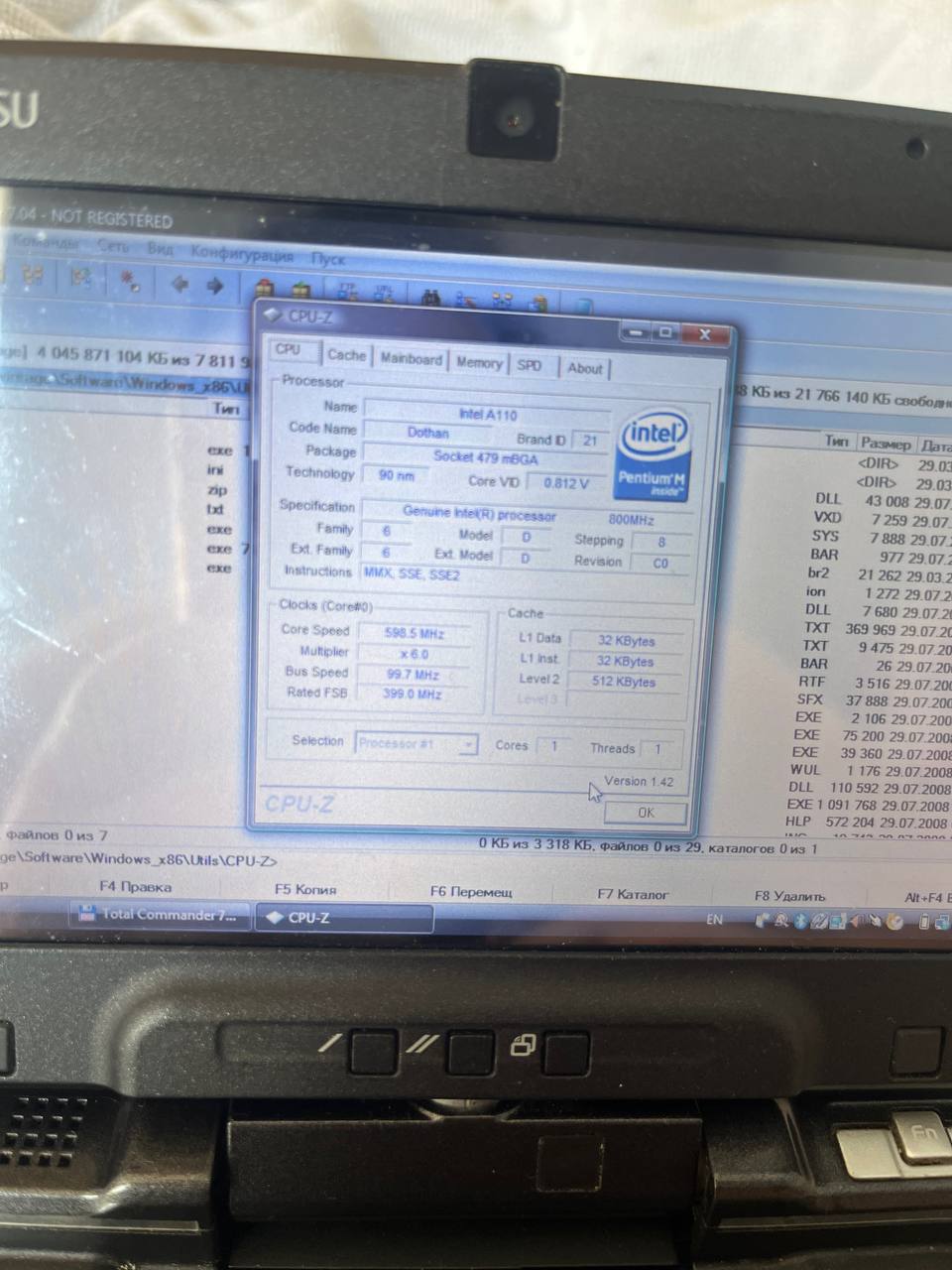
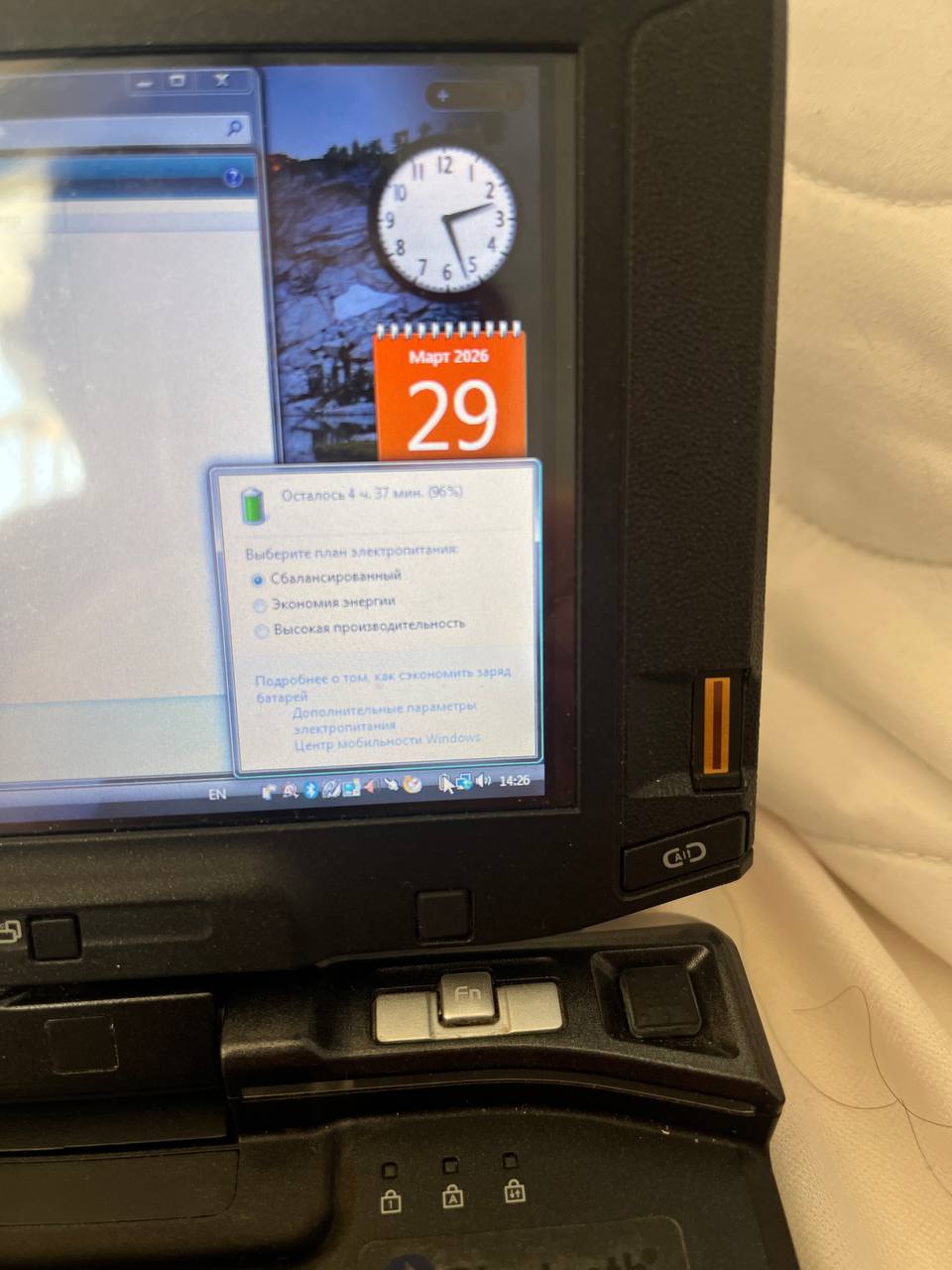
Начинка тоже подстать времени - Intel A110, кусочек Dothan с 512 Кбайт кэша и частотой 800 МГц. 1 гбайт памяти распаян на материнке. Видео - предоставлено чипсетом Intel 945GM. Все по классике. Из удобств - WiFi, Bluetooth и сканер отпечатков пальцев (ранний, довольно дубовый). Но главное - батарейка, которая спустя почти 20 лет держит 4 часа под средней нагрузкой.
Диск с завода стоит на 40 Гбайт, 1.8" ZIF IDE. Медленный, штатная виста запускается довольно долго, но запустившись работает весьма плавно и комфортно. Конечно, по ощущениям это не гоночный болид, а всего лишь прогулочный катер. Но все равно работать приятно. А зимой еще и руки греет :))) Если поставить Windows XP - машина тут же оживает и становится вполне адекватной для многозадачной работы.
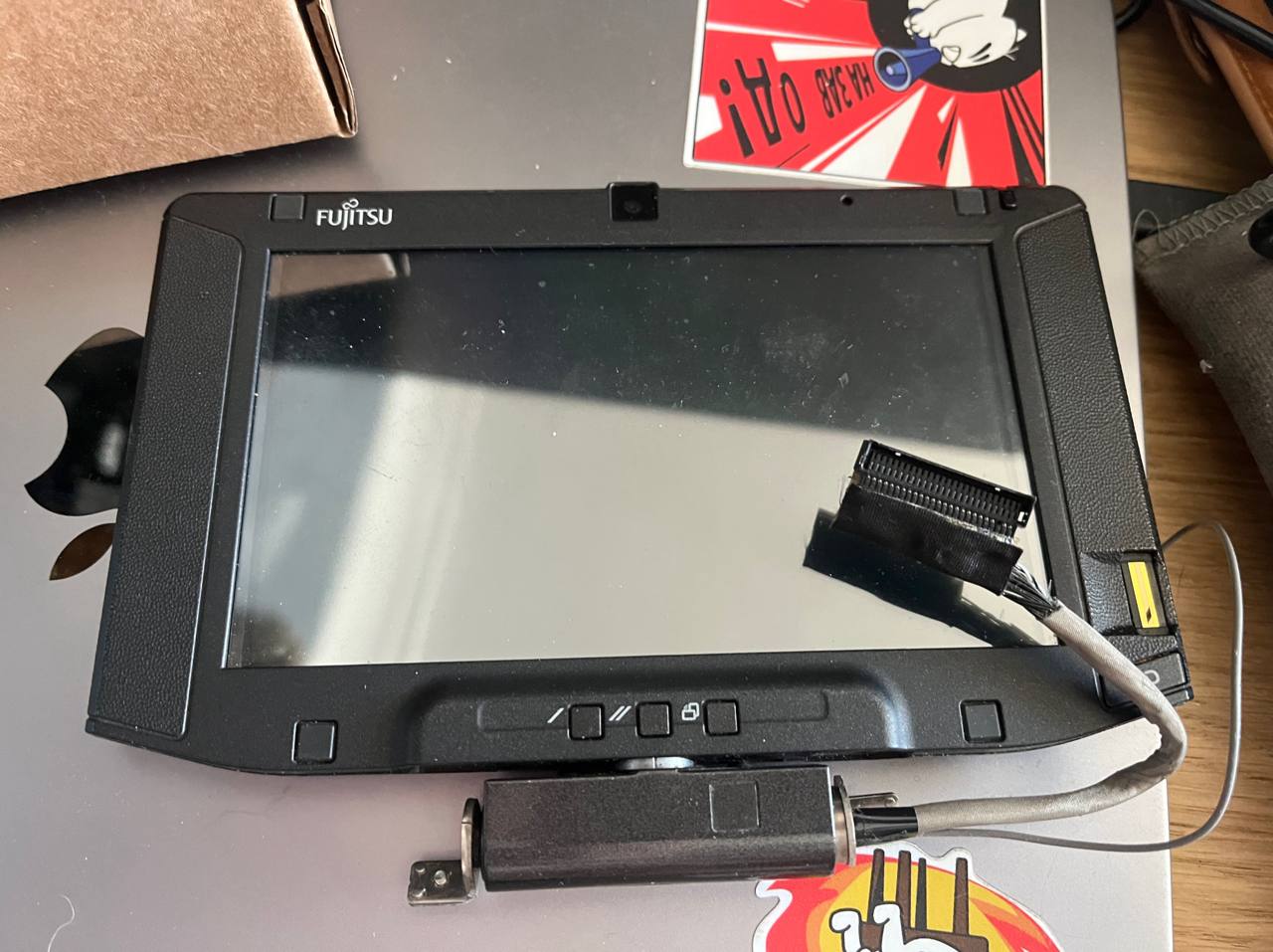
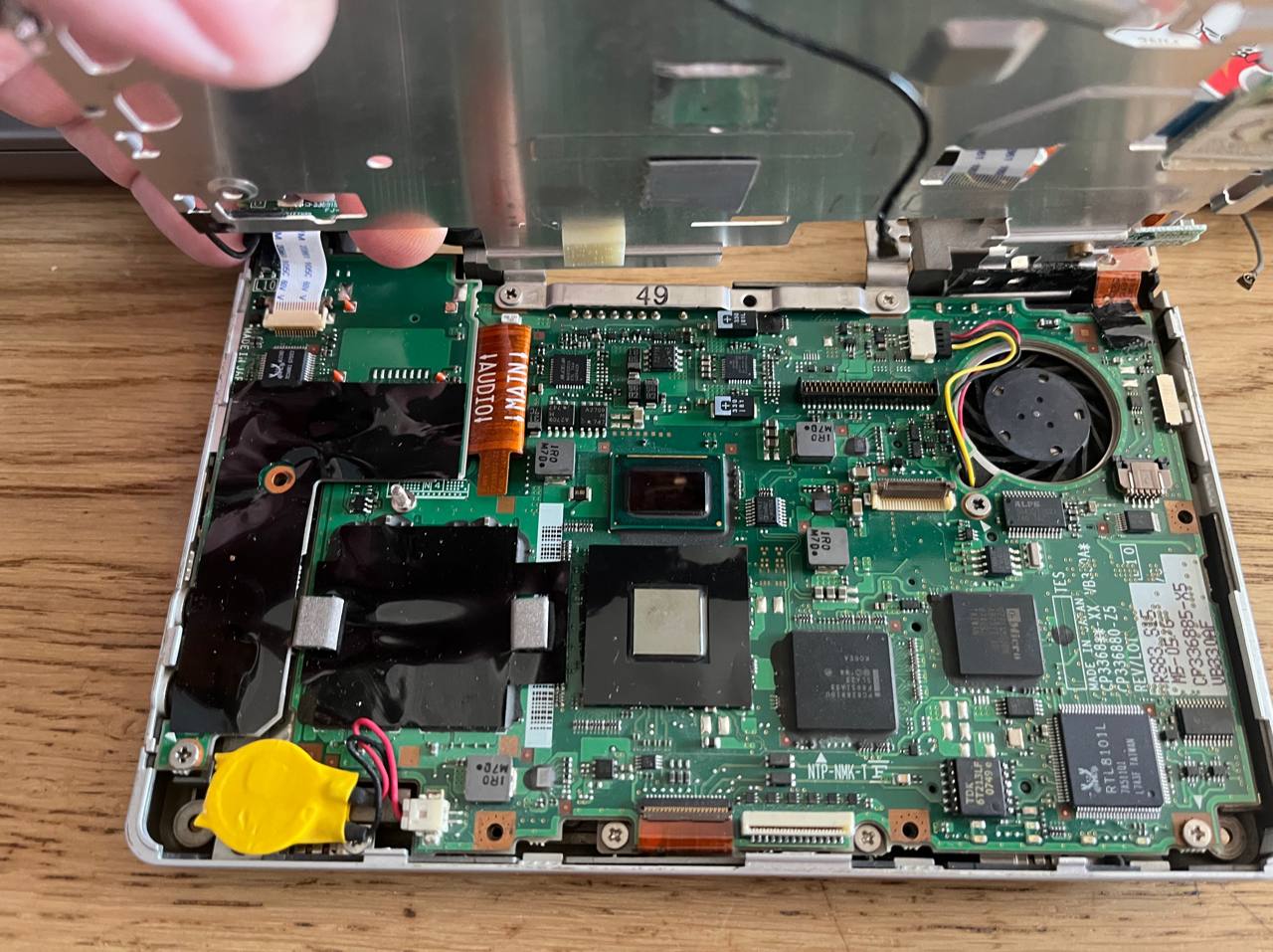
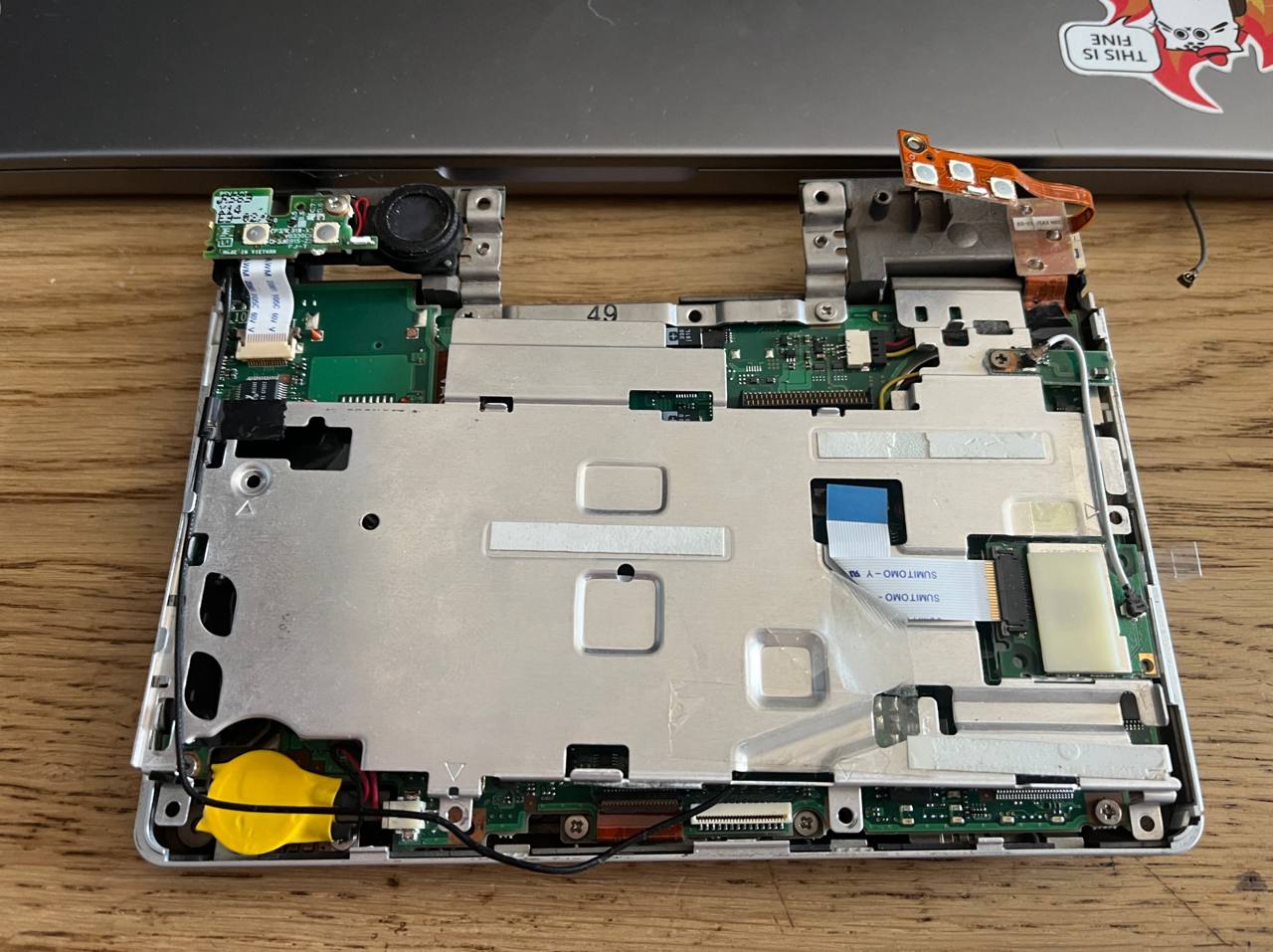
Досталась мне машинка с комментарием - что заводится она через раз. Со временем через раз превратился в 1 из 10, а потом и в никогда. Так как я рукожоп - начал плавно искать донора. И вот, некоторое время назад оказалось, что у Дракона из Мавзолея точности появился такой же ноут и он к нему быстро потерял интерес - машина оказалась не в лучшем состоянии, еще и с нерабочим тачскрином. Мы с Драконом договорились об обмене и вот пару дней назад его ноут попал в мои лапки))) По результатам осмотра было решено совместить лучшие по состоянию детали - поэтому его материнка и все дочерние платы и даже диск дружно отправились ко мне в корпус. И вот, наконец-то, машинка снова в строю)))
Навайбкодил тут))) Встречайте! Наконец, спустя годы, появился онлайн каталог коллекции. Впереди еще куча работы: фоткать, актуализировать, инвентаризировать...
Продолжим путешествие по низу рынка? В 2003 году А серия завершила свой путь - трехшпиндельные (жесткий диск, оптический привод, флоппи или второй привод) ноутбуки стремительно теряли актуальность и уступали место под солнцем более компактным двухшпиндельным моделям, фактически не уступавшим в функциональности. Заменой А-серии стали Т40 (пока еще 14") в верхнем сегменте рынка и R40/R40е в среднем и нижнем. Причем только R40 предоставлял возможность получить 15" экран с высоким разрешением. Через год IBM вспомнила о чем-то важном и в профессиональный сегмент вернулись IPS UXGA экраны - R50p (целый год профи вынуждены были работать на Т40р с 14" 1400х1050 TN экранами или дохаживать A31p).
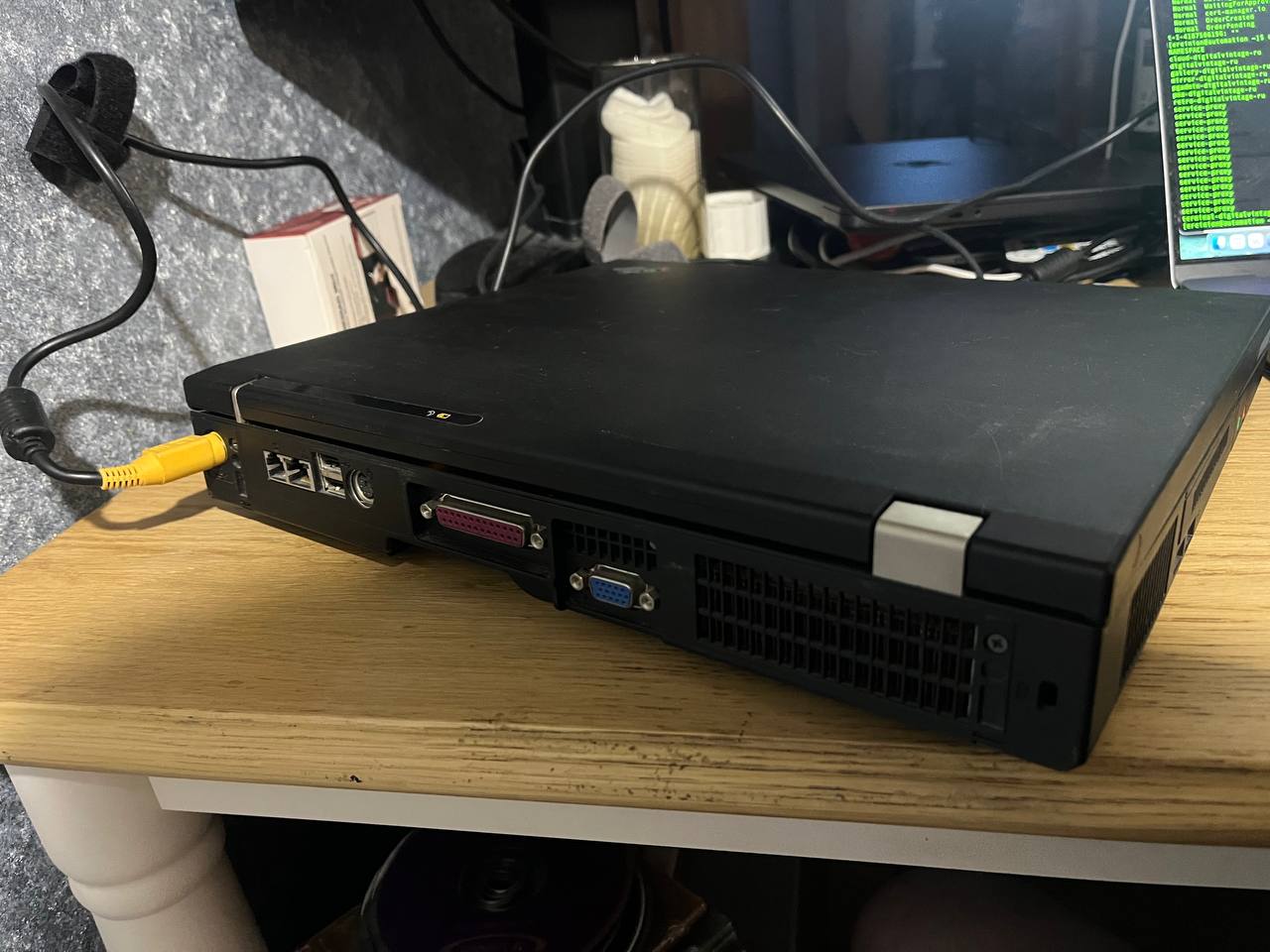
Но не всем хотелось компактный, пусть и с большим экраном, ноутбук. В моду входили машины класса DTR - desktop replacement. Они оснащались мощными, но дешевыми настольными процессорами, если повезет - им сопустствовало приличное видео и экран, частенько доставался флоппи-дисковод - все равно места в корпусе было хоть отбавляй. На фоне этого, IBM решила выпустить свой вариант настольного обогревателя с возможностью выполнения вычислений. Это был G40 - страшный уродец с настольными Pentium 4 или даже Celeron, одноканальным чипсетом Intel 852GM со встроенной графикой, флоппиком, одним (!) динамиком, встроенным бесперебойником - 12 (!) ячеечная батарея обеспечивала пару часов автономной работы, но чаще встречалась 6-ячеечная. Внешне и по характеристикам - скорее утюг, чем ноутбук. Экраны - отличные, для утюга. В основном - XGA, 15 дюймов. Кому не повезло - 14" с тем же разрешением. Но были и действительно неплохие экраны - 1400х1050 15", но это сравнительно редкая опция. Через год вышла обновленная версия - G41. Корпус тот же, экраны те же. Начинка слегка обновилась - Prescott вместо Northwood, тепловыделение под сотню ватт, флоппик стал опцией, но появилась опциональная дискретная видеокарта GeForce FX Go5200, хоть и бюджетная, но весьма приличная карта! Причем флоп и дискретка были взаимоисключащими опциями)))
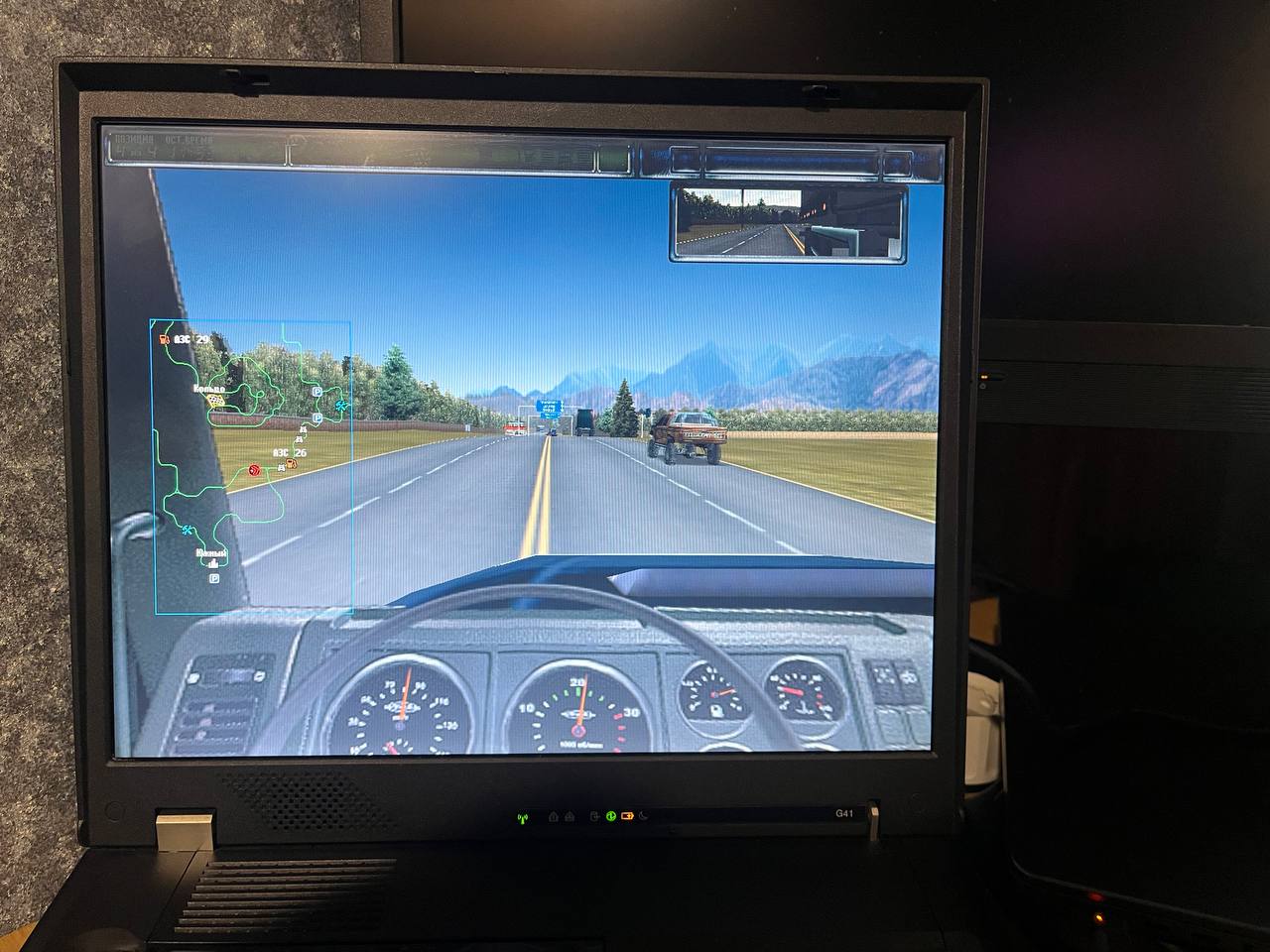
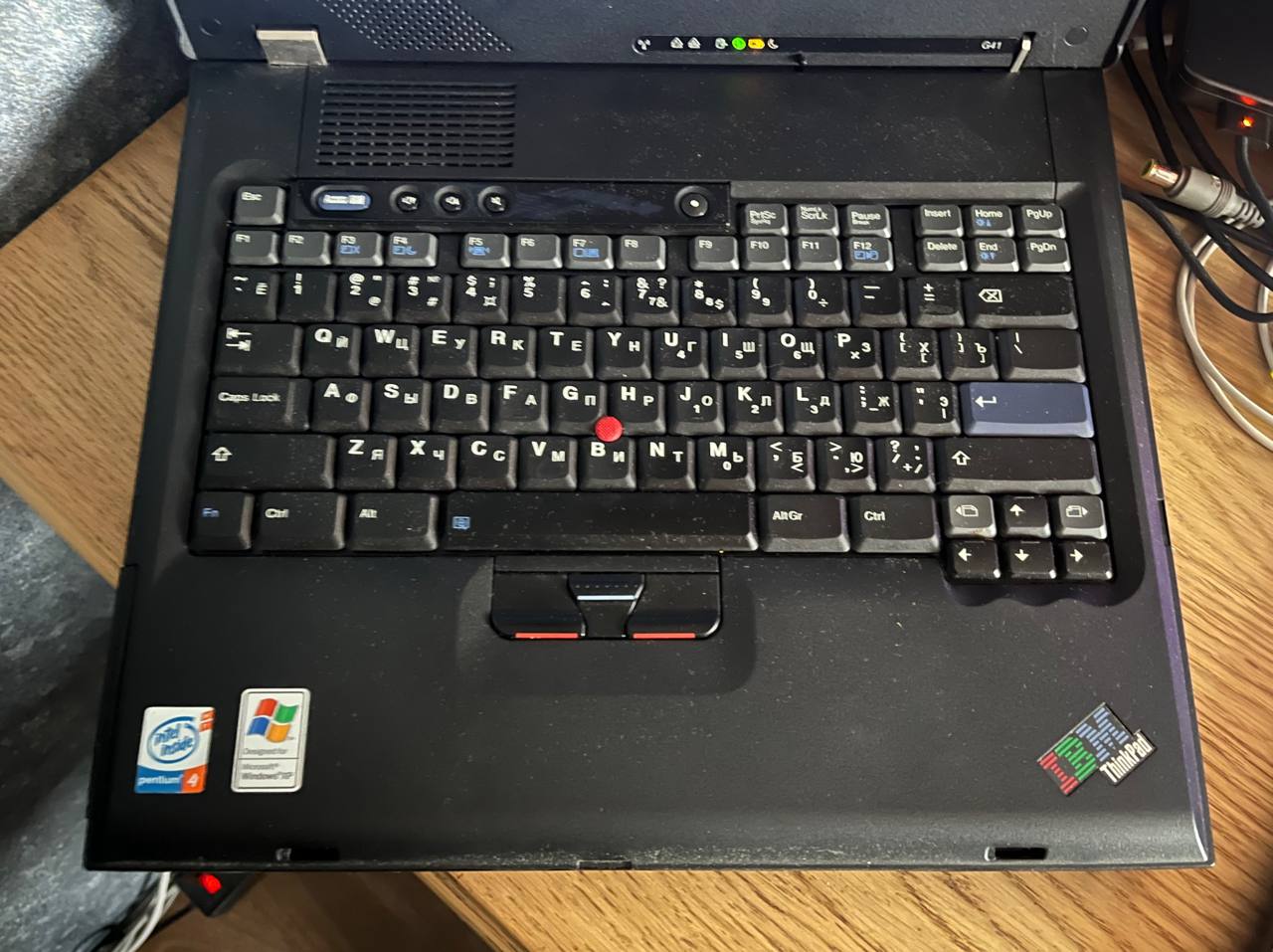
И вот, как и прошлый раз я знатно набухтелся, но ведь машина, несмотря на все эти недостатки, получилась отличная! Она ужасно выглядит в закрытом виде, но стоит поднять крышку... Отличная клавиатура, за счет отсутствия тачпада, более удобно расположенная. Корпус толст в задней части и обеспечивает удобнейший наклон при печати. Экран - не очень для работы с кодом или графикой, но шикарен для текста. Идеальная печатная машинка! Еще и функцией подогрева рук) Да и играть на ней приятно - отличный баланс разрешения экрана и производительности видеокарты. Плюс минимальный шаг работы SpeedStep - Дальнобойщики-2 не глючат (в игре таймер привязан к частоте процессора...). Экран - яркий, с адекватными для своего возраста углами обзора.
Вердикт - это самая что ни на есть замена десктопа. Ужасный в закрытом виде, неудобный для переноски, но шикарный на рабочем столе. Лайк!
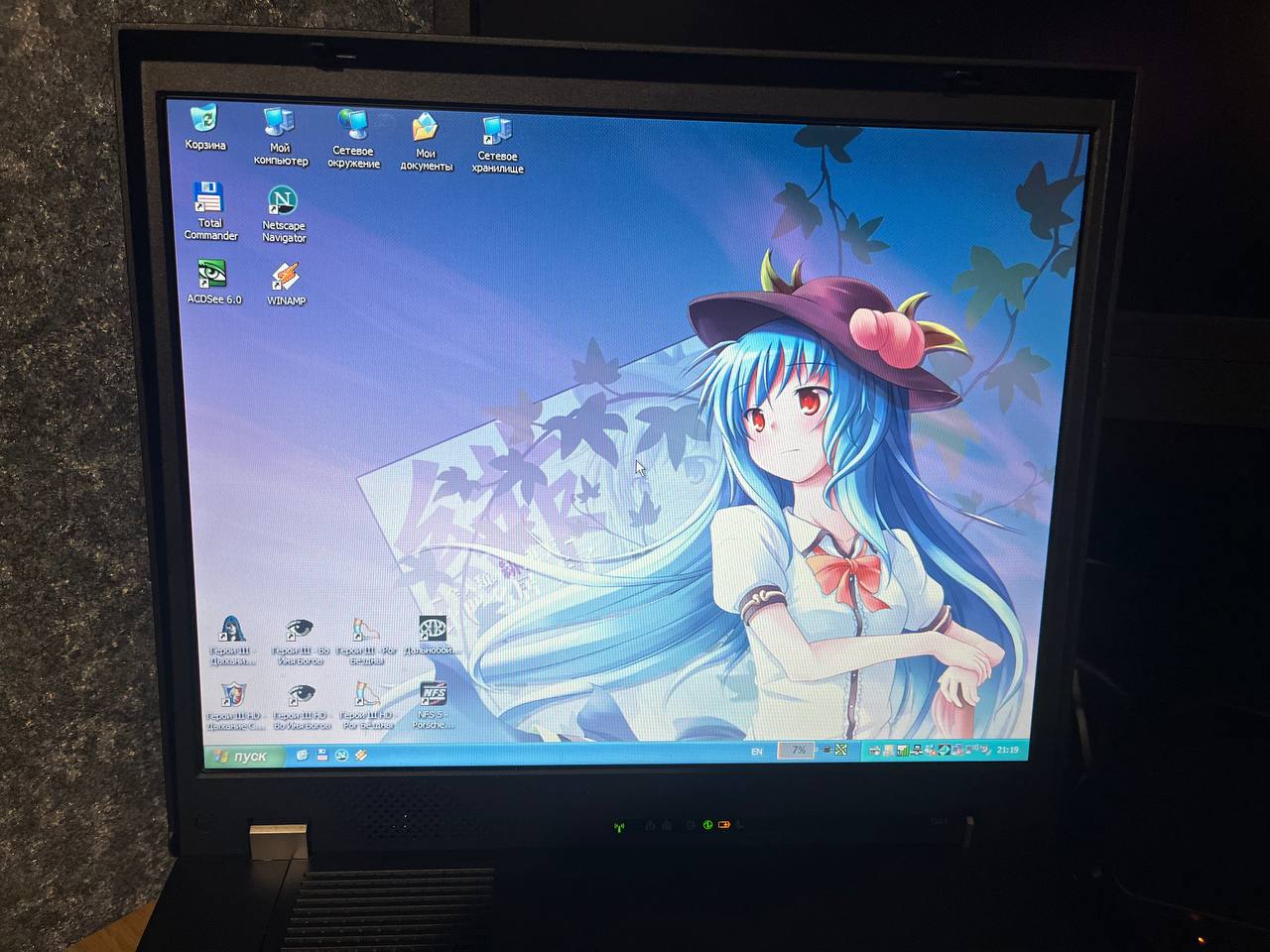
Машина в коллекции - в состоянии 10/10, настоящая капсула времени. Раздел восстановления сохранен (там Win XP Home RUS), когда ноут попал мне в руки - на нем была вполне живая система с данными, которую последний раз включали примерно в 2007 году. На рабочем столе - чья-то семейная фотография 2006 года. Прошло 20 лет, ребенок с фото наверняка уже растит своих детей, а старый ноутбук все еще работает и внешне не постарел ни на год!
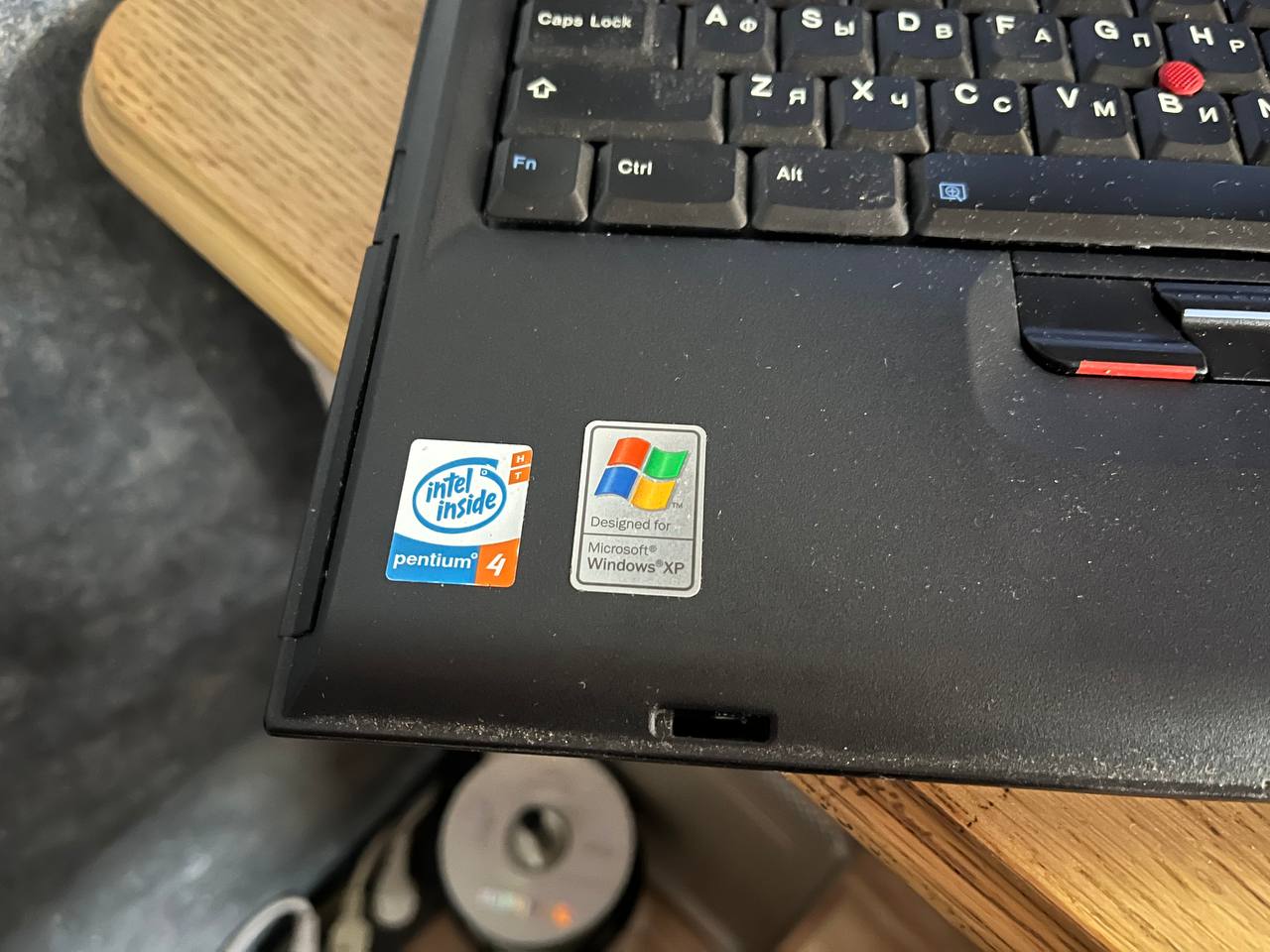
IBM ThinkPad G41 (2004 год) Intel Pentium 4 532 (3.06 ГГц, Hyper-Threading) 1 Гбайт ОЗУ 40 Гбайт HDD DVD-RW nVidia GeForce FX Go5200 Wi-Fi / Gb LAN
За что любят ноутбуки первого эшелона (условно - корпоративного класса и часть премиум-сегмента)? За эргономику и конструктивную надежность, а не только за статус. Получить мощную начинку или интересный дизайн можно и дешевле. Но ряд имен, включая ThinkPad, ассоциируются именно с этим набором преимуществ. Но что будет, если взять пару узнаваемых фич и шильдик - и воткнуть их в обычный потребительский ноут? Получится...Ёжик!
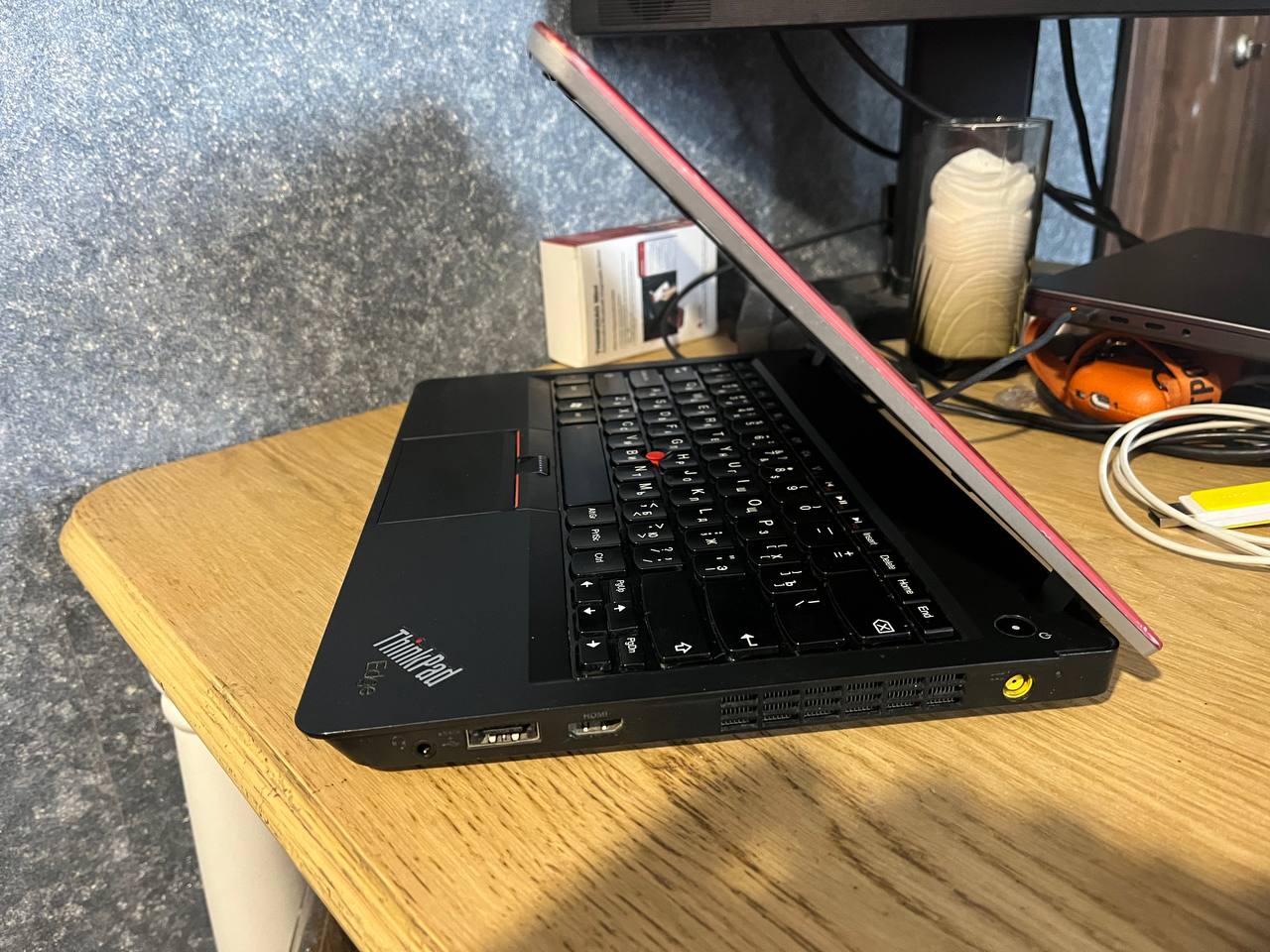
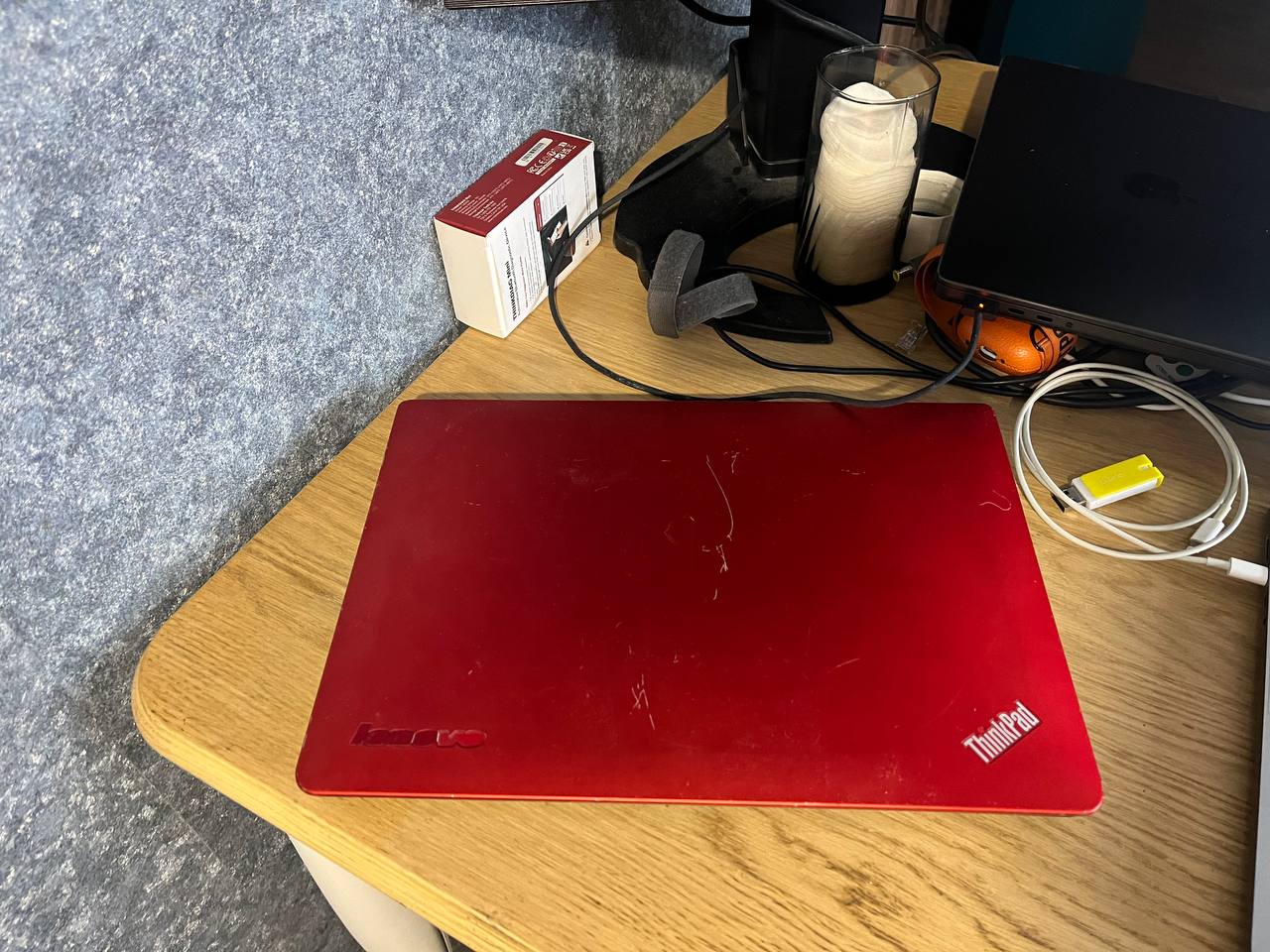
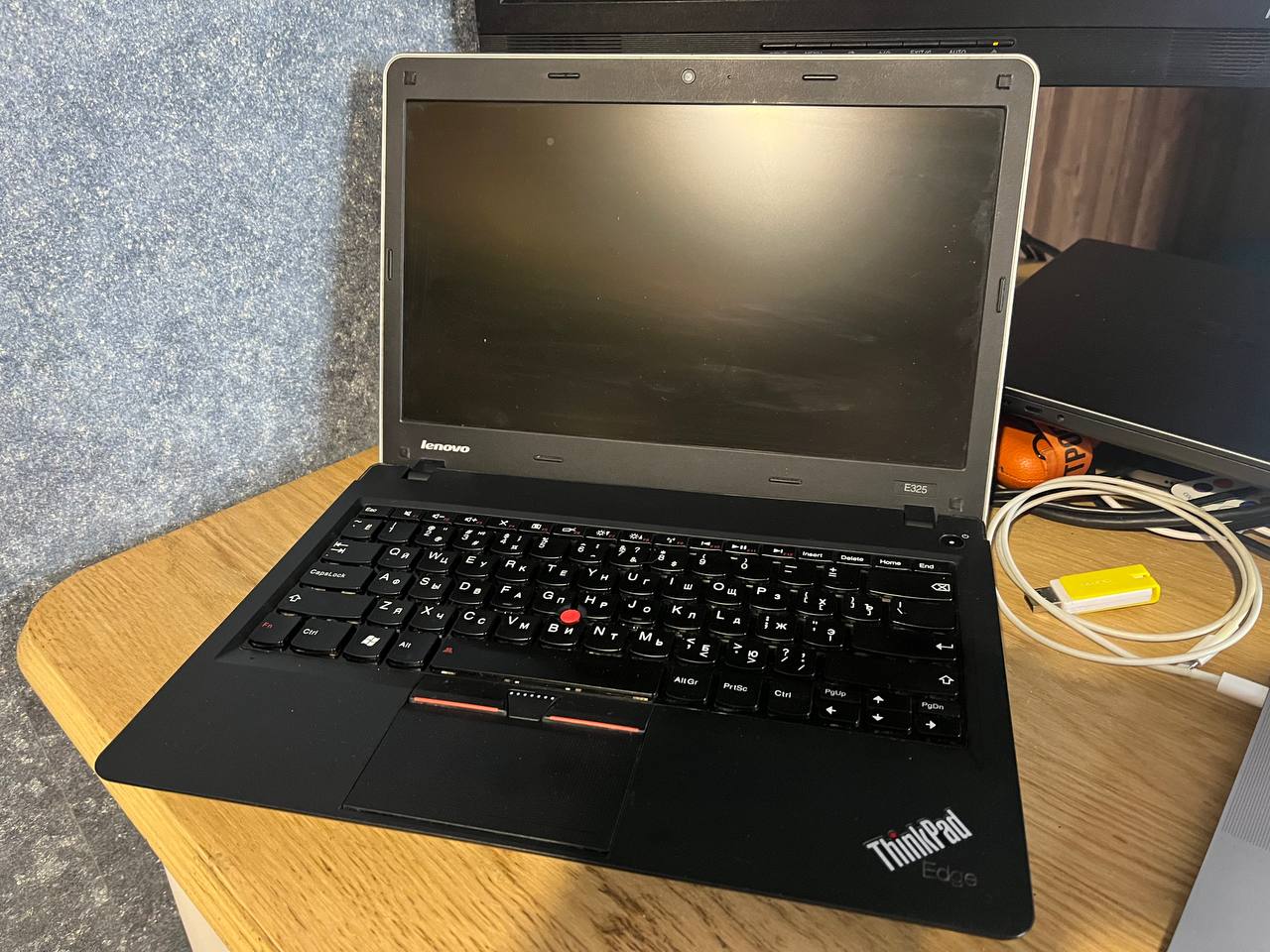
Сегодня у нас редкостный (sic!) ноут - ThinkPad Edge E325, и он - красненький! Очень редкая, кстати, машинка - на Авито их сейчас вообще нет в продаже. Скоро поймете почему.
Начнем с дизайна. Это что-то среднее между IdeaPad и ThinkPad. Красная крышка (крашеная, блин!), строгий черный низ с островной, но довольно приятной клавиатурой. Трекпойнт - в наличии. Тачпад - тоже. Кнопки F1-F12 уже по умолчанию управляют функциями ноута, а для использования их в софте - нужно нажимать вместе с Fn. Благо это можно изменить в настройках BIOS. Вернее UEFI (это же ровесник остальной Хх20 серии!). Сама же клава уже 6-рядная. Внешне - обычный ноутбук доультрабучной эпохи. Экран 13.3", толщина около 3 см, около 1.8 килограм. Чувствуется бюджетность. Хотя, если вспомнить другого его ровесника, ThinkPad X1 - при той же диагонали он имел сравнимую массу, да и дисплей был чуть ли не тот же. Но вот материалы и конструктив... А если сравнить с X301 или MacBook Air - разница будет чуть ли не в полкило.
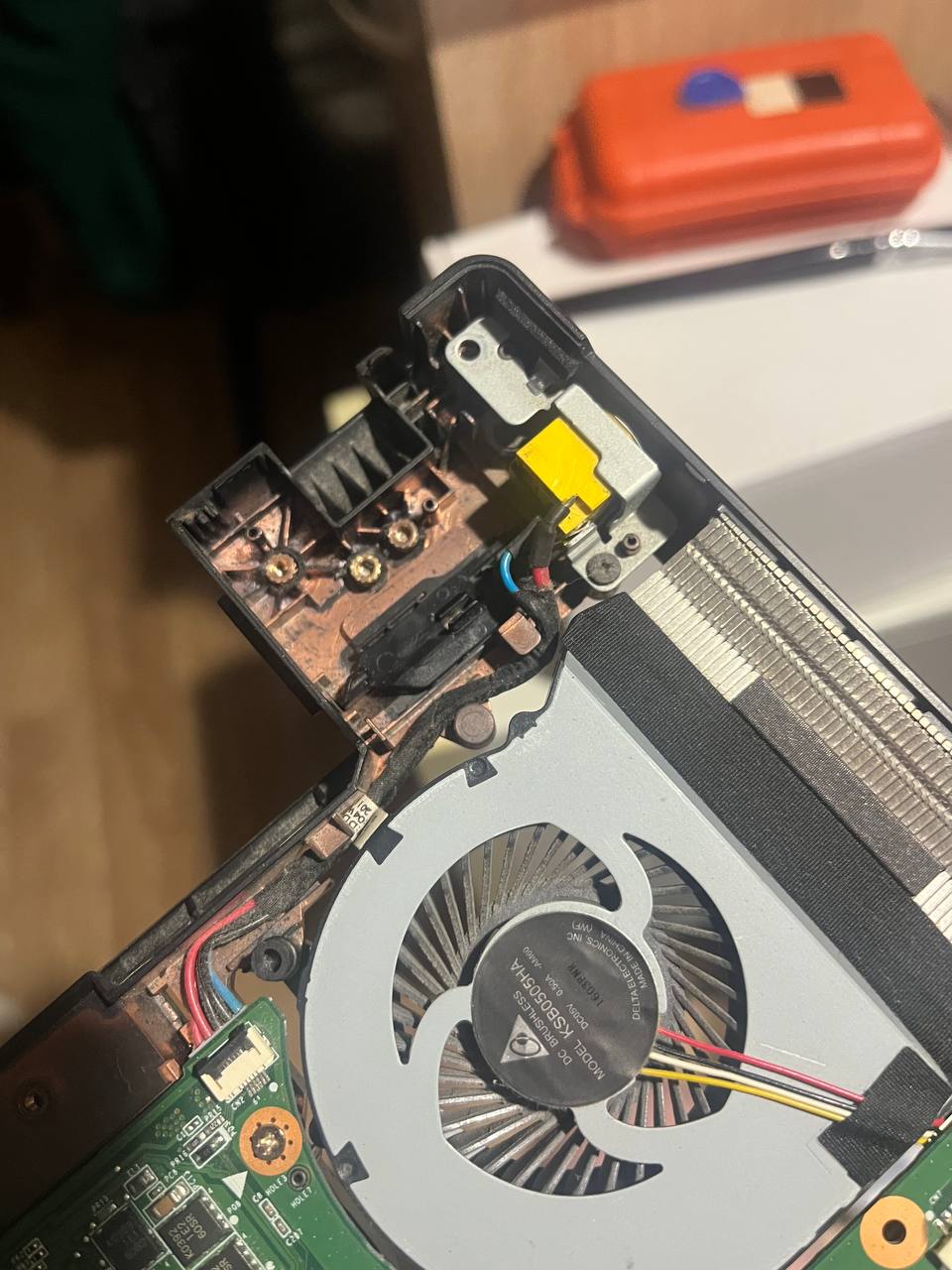
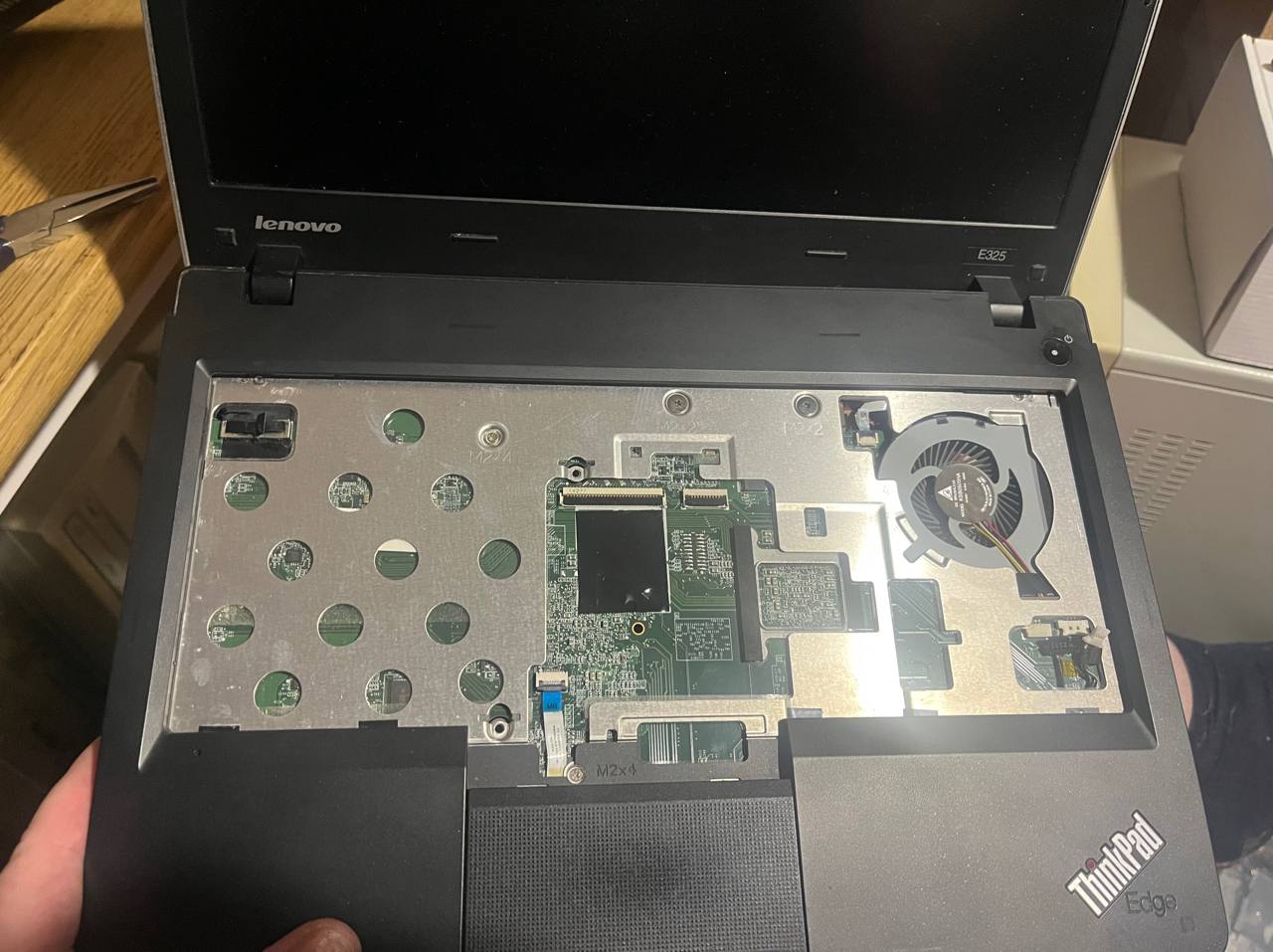
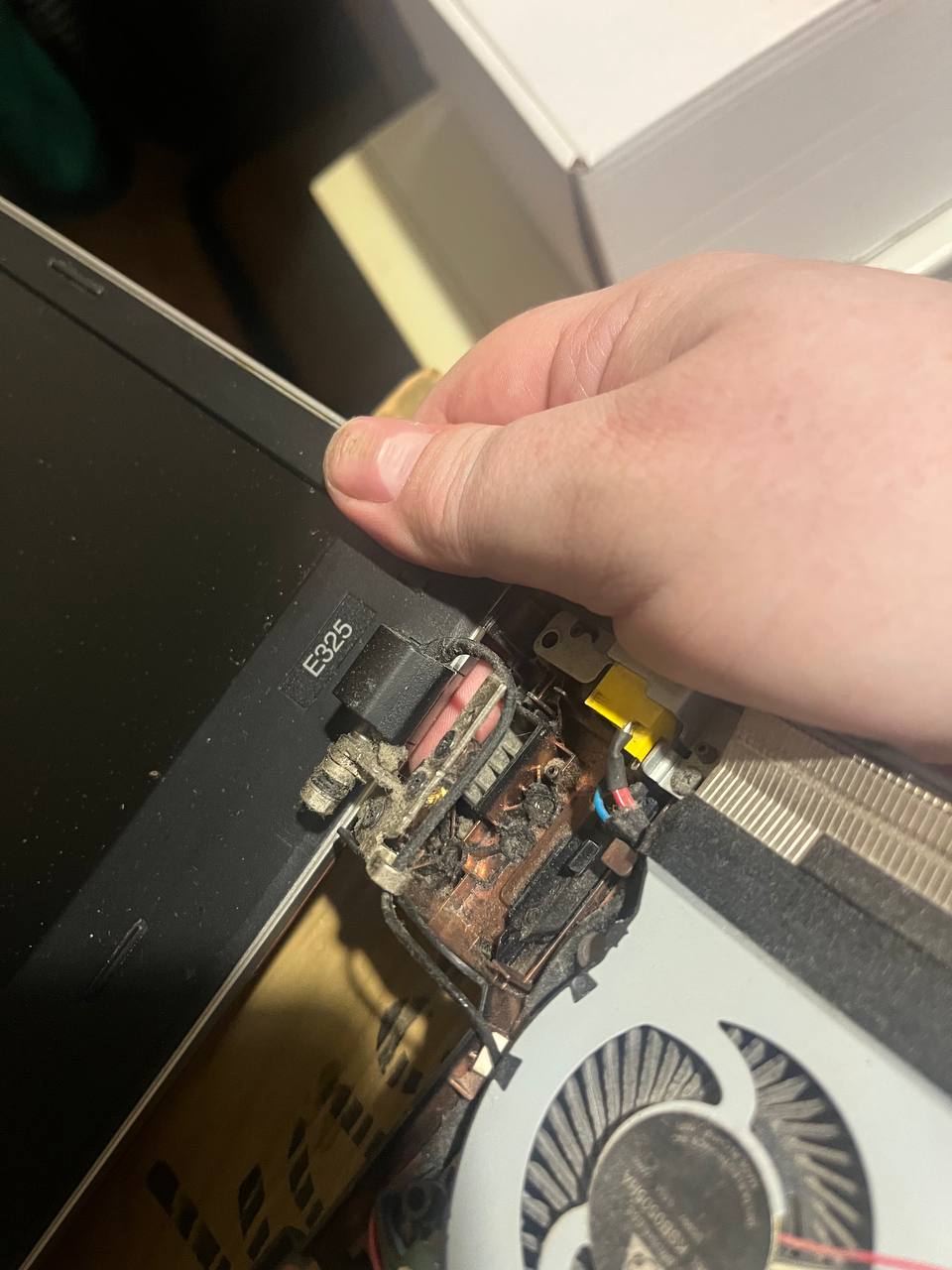
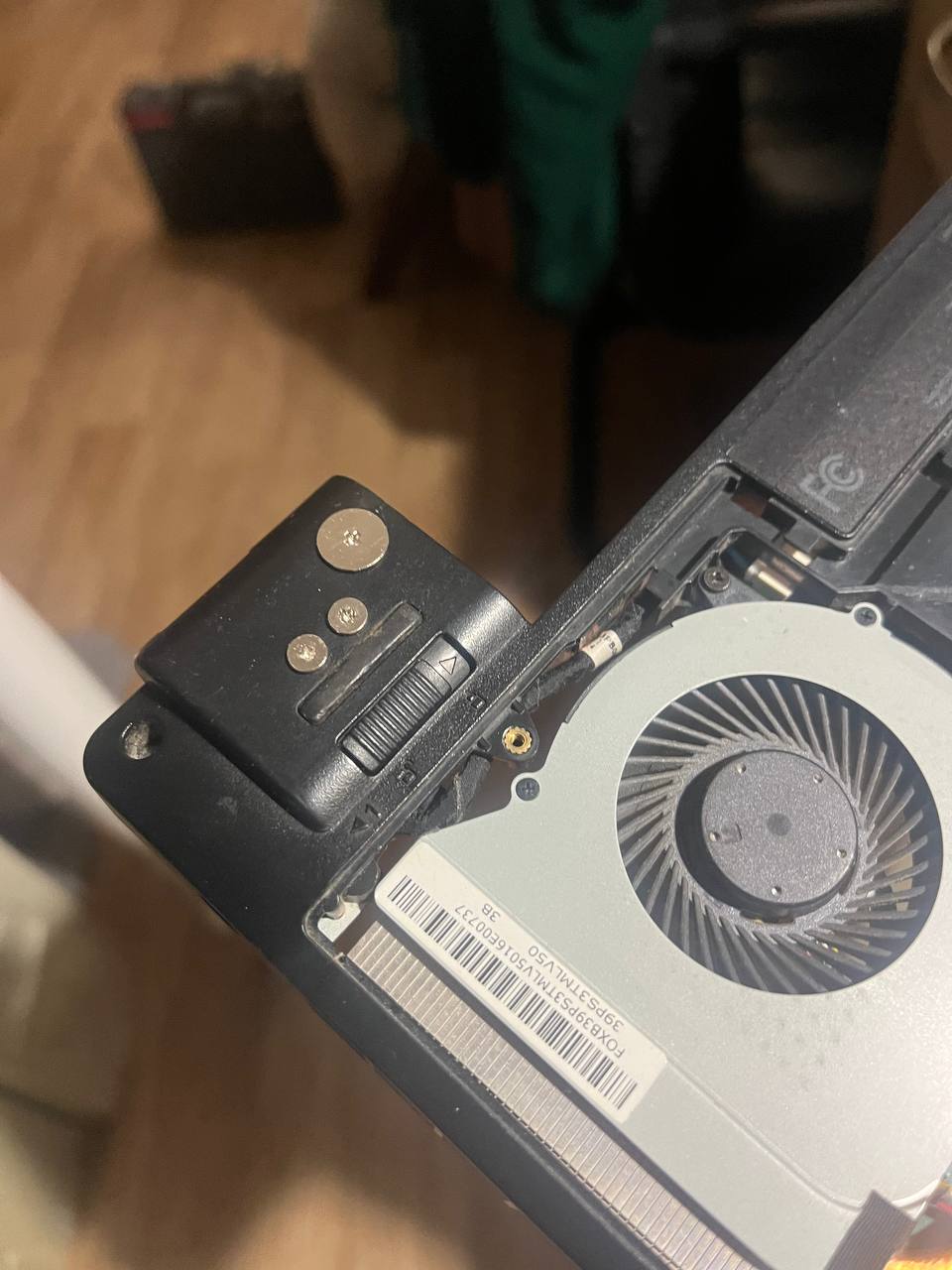
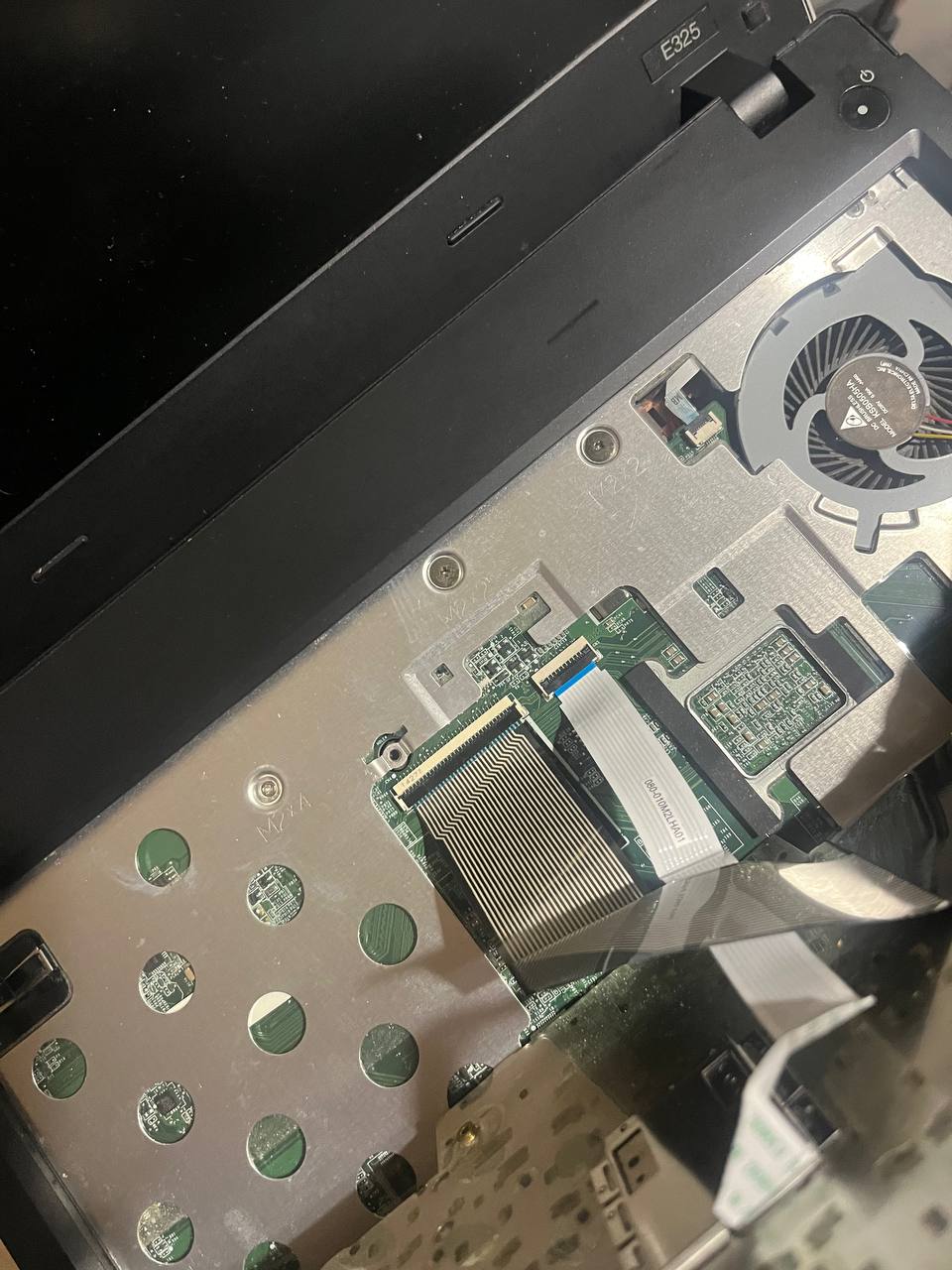
Теперь о материалах - это пластик. Да, хороший пластик и качественная окраска, но не более того. Но беда не в этом, беда в том, что этот пластик несет не только декоративную роль, но и конструкционную. Да - никаких усилителей внутри нет. Петли крышки крепятся как в лучших китайских ноутбуках начала 90х - к впечатанный в пластик закладным. К чему это приводит - вы можете догадаться и подтвердить свои догадки, посмотрев на фото. Это решение даже хуже, чем у печально известной 390 серии, где петли с годами вырывали пластиковые шахты, из-за недостаточной их глубины.
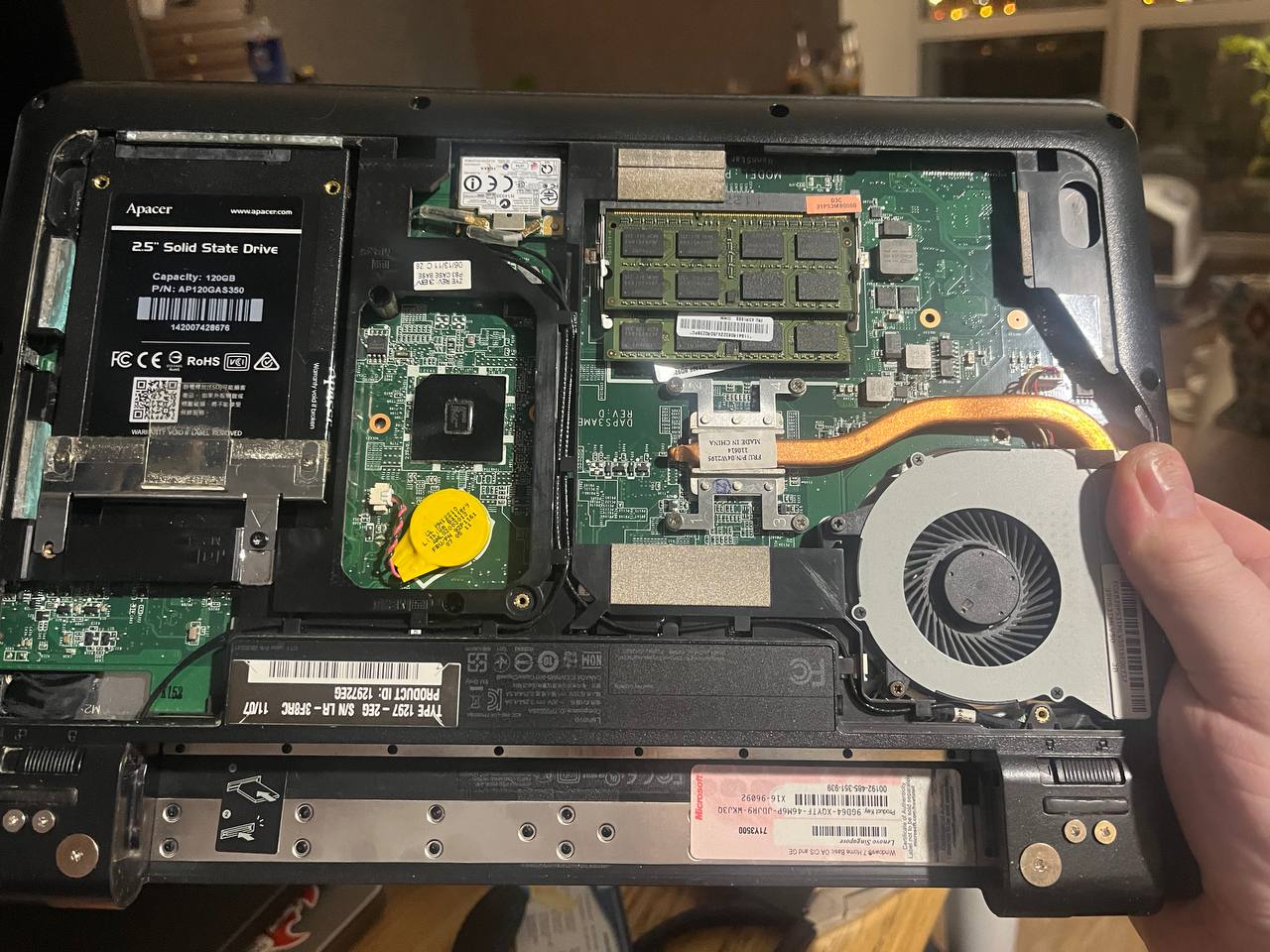
Перейдем к начинке. Не все Ёжики так ужасны, были и версии на Intel Core i3/i5 второго поколения, которые в принципе вполне пригодны к эксплуатации по сей день. Но тут...если кратко - первый Air или X301 кажется пошустрее будут))) Здесь у нас чудо от AMD - Fusion E350, система-на-чипе, она же APU. Два ядра по 1.6 ГГц, на упрощенной архитектуре (хотя бы с поддержкой внеоредного исполнения команд). Встроенное видео Radeon HD6310M (вот в этом ноут может быть даже посильнее интеловых собратьев!). Память DDR3 - до 8 Гбайт. В плюсах - низкое энергопотребление, 18 Вт (напомню - у Core i5-2520M - 35 Вт). Но разница в производительности куда выше - от 3 до 6 раз в зависимости от приложения. Он соответстовал младшим Celeron тех лет (847, U3400...).
Вот я сейчас вывалил на бедного Ежика целую кучу...сухих листьев. Но на самом деле он не так уж плох. Новым он стоил от 14.000 до 20.000 рублей. Как хороший нетбук. Для сравнения - T420 с i5 и улушченным экраном стоил от 42.000 рублей. Выводы пусть каждый сделает сам, а я с радостью положу успешно отремонтированный ноутбук на полочку с другими сравнительно недорогими ноутбуками ThinkPad - R, SL и L серий.
P.S. В этот раз без анимешных картинок - систему поставлю сегодня вечером)))
ThinkPad Edge E325 (2011 год) AMD Fusion E350 4 Гбайт ОЗУ 120 Гбайт SDD Видео AMD Radeon HD6310M WiFi / Bluetooth / Gb LAN
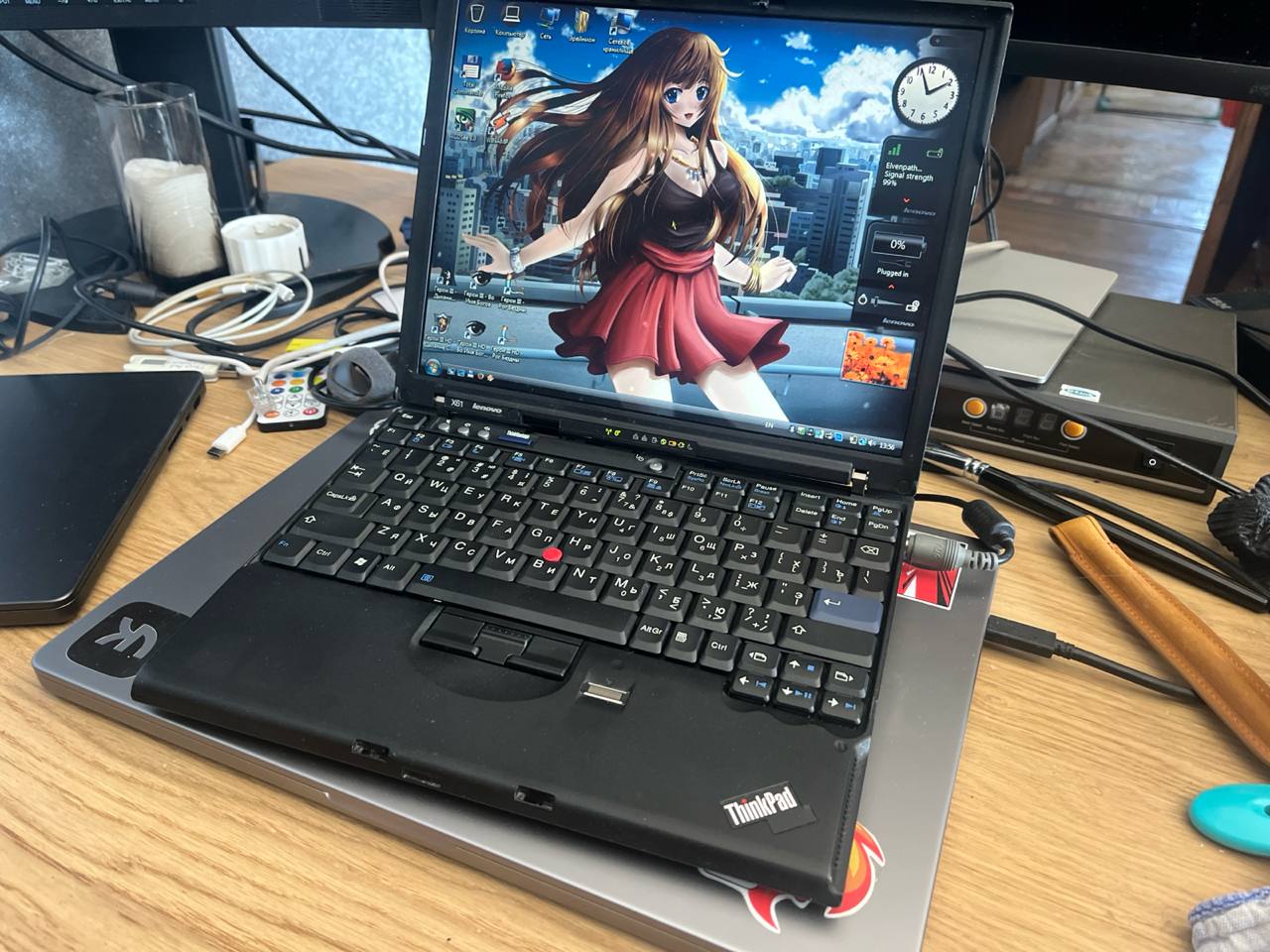
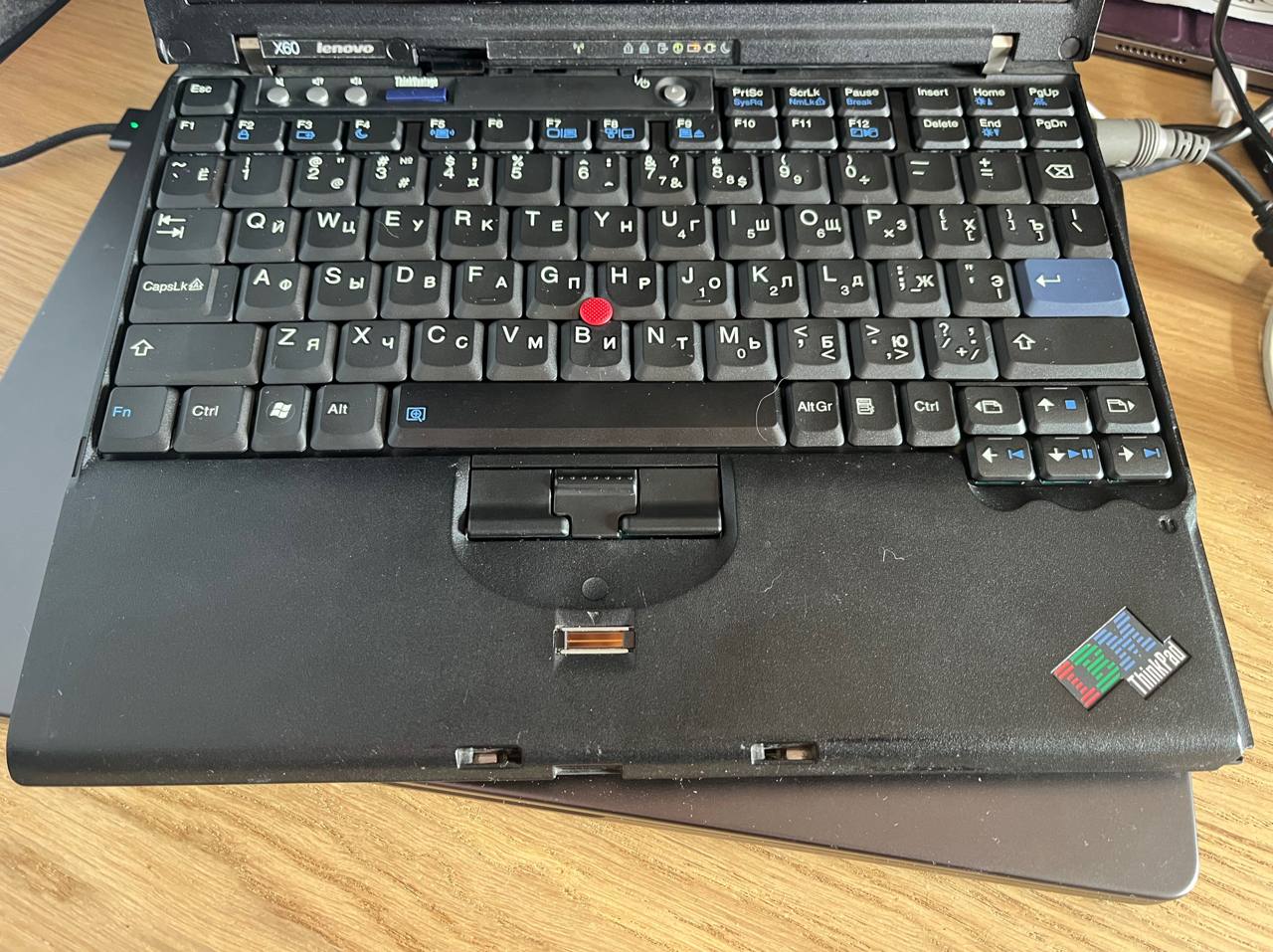
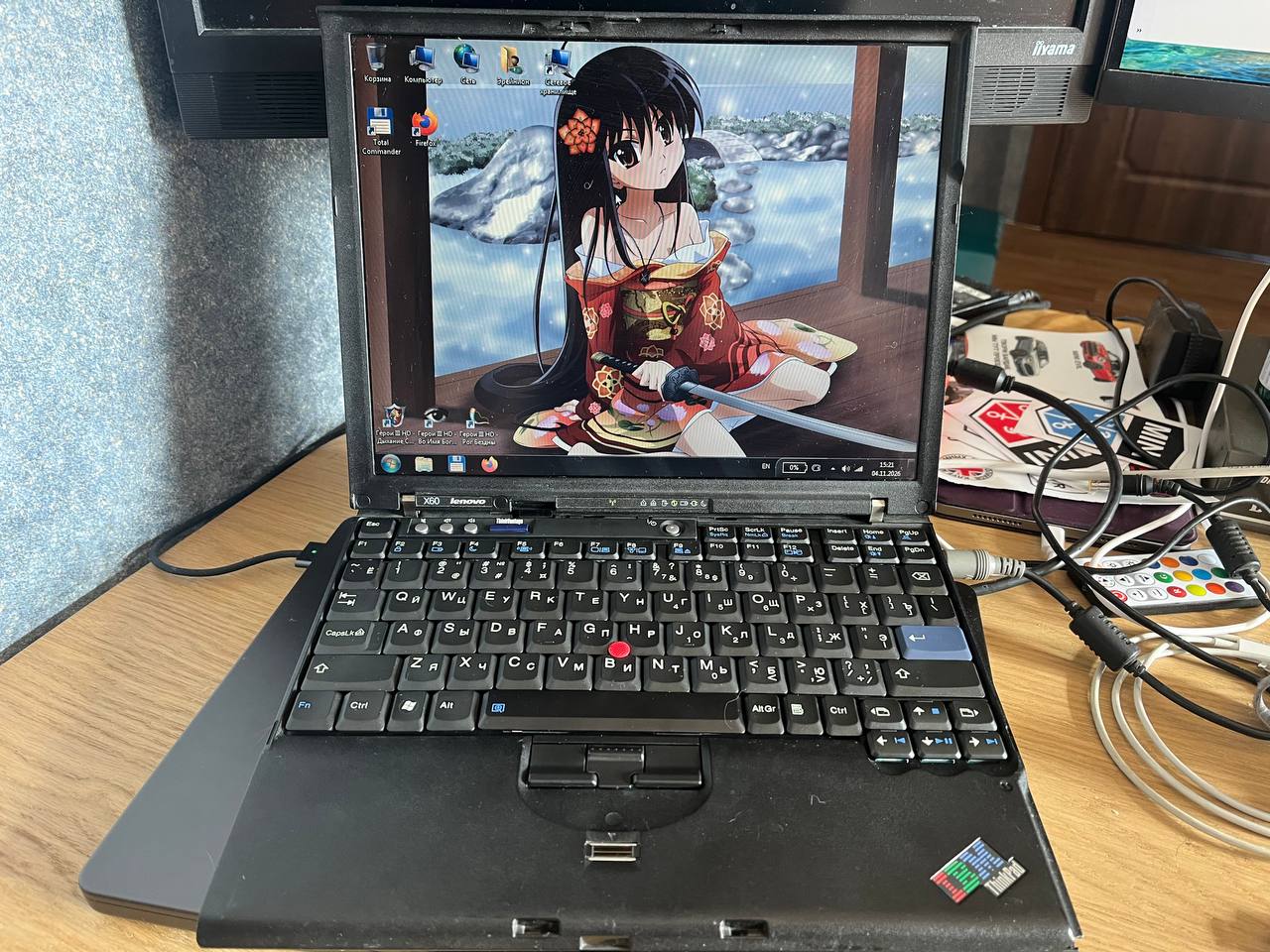
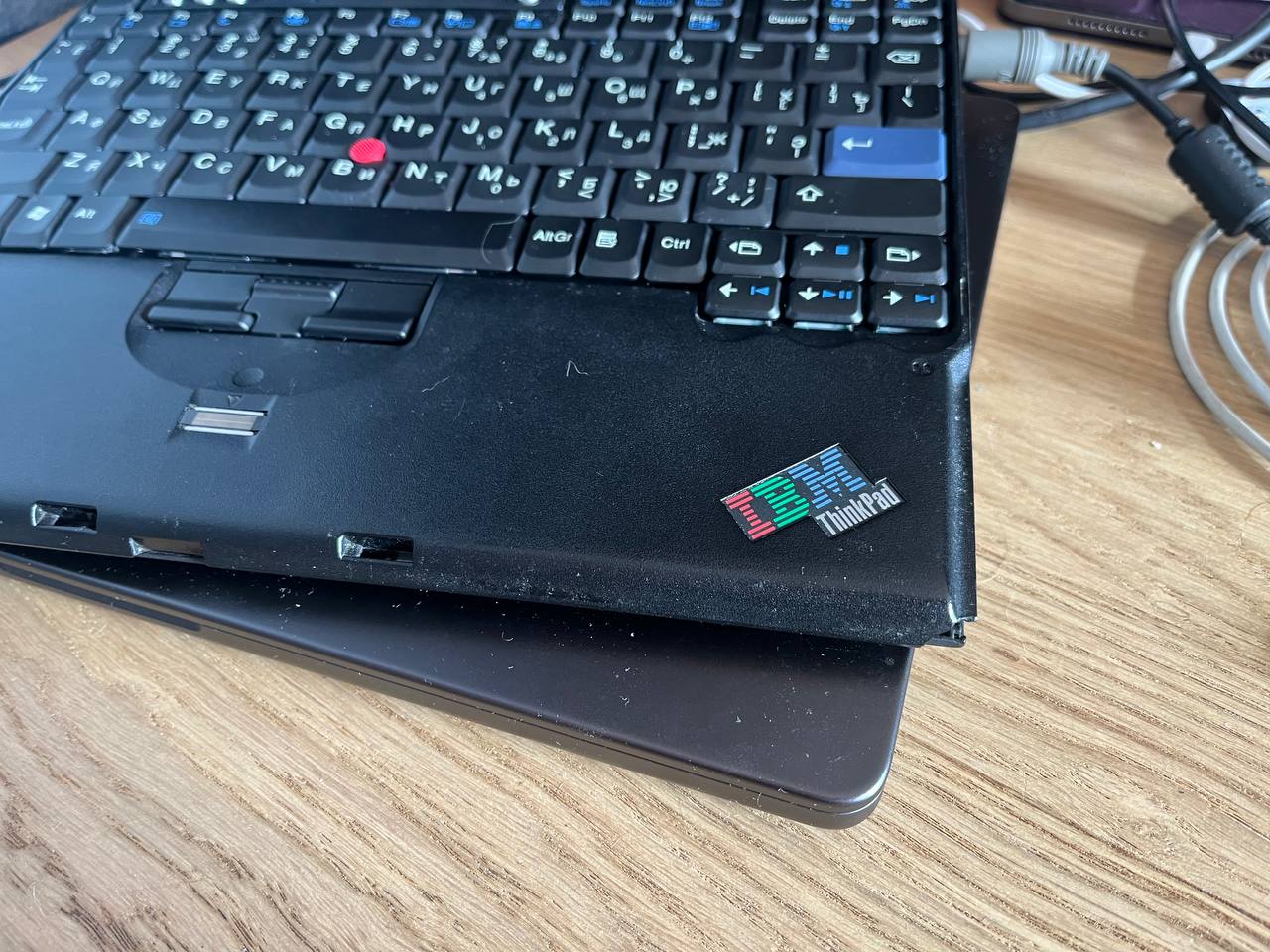
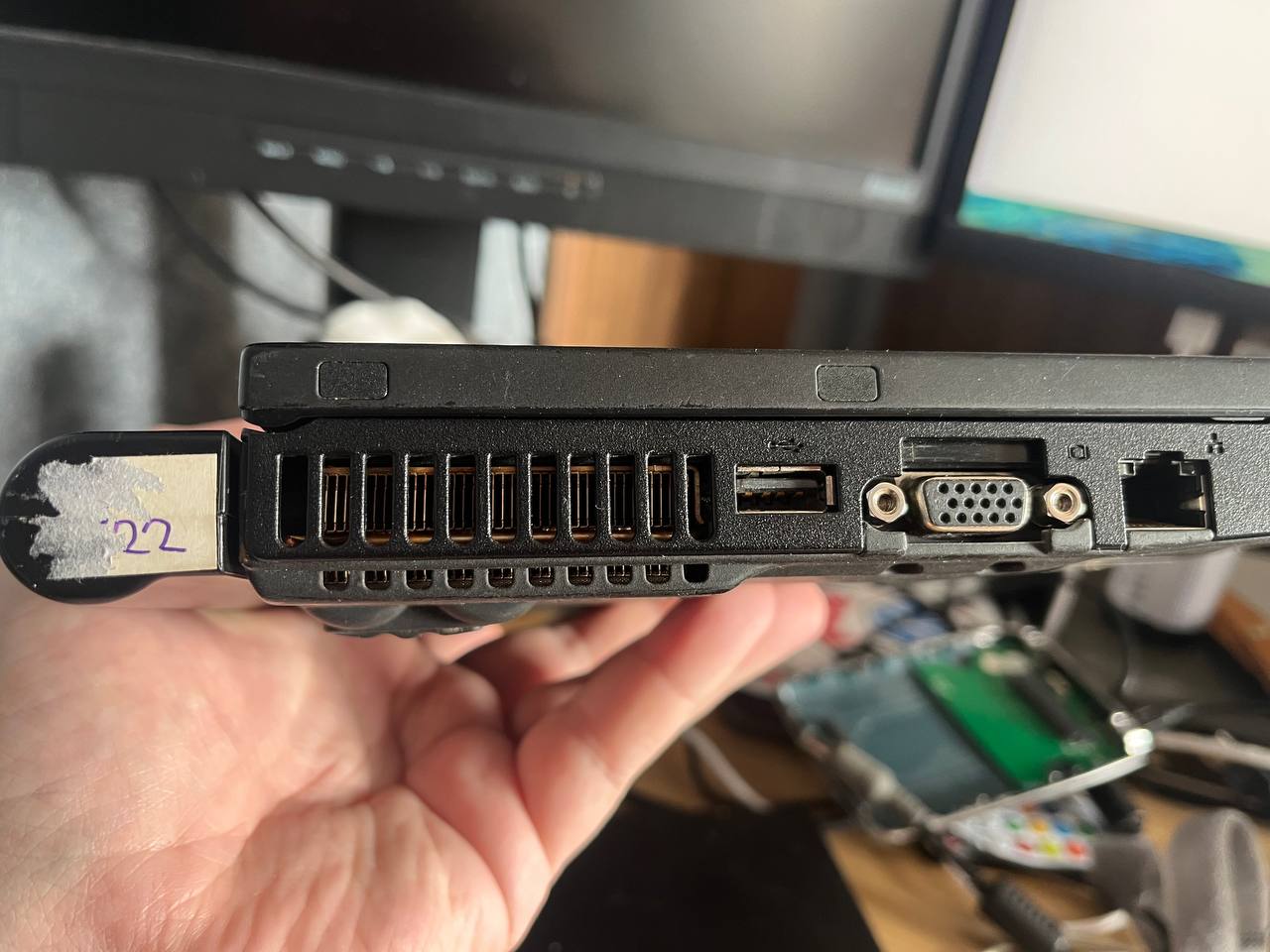
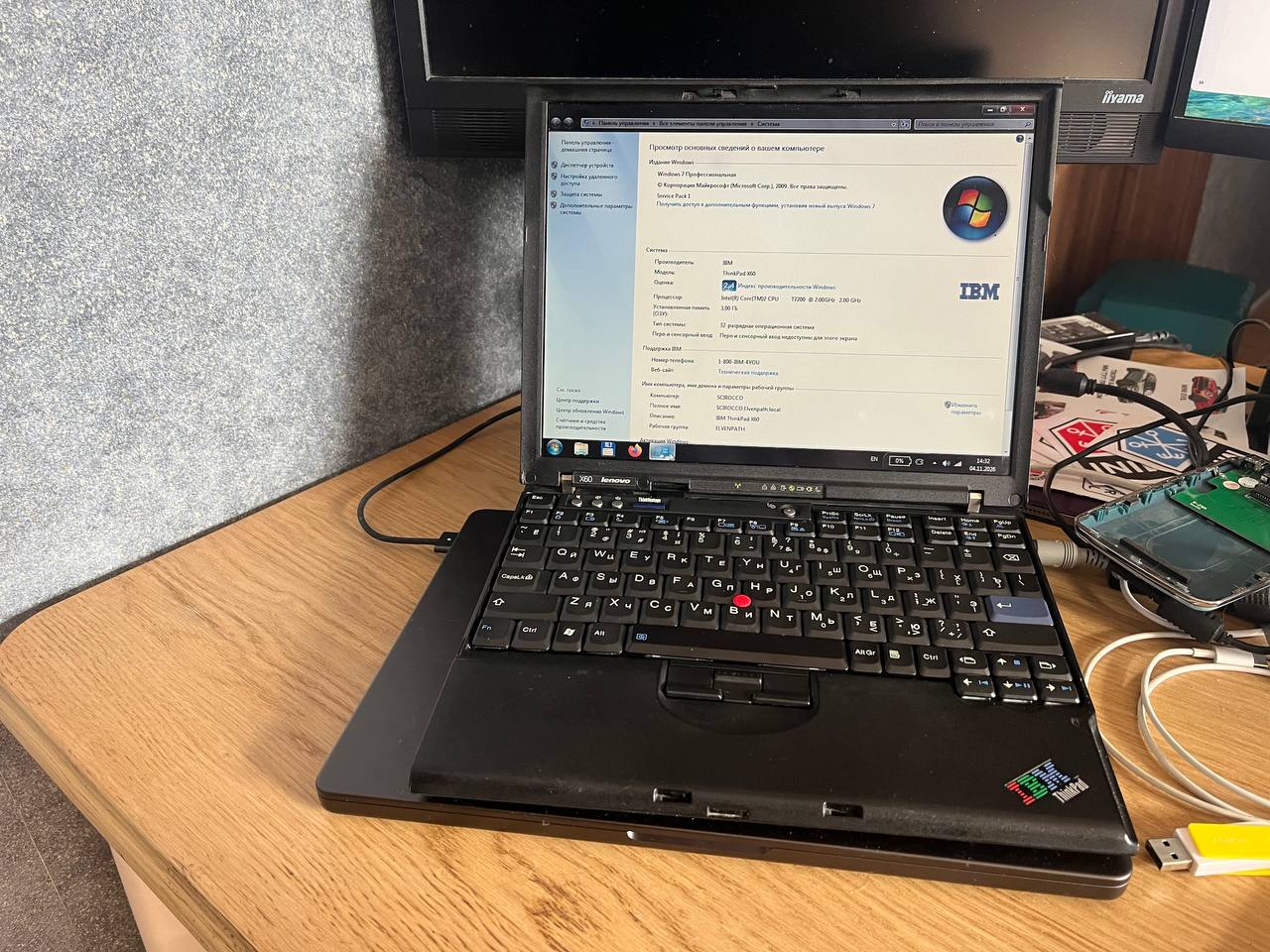
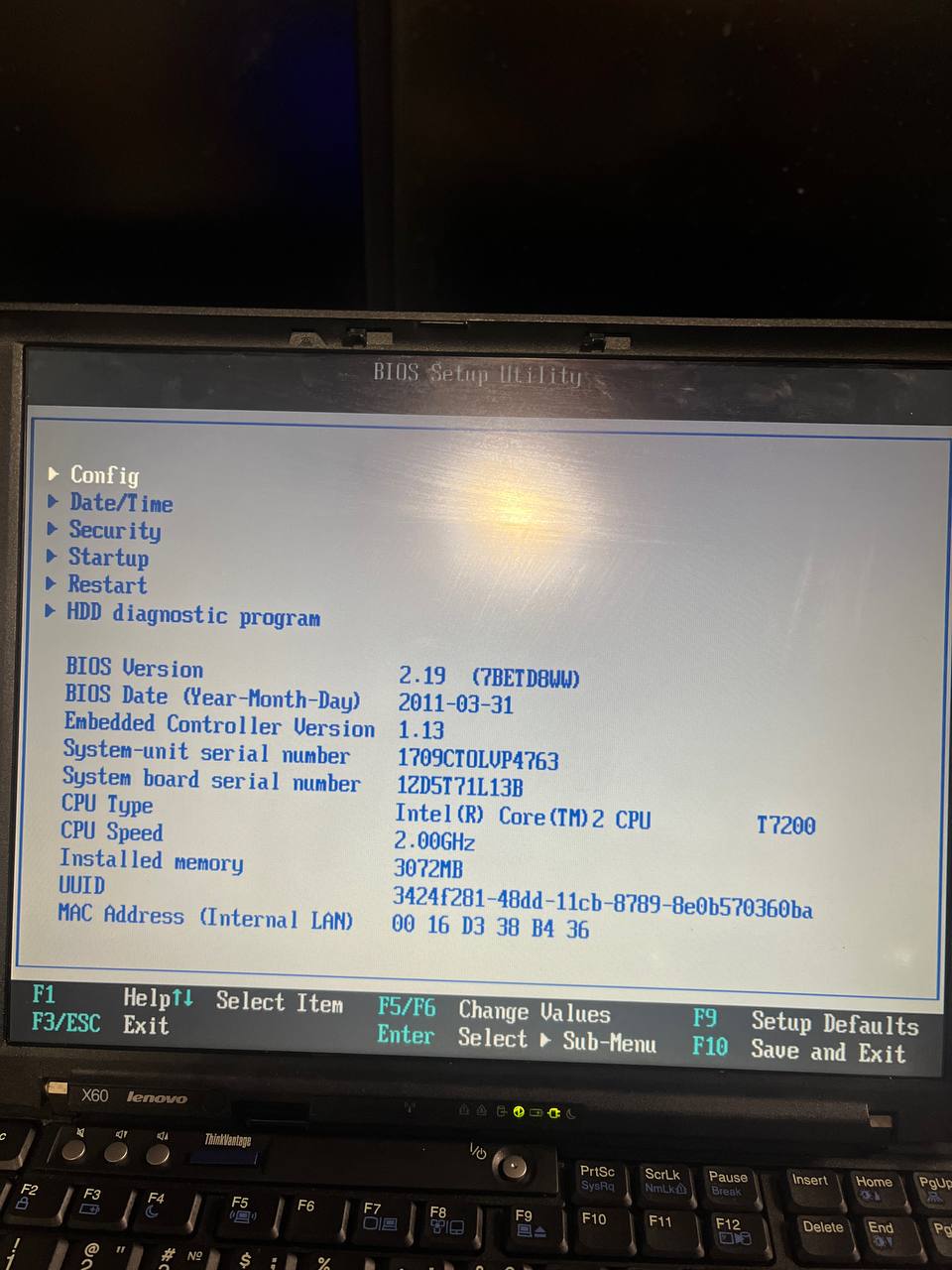
В прошлом посте я упоминал "компактные числогрызы" из линейки ThinkPad, лишившиеся дискретного видео, но сохранившие полновольтный процессор. Первым таким аппаратом стал ThinkPad X60. Он использовал процессоры Core Duo / Core 2 Duo T-серии (вплоть до Т2500/T5600/T7200), поддерживал до 3 Гбайт ОЗУ и базировался на чипсете Intel 945GM со встроенным видео GMA950. Разрешение 12-дюймового экрана, правда, оставалось прежним - 1024х768. Х60 использовал большую часть деталей от X60s - крышка в сборе, клавиатура и палмрест, шлейфы и даже материнская плата - но отличался припаянный к ней процессор. Кроме него отличались только две детали - поддон корпуса и система охлаждения. В итоге, машина получилась немного толще, чем X60s, но это касалось лишь варианта Х60s. 4-ячеечной батареей. При установке 6 или 8 ячеечной толщина становилась практически такой же.
Что интересно, в базе выпущенных конфигураций упоминаются X60s с процессорами Т-серии. Но есть основания полагать, что это просто ошибка базы.
ThinkPad X60 (2006 год) 12" 1024x768 Core 2 Duo T7200 (2x2.0 ГГц) 3 Гбайт ОЗУ 80 Гбайт SSD Видео Intel GMA950 WiFi 802.11 a/b/g + Gb LAN
 t h e c o m p u t e r c o l l e c t i o n